Washington, D.C.
I'd Like to Apologize to Every Teacher I Ever HadWashington, D.C. is the destination of Northeast High School’s November 16 field trip, an excursion that begins as a compromise between the production team’s preference for Manhattan and the network’s practical choice of the nation’s capital. It ultimately becomes more than a filmed outing: for students who have never visited the city, Washington offers encounters with places previously known mainly through books, while for Tony Danza it becomes a test of whether a highly visible television project can still function as real teaching.
Selection and Educational Purpose
The trip grows out of Tony Danza’s disappointment at being unable to return to Los Angeles for Thanksgiving and his wish to give the class a change of pace. He initially imagines taking the students to New York City, a place he admires and knows well, but the production team and network favor Washington, D.C. because it is less expensive, none of the students has been there, and the itinerary can include the Folger Shakespeare Library. Although Danza has little authority over the decision, he recognizes that the capital offers a defensible educational purpose and promises himself that Manhattan can remain a possibility later in the school year.
The destination also exposes the tension between an ordinary school field trip and a reality-television production. The network wants an appealing segment, and every part of the excursion will be filmed, but Danza tries to organize activities that are meaningful rather than merely photogenic. The trip therefore joins the cultural resources of Washington to the show’s demand for visible activity, making the city both a classroom and a stage.
The Journey from Northeast High School
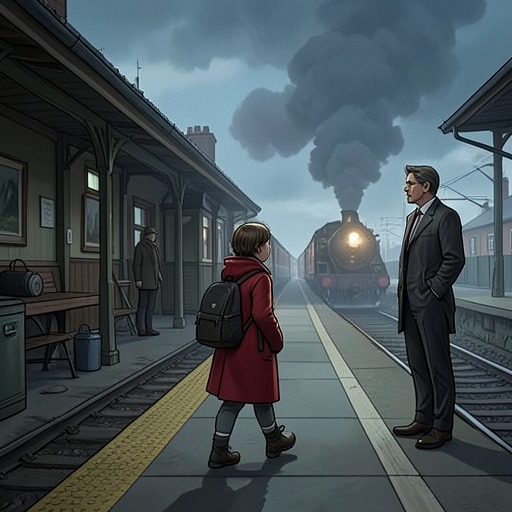
The trip begins before dawn on November 16 in freezing weather. At six o’clock, Danza waits outside Northeast High School, pacing on the corner while the chartered bus remains late and no students or production crew are yet visible. The other adult supervisors arrive over the next fifteen minutes: Al G’s math teacher, Ms. Green; David Cohn; and Kelly Barton, a retired former principal who serves as the production’s liaison to the school district. Barton’s experience with field trips reassures Danza, though reassurance does not immediately dispel his fear of taking twenty-six students far beyond his usual responsibilities.
The students appear at approximately 6:28, just before the bus is due to leave, and the journey is structured to keep them engaged. The production provides substantial box lunches, and Danza treats food as part of the practical work of maintaining a cooperative group. A road-spotter game played through an iPhone application becomes a competition between students and teachers. Danza also brings a ukulele, first playing older songs the students do not recognize and then surprising them with Rihanna’s “Umbrella,” which he learned specifically for the trip. Even Fred, the bus driver, joins the singing. By the time the group reaches Washington, the atmosphere has relaxed, including Danza himself.
First Encounters with the Capital
The city’s first effect is visual and emotional. Students point from the bus windows at buildings they have seen only in books, and their excitement gives the journey an immediacy that classroom instruction cannot reproduce. Fred acts as an informal tour guide, driving as close as possible to the White House and the Washington Monument despite the limited schedule. Washington is thus encountered in motion, through partial views and narrated history rather than through a leisurely tourist itinerary.
The city also links the students’ experience to Danza’s own past. Sitting beside Nakiya, he recalls visiting Washington with his Boy Scout troop at thirteen and winning a race to the top of the Washington Monument, when visitors could still climb its stairs. He remembers the popular song playing on the radio that day, “Can’t Get Used to Losing You” by Andy Williams. Nakiya’s amused response to his precise memory underscores the distance between his childhood Washington and the present city, while also creating a moment of personal connection between teacher and student.
The Folger Shakespeare Library provides the trip’s most explicit academic destination. Its location near the Capitol makes Washington seem densely layered with historical significance, and Danza is pleased that the students recognize this. They behave with unusual politeness toward the curator who greets them and leads them into the Great Hall, where vintage Shakespearean texts and illustrations are displayed. The visit turns a literary subject into a physical encounter with preserved objects, institutions, and national memory.
Institutional Context and Narrative Significance
Washington’s importance extends beyond the field trip itself. Northeast High School’s enormous campus already contains fields, gyms, a football stadium, trailers, and even a Philadelphia police station, yet its teachers and students remain subject to the pressures of standardized testing and institutional surveillance. The school’s failure to meet its Adequate Yearly Progress target places it under corrective action, bringing additional professional-development meetings, district walk-throughs, assessments, and pressure to perform. Against this background, the excursion presents an alternative model of education: movement, shared attention, cultural access, and learning through direct experience.
The field trip also illustrates the uneven distribution of cultural opportunity. The students’ wonder at buildings encountered through books suggests that Washington has previously existed for them at a distance, as an image rather than a place they could enter. The trip temporarily closes that distance through transportation, adult supervision, food, technology, music, and access to the Folger Shakespeare Library. Yet the need for a television production to supply these conditions quietly reinforces the larger problem Danza identifies elsewhere: schools are expected to produce transformative experiences while public commitment to the time, money, and attention required for educational success remains inadequate.
For Danza, Washington therefore becomes a concentrated version of his teaching year. He must manage fear, logistics, discipline, entertainment, and instruction at once, while cameras record every minute. The trip begins in anxiety over an absent bus and ends in shared calm and historical curiosity. Its significance lies in that change: Washington is not merely a backdrop for the show, but the place where a difficult outing briefly allows Northeast students to claim the capital’s history as part of their own lived education.