Event 1
Golden State Killer crime series

The [Golden State Killer crime series](entity:event-recall-event-golden-state-killer-cri-7b2dc7764eeb) was a decade-long sequence of sexual assaults and murders across [California](entity:location-recall-location-california-fd5bbc3f2eb4), carried out by one offender whose identity remained unknown in the account presented here. Its decisive significance lies in both its scale and its fractured geography: more than fifty sexual assaults, at least ten murders, and over fifty-five crime scenes accumulated across jurisdictions that did not always share information, while the offender’s methods changed over time and the case came to affect California DNA law.
## Scale and Geographic Reach
The series began in the mid-[1970s](entity:time-recall-time-1970s-2f89f32df2c9) with attacks attributed to the [East Area Rapist](entity:expression-recall-expression-east-area-rapist-824613894ac3). The offender first struck in eastern [Sacramento County](entity:location-recall-location-a98ebc72cc81), then extended his attacks to communities in the Central Valley and the [East Bay](entity:location-recall-location-beb0fb4c899c). In the early [1980s](entity:time-recall-time-1980s-3c00692f91a5), the crimes included murders in [Southern California](entity:location-recall-location-820a2bba2911). In total, the series encompassed more than fifty sexual assaults in [Northern California](entity:location-recall-location-2697f0558800) and at least ten murders in Southern California. The multiplicity of locations made the crimes difficult to understand as one continuing series: separate jurisdictions held separate files, and some agencies did not communicate effectively with one another.
The scale was also evidentiary. More than fifty-five crime scenes yielded thousands of pieces of evidence, much of it collected before DNA testing could connect the cases. The offender’s identity and face were unknown, and the files lacked the advantages of modern laboratory analysis. By the time DNA evidence established that crimes previously treated as unrelated belonged to the same man, more than a decade had passed since the last known murder. The connection clarified the scope of the series, but it did not immediately make the offender’s capture a priority.
## Reconnaissance and Method
The offender’s attacks were preceded by patient observation of both people and places. The reported pattern included prowling around a selected neighborhood, entering homes when occupants were away, and gathering information about household routines and interior layouts. He favored single-story homes, often near a greenbelt, park, or open field, and tended to choose a house second from a corner. These recurring features offered investigators a way to compare scenes, although they did not by themselves identify him.
Small thefts and hang-up calls in the surrounding blocks could precede an attack. The stolen objects were sometimes personal or inexpensive, and items taken from one home could later turn up near another victim’s residence. Rising numbers of hang-up calls within a small radius also suggested that the offender was learning who lived nearby and when they might be home. The pattern implied that he assessed several possible targets and prepared alternatives rather than relying on a single opportunity. That preparation made ordinary neighborhood details—open ground, fences, vacant houses, and the rhythms of household life—part of the practical setting of the crimes, without making residents responsible for the offender’s choices.
House design mattered to the method. Investigators noted that few of the neighborhoods he attacked had many two-story homes. A single-story layout made it easier to look through windows and assess activity inside, while a second-floor vantage point could expose someone moving through yards or jumping fences. In one reported case, a family was moving out during the last hours in its home; the offender did not approach the bedroom of their three-year-old child. That detail, also noted by other victims with young children, contributed to continuing speculation about how he learned household arrangements and routines. The available evidence raises the question of his access to such knowledge but does not settle it.
## Escalation and Community Response
The series changed as it continued. The offender moved from attacks in which victims were left alive to murders, a shift that raised the stakes and altered the time available for investigators to respond. In the murders, he used objects found in victims’ homes. The contrast between the earlier pattern and the later killings was consequential: leaving victims alive had allowed them to report an attacker, while murder could delay discovery and reduce the chance that witnesses would connect the crimes.
In [Sacramento](entity:location-recall-location-0fe1c0701977), public awareness rose gradually and then intensified. At first, many residents knew little about the attacks. The Sheriff’s Department asked local news outlets to withhold coverage because investigators hoped to keep the offender in the east side while they pursued leads. The resulting silence did not contain public anxiety. Rumors circulated, including false claims about what he was doing to victims, and the absence of public information left them uncorrected. When the East Area Rapist attacked twice within twenty-four hours, fear sharpened. A town-hall meeting at Del Dayo Elementary School drew five hundred people on November 3; the next morning, [The Sacramento Bee](entity:organization-recall-organization-the-sacramento-b-8a6f972679a5) published a report naming the manhunt, ending the press blackout.
By May 1977, fear had become a visible alteration of daily life. Three hundred neighborhood men patrolled eastern Sacramento County in pickup trucks with CB radios. Residents added protective panels and deadbolts, and orders for backyard floodlights rose from ten a month to six hundred. People who had opened windows at night or walked their dogs in the evening changed those habits. Over time, accounts from the neighborhoods describe a shift from unawareness to defensive withdrawal: residents might notice something troubling, then lock their doors and retreat rather than risk going outside or calling police. The offender’s crimes thus affected not only those he attacked but also the routines and sense of mutual security of entire communities.
## Geography, Evidence, and Uncertainty
Sacramento’s network of canals and drainage ditches appears repeatedly in the police reports. The offender used these routes, as well as open fields and neighborhood margins, to move through areas while avoiding notice. [Bloodhound](entity:creature-recall-creature-bloodhound-b1f352c14169) teams in [Danville](entity:location-recall-location-1c9f36039354) traced a route consistent with extended prowling, entry into a victim’s backyard, and departure across a rear fence toward railroad tracks, where the offender may have reached a vehicle. Such tracks offered investigative leads, but their interpretation remained sensitive to conditions such as wind and the movement of scent.
The real-estate pattern was another recurring but unresolved clue. Investigators found that several victims had recently moved, were preparing to move, or lived near homes being sold. A real-estate sign had stood across from an early crime scene, and the pattern continued to recur in the investigation. Its significance remained unclear; the evidence establishes a repeated association, not a proven explanation for how the offender selected victims.
[Geographic profiling](entity:concept-recall-concept-geographic-profiling-e7b2bf822eac) later offered a way to narrow the search by examining where linked crimes occurred and estimating an offender’s likely home or work area. The book’s account places the offender, with reasonable confidence, in Sacramento County in the mid-to-late 1970s; investigators broadly believed he had lived or worked in Sacramento. A later Southern California residence during the first half of the 1980s was considered highly probable. By contrast, his connection to [Stockton](entity:location-recall-location-5ecf5b252f49), [Modesto](entity:location-recall-location-b44defde8cc2), [Davis](entity:location-recall-location-69c05f2f85cf), and the East Bay was less certain. Geographic profiling was not yet an established investigative procedure when the crimes occurred, and the attacks in Southern California were not generally recognized as part of the same series until DNA evidence connected them. The series therefore resisted a simple map: local familiarity in Sacramento coexisted with unresolved questions about his presence elsewhere.
## Long Aftermath
The DNA connection transformed the understanding of the crimes, revealing that the assaults and murders belonged to one series and contributing, in the book’s account, to changes in California DNA law. Yet recognition of a single offender was not the same as identifying him. The case remained vast, old, and distributed among many files and jurisdictions. Even the possible relationship between the East Area Rapist crimes and the [Visalia](entity:location-recall-location-77de998b1b19) Ransacker series remained disputed decades later: [Ken Clark](entity:character-recall-character-ken-clark-ffab28aaf468) and the FBI favored a connection, while [Contra Costa County](entity:location-recall-location-815186f9e774) investigator [Paul Holes](entity:character-recall-character-paul-holes-323940342fc9) disagreed, citing the difference between the offenders’ reported builds.
The offender disappeared after May 4, 1986. The available account offers competing possibilities—that he died or went to prison—but presents no confirmed explanation. It instead suggests that improved technology may have made continued offending increasingly dangerous for him. That ending leaves the series with its defining contrast intact: a pattern whose reach and methods could be reconstructed in increasing detail, yet whose perpetrator remained unidentified in the narrative.
Event 2
Visalia Ransacker crime series
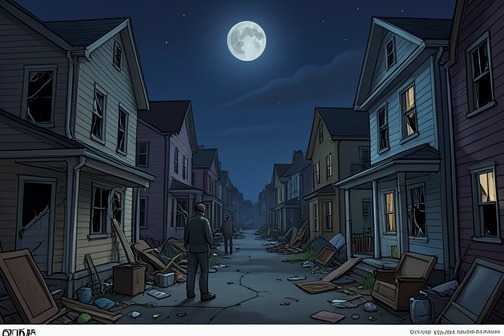
The [Visalia Ransacker crime series](entity:event-recall-event-b1f666a3e59e) was a run of as many as 130 burglaries in [Visalia](entity:location-recall-location-77de998b1b19) between April 1974 and December 1975, distinguished by extensive household disruption and the taking of small, personal objects. Its significance extended beyond the burglaries themselves: after the [East Area Rapist attacks](entity:event-recall-event-east-area-rapist-attack-4b1e821942c1) began in [Sacramento](entity:location-recall-location-0fe1c0701977), similarities in the offenders’ methods led investigators to consider a connection. The comparison became a persistent but contested investigative avenue, not a confirmed identification.
## Scope and Pattern
The burglaries continued for less than two years and repeatedly struck the same four residential neighborhoods. The offender sometimes entered several houses in a single night: four or five on some occasions, and as many as twelve on another. He favored photographs, wedding rings, and other personal items, often leaving behind possessions of greater monetary value. Hand lotion also appeared repeatedly among the details that investigators noticed.
The name Ransacker captured a central feature of the series: the destruction and disturbance inside the homes seemed more important than the value of what was taken. He tore up or concealed family photographs, sometimes breaking their frames or removing the pictures altogether. He poured orange juice onto clothing taken from closets and left rooms thoroughly disordered. The conduct repeatedly turned ordinary household spaces and family belongings into targets, so that the aftermath registered as more than a straightforward theft.
The stolen objects were often small or idiosyncratic. He took trinkets, personalized jewelry, piggy banks, and redeemable Blue Chip stamps, but could remove cash from its hiding place and leave it on a bed. He unplugged appliances and clock radios, and sometimes took only one earring from a pair. These choices, set against the valuables left behind and the damage to the home, made the series distinctive for the combination of selective taking and spiteful disruption.
## Intrusion and Preparation
The burglaries also carried a sexual element, evident in the repeated disturbance and arrangement of women’s undergarments. In one instance, the clothing was piled in a baby’s crib; in another, a man’s underwear was laid in a line along a hallway from the bedroom toward the bathroom. The pattern suggested that the offender searched for household products that could serve as lubricant, with a particular preference for Vaseline Intensive Care hand lotion. These details document the intrusions without making them reducible to theft: the offender manipulated private belongings and left signs of having moved through intimate areas of the home.
He also took precautions that indicate attention to escape and the risk of a resident returning. He generally kept more than one route out of a house available. In some homes, he arranged items such as perfume bottles or spray cans on doorknobs as a makeshift alarm, so that a disturbance could alert him. Such preparations sit in sharp contrast with the disorder he left behind: amid the apparent chaos, he took steps to preserve his own ability to leave.
On September 11, 1975, the series took a more alarming turn. An intruder entered the bedroom of the sixteen-year-old daughter of Claude Snelling, a journalism professor at College of the Sequoias, and attempted to take her from the house. He threatened her with a knife and a gun as he led her toward the back door. The episode marked a change from the burglaries’ repeated invasion of homes to a direct threat against a person. The account establishes this escalation, but does not provide enough detail here to characterize what followed.
## The Proposed Link to Sacramento
In late February 1977, [Richard Shelby](entity:character-recall-character-richard-shelby-7e183aff8811), at the [Sacramento County Sheriff’s Department](entity:organization-recall-organization-sacramento-count-e5a3f89f5544), received a call from Sergeant Vaughan of the [Visalia Police Department](entity:organization-recall-organization-visalia-police-d-282bbdefce4f). Vaughan thought information about the Ransacker might be useful to the [East Area Rapist](entity:expression-recall-expression-east-area-rapist-824613894ac3) investigation. The timing offered an immediate reason to compare the cases: the Ransacker activity had stopped in December 1975, while the East Area Rapist series in Sacramento began about six months later.
Visalia investigators assembled at least a dozen similarities. Both offenders ransacked homes, selected trinkets and personalized jewelry while leaving more valuable property, and used a similar approach to sleeping victims. Both had used household objects as makeshift alarms, entered by prying around a doorjamb to bypass the striker plate, and jumped fences. Investigators also noted similarities in height, the removal of purses from residences and disposal of their contents outside, and the offenders’ movement through multiple houses in a neighborhood. Taken together, the parallels made comparison seem compelling enough to pursue.
[Sacramento County](entity:location-recall-location-a98ebc72cc81) Sheriff’s personnel, however, saw serious obstacles to the theory. They found that six of nine behavioral factors did not match, and pointed to differences in shoe impressions and shoe sizes. The East Area Rapist did not take Blue Chip stamps, while descriptions of the two offenders differed substantially. Accounts of the Ransacker described a notably heavy-set figure with short limbs and fingers and pale skin; the East Area Rapist was described as medium to slight in build, with one victim calling him puny, and appeared tanned in summer. The mismatch in physical descriptions made a single offender seem difficult to reconcile with the evidence then available.
## Investigation and Unresolved Significance
The disagreement moved into public view in July 1978, when the Sacramento Union promoted the possible connection and criticized the Sacramento County Sheriff’s Department for dismissing it. The department responded the following day, condemning the newspaper’s reporting as irresponsible and accusing the Visalia Police Department of seeking publicity out of desperation. The dispute made the proposed link a public controversy as well as an investigative question; neither side’s position, as described here, resolved the offender’s identity.
The investigation did not end with the exchange in the press. Sacramento County Sheriff’s personnel asked local utility companies for names of employees who had transferred from the Visalia area between December 1975 and April 1976. They identified two people, and both were eliminated. Separately, after a composite sketch based on an encounter with the Ransacker was released to local media in mid-December 1976, the offender never struck Visalia again. The account supplies that sequence but does not establish that the sketch caused the series to stop.
The Ransacker case remains important in the book as a comparison whose strongest evidence points in opposing directions. The shared tactics and the six-month interval between the end of the burglaries and the beginning of the East Area Rapist attacks invited a common explanation; the physical and behavioral differences resisted it. The book’s wider account of the East Area Rapist also describes neighborhood surveillance, preliminary prowling, and the use of domestic routines to select targets, giving the comparison a broader context without proving that the same person committed both series. The investigation’s value lies partly in preserving that distinction: a persuasive cluster of similarities can generate a lead, while differences and unconfirmed identity prevent the lead from becoming a conclusion.
Event 3
Murder of Claude Snelling
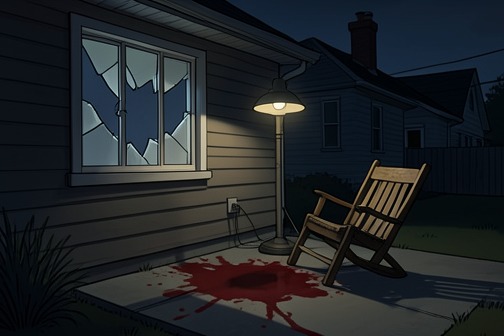
The [Murder of Claude Snelling](entity:event-recall-event-claude-snelling-765d1f61e0a9) marked a lethal turn in a crime series previously characterized by burglaries and prowling. In the early morning of September 11, 1975, an intruder entered the home of Snelling, a journalism professor, and attempted to take his sixteen-year-old daughter. When Snelling came outside in response to the disturbance, the intruder shot him; Snelling died within minutes. Evidence tied the handgun to an earlier Ransacker burglary, placing the killing within a pattern of escalating criminal behavior.
## Background and Escalation
Before the murder, the Ransacker’s burglaries had involved deliberate disruption as well as theft. He damaged or removed family photographs, poured orange juice on clothing, and left homes in disarray. Small objects and personal items were more characteristic of his thefts than valuable goods. His intrusions also included prowling around homes and handling residents’ belongings. The book presents the attack on Snelling’s family as a frightening pivot from those crimes to direct violence.
There had been an earlier warning sign at the same home. In February 1975, Snelling returned to find a person crouched beneath his daughter’s window and chased him, but the person disappeared in the dark. That episode did not prevent the September intrusion. In the intervening months, the assailant had also acquired the weapon later used in the killing: a Miroku .38 handgun stolen in a Ransacker burglary ten days before the attack.
## The Attack
At about two in the morning, Snelling’s daughter woke to find a masked intruder in her room. He tried to take her from the house. Alerted by the noise, Snelling ran onto the patio and confronted him, asking what he was doing and where he was taking his daughter. The intruder fired twice. Snelling staggered back into the house and died within minutes; the assailant fled.
The encounter turned on Snelling’s attempt to intervene. Before he came outside, the intruder had gained access to the home and begun carrying out his plan; the confrontation transformed the attempted abduction into a fatal attack. The account identifies the assailant as a white man of about five feet ten, as described by Snelling’s daughter to police. It does not provide an identified name for the attacker in this episode.
## Evidence and Investigation
Ballistics testing linked the handgun used in the murder to a burglary attributed to the Ransacker ten days earlier. The connection gave investigators a concrete evidentiary bridge between the killing and the burglary series. The earlier report of a prowler beneath the daughter’s window added a second point of continuity: someone had been watching the family and its home months before the fatal intrusion. Together, the stolen weapon and the prior sighting made the attack more than an isolated violent incident in the narrative; they placed it against a record of earlier intrusion and surveillance.
Investigators increased nighttime police presence as evidence pointed toward the Ransacker. Surveillance units were assigned to nocturnal stakeouts, including at a residence on West Kaweah Avenue that had been targeted three times before and lay in an area of heavy Ransacker activity. On December 10, Detective Bill McGowen startled a suspect outside the house. The man vaulted a fence and fled, and a chase followed. After McGowen fired a warning shot, the suspect gestured in surrender. This later encounter belongs to the investigation’s intensified pursuit, rather than to the September attack itself.
## Significance
The killing changed the stakes of the Ransacker investigation. The earlier pattern of prowling and burglary had already exposed households to repeated intrusions; Snelling’s death showed that an encounter during one of those crimes could become lethal. The stolen handgun made that escalation legible to investigators through physical evidence, while the February sighting suggested that the home had been observed well before the attack.
The event also sits within the book’s wider account of crimes organized around advance observation of homes and neighborhoods. In its discussion of the [East Area Rapist](entity:expression-recall-expression-east-area-rapist-824613894ac3), the narrative describes prowling, illegal entries, and the selection of potential victims before an attack. That broader pattern gives the Snelling case added resonance, but the evidence presented for this murder is more specific: a prior prowler at the family home, an attempted abduction, Snelling’s intervention, and a weapon traced to a recent Ransacker burglary. The killing stands as the point at which those strands converged in a single fatal encounter.
Event 4
Bill McGowen and the Visalia Ransacker Shootout
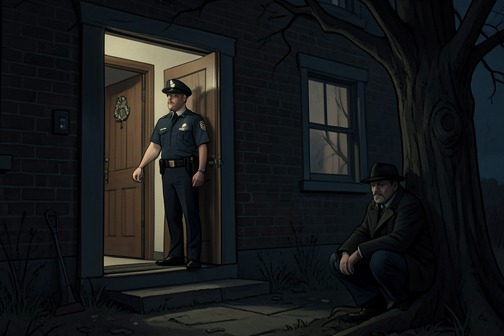
The [Bill McGowen and the Visalia Ransacker Shootout](entity:event-recall-event-1d7051a3f21a) was a failed attempt to capture the [Visalia](entity:location-recall-location-77de998b1b19) Ransacker during an extended nighttime stakeout in Visalia. The encounter brought McGowen face to face with a suspect investigators already had reason to connect to a series of burglaries, and it turned abruptly from apparent surrender to gunfire. The Ransacker escaped, but the confrontation left investigators with a close-range account of his appearance and behavior—and with a vivid illustration of how quickly a seemingly controlled arrest could collapse.
## Background and Surveillance
The evidence pointed strongly toward the Ransacker. The handgun used in the crime was identified as a Miroku .38 stolen in a Ransacker burglary ten days earlier. Investigators also knew that, in February, Claude Snelling had chased a prowler from beneath his daughter’s window before losing him in the dark. With nighttime police presence increased and surveillance units assigned to stakeouts, attention settled on a house on West Kaweah Avenue that had been targeted three times before, in an area of heavy Ransacker activity.
On December 10, Detective Bill McGowen startled the suspect outside that house. The Ransacker vaulted a fence, and McGowen pursued him. When McGowen fired a warning shot, the man appeared to surrender, raising his hands and pleading not to be hurt. The apparent compliance did not last: he drew a gun from his coat and fired at McGowen. The shot hit the officer’s flashlight. That earlier encounter established the central danger of the later confrontation: a gesture of surrender could conceal an immediate attempt to shoot.
## The Stakeout and Confrontation
On January 9, 1976, McGowen and Detective John Vaughan drove three hours south to [Parker Center](entity:location-recall-location-20a110fd3ca8), the [Los Angeles](entity:location-recall-location-a4be76fb5f5a) Police Department’s headquarters, where McGowen underwent hypnosis in the hope that he might recall further details. Under the hypnotherapist’s guidance, he returned in memory to the stakeout. He had chosen a front-facing garage at 1505 West Kaweah Avenue because he thought the Ransacker might return to the Hanley house, where tennis-shoe impressions had been found beneath Donna’s bedroom window.
McGowen began watching at seven in the evening. The garage door remained open, the lights were off, and he sat in the dark, looking through a side window toward the neighboring house while also watching for anyone passing the garage. After about an hour and a half, a crouching figure crept past the window and appeared in the doorway. McGowen initially considered whether the person might be the homeowner or another officer, but in the dark he made out black clothing and a watch cap.
The figure moved along the side of the garage toward its rear, where he fiddled with a gate. McGowen went outside and illuminated him with his flashlight. The confrontation became a chase into the backyard. The suspect ran erratically, crossed a short slate fence into an adjoining yard, and kept pleading for McGowen not to hurt him. McGowen followed with the flashlight trained on him, ordered him to stop, and fired a warning shot into the ground. The Ransacker froze, turned, and raised his right hand as if giving himself up.
## The Reversal and Escape
McGowen started over the fence to arrest him. The suspect had raised only his right hand: with his left, he pulled a blue-steel revolver from his coat and aimed at McGowen’s chest. McGowen’s flashlight was extended in front of him, a position attributed to police-training muscle memory. The bullet struck its lens and knocked him backward. The light, held out between officer and gunman, had become the barrier that saved him from the shot.
Vaughan, alerted by the gunfire, ran into the yard and found McGowen motionless on the ground. Believing he had been shot, Vaughan rushed toward the direction the Ransacker seemed to have fled while radioing for help. He then heard movement behind him and turned to find McGowen alive, with powder burns on his face and a red eye but otherwise unharmed. McGowen pointed out that the suspect was still getting away. The encounter’s apparent ending—a surrender and an approaching arrest—had reversed in seconds, leaving the officers to resume the pursuit.
Seventy officers from three agencies sealed off a six-square-block area, but the search found no trace of the Ransacker. He disappeared into the night, leaving behind a sock containing collectible coins and jewelry, along with two books of Blue Chip stamps. The objects were remnants of the burglary activity that had drawn police to the area, but they did not lead to his capture. The stakeout therefore yielded a direct encounter rather than an arrest: McGowen survived the shot, while the suspect again escaped.
## Significance and Retelling
McGowen’s account of the man’s appearance and unusual manner matched reports from earlier close encounters with the prowler in Visalia. His description offered investigators a remembered face and a sequence of actions to compare with those reports, even as the Ransacker remained at large. The shootout also exposed the vulnerability built into the attempted arrest: the officers had found the suspect in the very area they were watching, but the moment of apparent surrender gave him an opening to fire and flee.
The book presents the confrontation through McGowen’s later return to the night under hypnosis, with Vaughan taking notes as he recounted it. That frame makes the scene both an attempted capture and an act of reconstruction: details of the dark garage, the figure at the gate, and the revolver emerge through a memory being revisited for investigative value. The decisive outcome remains stark. McGowen escaped serious injury because the bullet struck his flashlight, but a multi-agency search could not prevent the Ransacker from vanishing.
Event 5
Kathleen Lombardo murder
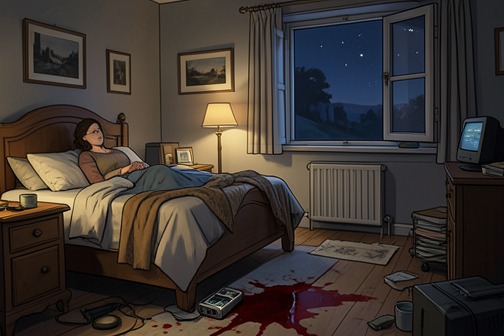
Kathleen Lombardo’s murder was an unsolved killing in [Oak Park, Illinois](entity:location-recall-location-1cc257bb626f), whose unanswered questions became a formative part of [Michelle McNamara](entity:character-recall-character-michelle-mcnamara-add26011e3fd)’s life and, decades later, the subject of a disputed eyewitness recollection. The crime was never solved. For McNamara, the case began not with a theory or an investigation, but with the discovery of a broken personal object near the place where Kathleen had been attacked—and with the enduring absence of an identified killer.
## The Night of the Murder
On the evening of August 1, 1984, Kathleen Lombardo, twenty-four, was jogging along Pleasant Street with her Walkman. It was a hot night, and neighbors sitting on their porches saw her pass at about 9:45 p.m. She was killed minutes later. Her attacker dragged her into the mouth of the alley between Euclid and Wesley. The book gives no resolution to the central question of who attacked her or why.
At the time, McNamara was fourteen and in the attic bedroom of her family’s house, about three-tenths of a mile away. The room had been renovated into a retreat for the children as they passed through their teenage years: its slanted ceilings, deep-orange shag carpet, built-in bookcase, and large wooden desk made it a private place for McNamara to write and dream. She signed her journal entries “[Michelle](entity:character-recall-character-michelle-246b9eb4f39d), the Writer,” and was only weeks away from starting high school. Crime was not yet a particular interest; her childhood reading had included the occasional Nancy Drew book.
News of the killing reached the household through a brief exchange upstairs and her mother’s quick movement to a window. The family knew the Lombardos from St. Edmund’s. Two days after the murder, McNamara went without telling anyone to the place near her home where Kathleen had been attacked. Among the debris she found pieces of [Kathleen Lombardo’s Walkman](entity:object-recall-object-8b2b98157457). The object made the event tangible to her, but it did not supply an identity. What stayed with her was the unanswered question of who the killer was. She later described the gap where a face should have been as the force that gripped her imagination.
## Discovery and Conflicting Recollections
The murder’s discovery became contested decades later, when Dan Olis contacted McNamara. He and his cousin Terry Keating had both been haunted by the case. They believed the commonly accepted account of what happened that night was wrong and said that they knew the killer’s identity because they had encountered him. Their account did not establish that identification as fact, but it introduced a distinct set of remembered circumstances.
Terry recalled walking with four other boys into the alcove behind 143 South Wesley Avenue. Near the garbage cans, he thought he saw a rolled-up rug. In the dark, he mistook Kathleen’s pale legs for a light-colored carpet. Danny, who was closest, recognized that they had found a body and alerted the others. The boys’ recollections were of a sudden discovery in the alley, followed by alarm and confusion. One boy moved away from the scene; another ran toward a nearby back door to call for help.
The boys remembered that Kathleen was still showing signs of life when they found her, and that she died in the minutes before a large number of police arrived. They also recalled detectives telling them that they must have just walked up on the man responsible. These are the boys’ later memories, not an independently established account in the evidence presented here. Their recollection nevertheless marks a sharp divergence from the accepted narrative: in their telling, a man emerged from the alley almost simultaneously with their discovery.
They described him as tall and apparently of Indian descent, wearing a linen shirt open at the chest, shorts, and sandals. Terry remembered that the man asked what was happening but did not look toward Kathleen’s body. When Mike told him that someone was hurt and the police needed to be called, the man shook his head. Years afterward, Terry revisited the image of the stranger and the way he seemed not to look at the scene. When Terry compared that memory with Tom’s description of a tall man from India whom Tom had encountered in the neighborhood, Terry recognized a possible connection and insisted that the man had been present when they found Kathleen.
## The Case and Its Unanswered Leads
The recollections did not close the case. The one lead McNamara knew from witnesses’ reports was a man described as African American, wearing a yellow tank top and a headband, who had watched Kathleen intently as she jogged. McNamara also remembered a rumor that witnesses had seen the killer leave the El train and follow Kathleen. When she later contacted the Oak Park police to check details, they debunked that rumor. The suggestion that the killer had arrived from elsewhere had circulated, but the police did not support it.
The witnesses’ reported sighting and the boys’ later description were not the same account: one concerned a man watching Kathleen during her jog; the other concerned a man who, the boys said, emerged from the alley near the time they found her. The available evidence does not establish that these descriptions referred to the same person, nor does it verify the boys’ identification. McNamara’s contacts with the police left her with the impression that investigators regarded the case as a dead end. The murder remained unsolved.
The case had also prompted questions about possible connections to other killings. In August 1981, newspaper coverage asked whether the Harrington case was related to other recent double homicides in [Southern California](entity:location-recall-location-820a2bba2911). [Santa Barbara](entity:location-recall-location-433b36b956ee) investigators had raised the possibility of a connection among two double homicides and a knife attack in which a couple escaped, while officials in [Ventura](entity:location-recall-location-b509f06b95b7) and [Orange County](entity:location-recall-location-47ece46856d3) were skeptical. These broader suspicions formed part of the period’s uncertainty about unsolved attacks, but they did not resolve Kathleen Lombardo’s murder or establish a link to it.
## A Murder That Shaped a Later Search
For McNamara, the unresolved case did not recede into the past. She wrote about it from time to time and mentioned it in interviews; even as an adult, she called the Oak Park police to fact-check details. In her account, the case became the beginning of an enduring attentiveness to unsolved crimes: she collected troubling details, associated places and people with other disappearances or killings, and eventually created True Crime Diary, a website devoted to cold-case homicides.
The later message from Dan Olis reopened a case McNamara had thought had reached a dead end. It also shifted the story from a solitary question—the unknown identity of the attacker—to a set of personal memories held by people who had been boys at the scene. Dan and Terry were not contacting her with a verified solution; they were carrying their own account of the discovery and their conviction that the accepted version was wrong. The difference between remembered certainty and proven identity remained essential.
The murder’s significance in the book lies in that lasting tension. Kathleen’s death was known, the location of the attack and the object left behind were recalled, and witnesses had reported a suspicious figure. Yet the person responsible remained unidentified. The broken Walkman gave McNamara a concrete trace of the crime; the later recollections offered another possible trace, but not a resolution. The face missing from the case continued to draw her back to it.
Event 6
Keith and Patty Harrington murders

The [Keith and Patty Harrington murders](entity:event-recall-event-6a5bb61c9277) were a double homicide in [Dana Point](entity:location-recall-location-0d4433cbc522) in 1980 whose unresolved questions shaped Roger Harrington’s life and later became central to an emerging connection between separate [Southern California](entity:location-recall-location-820a2bba2911) cases. The scene offered investigators clues to an intruder’s presence, but no immediate answer about who had entered the home or why. Years later, forensic comparisons linked the case to the murder of Manuela Witthuhn; the eventual breakthrough came too late for Roger to learn what it revealed.
## Discovery in Dana Point
On August 20, 1980, a note had been left beneath the doorbell at 33381 Cockleshell Drive. Signed by Merideth and Jay, friends of Keith and Patty, it said they had called by the previous evening and asked to be contacted if plans had changed. The next day, Roger arrived expecting dinner with his son and daughter-in-law. He found their cars in the driveway but the front door locked, unusual for a couple who rarely locked up when home. He used a key kept above the patio trellis and brought the mail inside.
The house was quiet. In the kitchen, two cans of food sat in a grocery bag in the sink, with bread left out nearby. Roger noticed an unusual rise beneath the comforter on the made bed in the guest room, where Keith and Patty slept. When he lifted the cover, he found them lying on their stomachs, their arms at odd angles. The stillness of the carefully made bed had concealed the deaths from view.
Keith was Roger’s youngest son, a third-year medical student at the [University of California, Irvine](entity:location-recall-location-729fbfb6202b). Patty was a registered nurse, and they had married within a year of meeting at UCI Medical Center. Roger had wondered whether Keith was moving too quickly after an earlier relationship ended, but he saw the newlyweds as devoted to one another. He had recently helped them install a sprinkler system and clear brush, and the previous weekend they had hosted a birthday barbecue for Patty’s father. Their ordinary family life made the abrupt discovery all the more difficult to comprehend.
## The scene and its clues
Investigators found no clear evidence of a struggle or forced entry. One sliding door may have been left unlocked. The timing narrowed the likely window: a grocery receipt showed that Patty had shopped at 9:48 p.m. on Tuesday, and her sister Sue spoke with her at about 11:00. Keith answered sleepily and handed the phone to Patty, who said they were in bed and that she expected an early call from the nurse registry. Patty did not appear at work the next morning.
A metal fragment consistent with brass was found in Patty’s head wound. Investigators considered whether it had come from one of the new brass sprinkler heads in the yard, suggesting that the intruder might have picked one up and used it to enter. That possibility gave the recent yard work a chilling afterlife: a household improvement may have supplied an object used in the crime. Yet the house was within Niguel Shores, a gated community, and no one reported hearing anything.
A short-burned wooden match was found on the kitchen floor. The Harringtons were not smokers, and investigators believed the match belonged to the killer. Later comparison with the Witthuhn scene added another small, potentially significant detail: four wooden matches had been collected from a flowerbed beside that house. The matches did not by themselves establish a connection, but they became part of a pattern investigators examined across cases.
## A possible connection to the Witthuhn murder
About six months after the Harrington murders, Manuela Witthuhn was killed. Criminalist Jim White of the [Orange County Sheriff’s Department](entity:organization-recall-organization-orange-county-sh-f63020dcd882), reviewing evidence from that case, felt that it might be connected to the Harrington killings. Both involved middle-class victims attacked in bed with objects taken from their homes, and in each case the killer took the weapon away. Both female victims were raped. Keith and Patty had ligature marks, with pieces of macramé cord found in and around their bed; Manuela also had ligature marks, but the binding material was missing from her scene. To White, that difference could suggest that the perpetrator had learned from an earlier crime.
There were also medical connections among the people involved. Keith was a medical student, Patty sometimes worked shifts at Mercy Hospital in Santa Ana, and Manuela’s husband, David Witthuhn, had been a patient at Santa Ana–Tustin Community Hospital. Such overlaps were intriguing but not proof. The cases belonged to different investigating agencies, and investigators debated whether the apparent similarities outweighed the differences. The Harrington crime had involved two victims, a choice considered unusually risky; the Witthuhn crime involved one. The possibility that the same offender had encountered Manuela alone unexpectedly remained speculation, not an established explanation.
The possible link was never ruled out, but it was set aside as the cases went cold. In August 1981, newspapers asked whether a “Night Stalker” was killing couples in their beds. The [Santa Barbara](entity:location-recall-location-433b36b956ee) Sheriff’s Department had proposed a connection among cases in its area, while officials in [Ventura](entity:location-recall-location-b509f06b95b7) and [Orange County](entity:location-recall-location-47ece46856d3) were skeptical. Differences among jurisdictions, and the collapse of a highly publicized case against a Ventura double-homicide suspect, helped keep the wider theory contested.
## Roger’s search and the delayed forensic break
Roger continued trying to make sense of his son and daughter-in-law’s deaths. He hired a private investigator, offered a large reward, and arranged for friends and co-workers to be interviewed again. He even consulted a clairvoyant in desperation, but nothing produced a usable lead. He repeatedly revisited his last moments with Keith and Patty, while the fragments of the case remained unresolved.
Roger formed a particular theory about the bedspread. He believed the killer had covered the couple’s heads because he knew them and regretted what he had done, and he suspected the motive lay in Patty’s past rather than Keith’s. That interpretation mattered to him because it offered a possible relationship between the victims and the unknown killer. Later evidence would show that the cover had a different practical explanation: the killer did not want their blood on him. Roger never learned that his theory was wrong.
The eventual progress came not from a tip but from preserved evidence. Three glass tubes, stored in manila envelopes, remained untouched for fifteen years. As the Orange County Sheriff’s Department began prioritizing unsolved homicides involving sexual assaults for DNA testing, Jim White urged criminalist [Mary Hong](entity:character-recall-character-mary-hong-da6a8b8bca14) to focus on the Harrington and Witthuhn cases. White had retained his belief that the same man was responsible. Hong, who had not worked at the laboratory when the murders occurred, compared the profiles and confirmed that the Harrington and Witthuhn samples matched. Patty’s baby blanket, found between her and Keith, was another detail that stayed with the criminalists who had worked the case.
In late 1996, Hong was reviewing a spreadsheet of unsolved cases with successfully developed DNA profiles. The Harrington and Witthuhn profiles were already known to match. As she checked the entries, she noticed a further profile that matched them. The evidence had begun to connect the case beyond the two murders, although the information available here does not identify that additional profile.
The tubes were opened and tested in October and November 1996. By December, investigators were ready to contact the families with the results. Roger had died on March 8, 1995, a year and a half earlier. His long pursuit ended without the answer he had sought, while preserved evidence carried the investigation forward after his death. The case thus holds together two sharply different timelines: a father’s years of unresolved searching, and forensic evidence that waited in storage before it could turn suspicion into a testable connection.
Event 7
Manuela Witthuhn murder

The [Manuela Witthuhn murder](entity:event-recall-event-21c8d4961cfb), discovered in [Irvine](entity:location-recall-location-2f62f484d360) on February 6, 1981, became an early point in a chain of investigations that eventually connected separate killings in [Orange County](entity:location-recall-location-47ece46856d3). The circumstances of the discovery and evidence at the home raised questions about the killer’s identity and helped Jim White recognize similarities with another case.
## Discovery and Setting
Manuela Witthuhn and her husband, David, lived at 35 Columbus, in a single-story home in [Northwood](entity:location-recall-location-19fbd527ac42), then a new Irvine development spreading across the former Irvine ranch. In early February, David was admitted to Santa Ana–Tustin Community Hospital with a severe gastrointestinal illness. Manuela visited him in the evenings and spoke with him by phone each day. On Friday, February 6, David could not reach her at home, so he called her mother, Ruth, who went to the house and entered with her key. She then summoned Ron Sharpe, a close family friend. After police had processed the scene and the house was released to David’s brother, Drew, the closed front door no longer concealed the bedroom from view: the murder had become an immediate, intimate reality for the family.
## Evidence at the Scene and Competing Interpretations
Manuela was found in the bedroom, partly wrapped in a sleeping bag. Marks around her wrists and ankles indicated that bindings had been removed. A large screwdriver lay on the patio near the rear sliding door, whose lock had been pried open. Investigators also found that a nineteen-inch television had been carried to a corner of the backyard beside a wooden fence that appeared disturbed, while small-circle shoe impressions marked the front and back yards and the top of the gas meter. Together, these details suggested both deliberate entry and activity around the house before the killing.
The scene offered clues that seemed to point in different directions. Jewelry was missing, the television had been moved, and the answering-machine tape was gone; David speculated that the killer might have removed it because his voice had been recorded. Yet the screwdriver had been left behind, an odd choice for a burglar. Some Irvine investigators wondered whether Manuela had known the killer and whether the apparent break-in had been staged to disguise a personal encounter. Others doubted that she knew him. The missing lamp beside the bed sharpened the physical reconstruction: its square stand and chrome, cannonball-shaped light were gone, and police believed it was the heavy object used to kill her.
The investigation also uncovered evidence that the house had been watched before the murder. Interviewed the day after Manuela’s body was found, David recalled unexplained footprints from October or November 1980. He remembered a tennis-shoe sole with small circles and sketched it for police, unaware that investigators had a plaster cast of an impression made by the killer while stalking the house on the night of the murder. The sketch matched the cast. The comparison turned an earlier, puzzling trace into evidence that someone had approached the home months before the killing.
## Jim White’s Wider View
Jim White, a criminalist with the [Orange County Sheriff’s Department](entity:organization-recall-organization-orange-county-sh-f63020dcd882), processed the scene alongside Investigator Veach. He collected flaky mud beside the bed, swabbed a diluted bloodstain in the bathroom, and documented the evidence as Manuela’s body was examined. The work tied careful preservation of individual traces to a larger investigative question: whether an Irvine killing that seemed rare to local police belonged to a pattern visible across county lines.
In the laboratory, White compared paint from the screwdriver left at the house with common commercial products. The closest match was Oxford Brown, a store-mixed paint made by Behr. His perspective extended beyond Irvine because the county’s police departments relied on the Sheriff’s Department crime lab; White had processed scenes from Santa Ana to San Clemente. Six months after the murder, reviewing the evidence led him to suspect a connection to the killings of Keith and Patty Harrington. Both cases involved middle-class couples attacked in bed, victims bludgeoned with objects taken from their homes, and murder weapons removed by the killer. The women had also been raped, and both cases showed evidence of ligatures. In Manuela’s case, the bindings were gone, unlike the cord pieces found in and around the Harringtons’ bed—a difference White understood as possible evidence that the offender had adapted his methods.
The cases also shared a circumstantial medical connection: Keith Harrington was a medical student at UC-Irvine, Patty worked as a nurse, and David had been hospitalized in Santa Ana when Manuela was killed. These parallels did not establish a link on their own, but White retained his suspicion. Fifteen years later, when criminalist [Mary Hong](entity:character-recall-character-mary-hong-da6a8b8bca14) was assigned to cold cases, he urged her to prioritize the Harrington and Witthuhn investigations. Their DNA profiles were among those successfully developed from unsolved cases, and Hong confirmed that the two matched. As 1996 drew to a close, a spreadsheet comparison led her to identify an additional profile with the same sequence. The murder’s significance thus widened beyond the initial Irvine investigation: preserved evidence gave investigators a way to test a connection that White had carried forward for years.
## Cold-Case Context
The later review formed part of a countywide effort to revisit unsolved homicides: from 1972 through 1994, Orange County investigated 2,479 homicides and cleared 1,591, leaving nearly 900 unresolved. Investigators prioritized cases involving sexual assault because repeat offenders were more likely to leave biological material suitable for DNA typing. By late 1996, the comparison Hong was undertaking drew on roughly twenty unsolved cases with usable profiles, each represented by five PCR markers. That framework made the Witthuhn evidence valuable beyond its original scene: preserved traces could be assessed alongside evidence from other cases, rather than remaining isolated clues in an Irvine file.
Event 8
Janelle Cruz murder
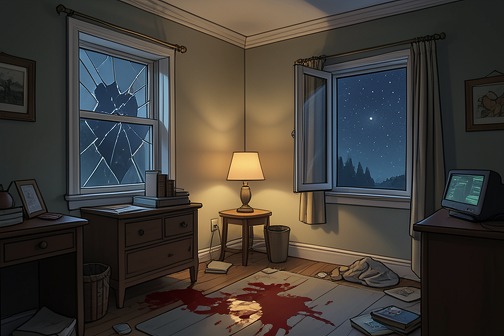
The [Janelle Cruz murder](entity:event-recall-event-e2e5bf82418b) was both a devastating loss and a major turn in the investigation: a DNA profile developed from the crime eventually matched profiles from two earlier, apparently unrelated murders. Cruz was eighteen when she was killed in her family’s home in [Irvine, California](entity:location-recall-location-140ee4637875). The discovery of the match forced investigators to reconsider a connection that geography alone had not made obvious, while the account of the days around her death restores the young woman’s life to a case often reduced to evidence and comparison.
## Life and final evening
Cruz’s childhood had been unsettled. Her biological father was no longer present, and she experienced a succession of stepfathers and other adult stand-ins, several of whom abused her. In [Michelle McNamara](entity:character-recall-character-michelle-mcnamara-add26011e3fd)’s reconstruction from her notes, Cruz understood her mother as more invested in parties and drugs than in raising her. The account places her later life against that difficult background without treating it as an explanation for the crime.
Cruz earned her high school diploma through Job Corps, returned to [Irvine](entity:location-recall-location-2f62f484d360), and enrolled in classes at a local college. She worked as a hostess at Bullwinkle’s Restaurant, a family restaurant, and wrote poems. Her social and romantic life was unsettled, and the account describes her as searching for affection that did not arrive. These details matter because they give the case a life beyond the circumstances of her death: Cruz was a young adult making plans and trying to find connection, not simply a name on a laboratory spreadsheet.
On May 3, 1986, Cruz’s mother and stepfather left for a vacation in Cancún. The following evening, a male coworker from Bullwinkle’s spent time with her after she told him she felt lonely with her parents away. They sat on her bedroom floor, and she read him some of her poems. She also played a recording of a counseling session in which she spoke about her family. A noise outside startled them. Cruz looked out and closed the shutters, then dismissed the sound as probably caused by cats. Later, when another noise came from the direction of the garage, she attributed it to the washing machine. Her coworker left because it was a school night; they exchanged a friendly hug. This is the last evening described in the account before her body was discovered the next day.
## Discovery at 13 Encina
On May 5, real-estate agent Linda Sheen visited 13 Encina, a three-bedroom, single-story house in [Northwood](entity:location-recall-location-19fbd527ac42), to show it to a prospective buyer. Although the home had been on the market for months, its owner and family still lived there. It stood near a park, toward the end of a cul-de-sac, beside the hedge-lined edge of the developed neighborhood. The house’s ordinary appearance was part of the account’s unsettling contrast: it resembled many others in a community whose development had replaced the orange groves that once occupied the area.
After receiving no answer at the door, Sheen used the property’s lockbox and entered. She noticed everyday signs of an inhabited home, including a light on in the dining room, milk on the breakfast table, and a newspaper open to the Employment section. A bedroom door was locked. In another room at the end of the hall, she saw a young woman lying motionless in bed, with a blanket over her head. Unsure whether the woman was unconscious or dead and afraid that someone else might be in the house, Sheen left and reported what she had found to her supervisor. She tried calling the residence twice, without an answer.
Sheen and her supervisor then informed colleagues at the real-estate company handling the sale. They went to the house, confirmed that the young woman was dead, and called the police. [Irvine Police Department](entity:organization-recall-organization-irvine-police-de-8014b3339145) officer Barry Aninag was the first to respond. Cruz was found on the bed, and the scene showed that she had suffered a fatal assault. Investigators also documented evidence relevant to the inquiry, including semen, blue fibers, and tennis-shoe impressions outside the house. No ligatures or weapons were found at the scene. The account records these details as investigative observations rather than as a complete explanation of who entered the home or when the killing occurred.
## A connection hidden in the profiles
For years, Cruz’s case was not proposed as connected to the murders of Patty Harrington and Manuela Witthuhn. Cruz was ten years younger than those women, and more than five years separated her death from the earlier crimes. Yet she lived in Northwood, the same subdivision as Witthuhn, and the two homes were only about two miles apart. The closeness of the locations had not been enough to overcome the apparent differences in the victims and the timing.
Near the end of 1996, a laboratory analyst, [Mary Hong](entity:character-recall-character-mary-hong-da6a8b8bca14), was reviewing a spreadsheet of roughly twenty unsolved cases for which DNA profiles had been developed. The chart compared victims and case numbers against profiles built from five PCR markers then used for typing. Hong already knew that the Harrington and Witthuhn profiles matched. While scanning the spreadsheet, she noticed that Cruz’s profile appeared to match as well. She checked the sequence repeatedly against the other two profiles and concluded that the match was real. What had been treated as a separate case now belonged to a three-case pattern supported by forensic evidence.
The spreadsheet moment was quiet, but its consequence was substantial. The comparison redirected attention from the differences that had kept the cases apart—the victims’ ages and the years between the crimes—to evidence that joined them. Cruz’s case became part of an investigation linking murders across time and place, and the discovery gave investigators a new way to understand what had happened in her home. It did not, on the evidence recounted here, identify the killer by name; its importance lay in establishing the connection and changing the questions the cases could ask together.
Event 9
Discovery of DNA fingerprinting by Alec Jeffreys

The discovery of [DNA fingerprinting](entity:concept-recall-concept-dna-fingerprinting-51dff9a5e820) by Alec Jeffreys became a turning point in forensic science: it made biological traces a means of identifying people and, over time, helped investigators connect old crimes, find perpetrators, and clear the wrongly convicted. The book places that transformation against the long distance between a boy dissecting a dead cat in 1962 and the expanding laboratory and database systems that would make DNA evidence consequential in criminal investigations.
## From childhood curiosity to discovery
On a Sunday morning in 1962, a twelve-year-old paperboy in Luton, thirty miles north of London, found a dead cat by the road and brought it home in his bag. Before lunch, he set it on the dining-room table and began to dissect it with a homemade kit, including a scalpel fashioned from a flattened pin. The episode serves as an early glimpse of a budding scientist: the boy was Alec Jeffreys, who discovered DNA fingerprinting in September 1984.
The book treats that discovery as a decisive change in forensic science and criminal justice, but also emphasizes how far practical testing still had to go. DNA identification did not instantly make every trace usable or every investigation quick. Its force depended on laboratory methods, suitable samples, and systems capable of comparing profiles.
## The limits of early testing
The first generation of DNA technology was slow and demanding by later standards. When the [Orange County Crime Lab](entity:organization-recall-organization-orange-county-cr-d139e8c3654a) began incorporating DNA testing in the early [1990s](entity:time-recall-time-1990s-e168405d040a), a criminalist could spend as long as four weeks working on one case. A sample needed to be substantial—a bloodstain about the size of a quarter, for example—and in good condition. The contrast with later testing, in which a small scattering of skin cells could yield a genetic fingerprint within hours, shows how changes in technique enlarged the evidence investigators could use.
In the mid-1990s, laboratories relied on RFLP analysis, a laborious method for DNA profiling. The [Orange County](entity:location-recall-location-47ece46856d3) lab nevertheless had a reputation for being ahead of the pack. In December 1995, a newspaper reported that local prosecutors, detectives, and criminalists were for the first time submitting DNA from old unsolved cases to a new [California Department of Justice](entity:organization-recall-organization-california-depar-fa9c270bbe8b) laboratory in Berkeley. The lab held four thousand profiles of known violent criminals, many of them sex offenders; the state database was still young, and the old evidence being submitted helped it grow.
## From profiles to database matches
The [DNA Identification Act of 1994](entity:rule-recall-rule-dna-identification-act-o-0510f12e9f02) established the FBI’s authority to maintain a national DNA database, giving rise to [CODIS](entity:concept-recall-concept-codis-3bb72ef656b6), the Combined DNA Index System. Its operation rests on a chain of comparisons: local crime laboratories enter unknown crime-scene samples and certain collected suspect samples into state databases; states also collect DNA from jails and courthouses, verify and compare samples within their own systems, and then pass profiles up to CODIS. In [California](entity:location-recall-location-california-fd5bbc3f2eb4), samples entered into the state system are automatically uploaded every Tuesday.
This network turned DNA fingerprinting from a laboratory technique into part of a larger investigative infrastructure. The Orange County laboratory’s first cold hit, in June 1996, matched crime-scene DNA to a known felon in the database and identified inmate Gerald Parker as the serial killer of five women. DNA evidence also showed that a man who had spent sixteen years in prison for an attack on Parker’s pregnant victim was not responsible; he was immediately exonerated. Parker was a month away from release when the match was made. The breakthrough therefore had two distinct consequences: it identified a serial killer and helped undo a grave error in the justice system.
## New possibilities and legal limits
The book also follows the logic of genetic comparison beyond official law-enforcement databases. At the time of its account, [23andMe](entity:organization-recall-organization-23andme-30c84968b1f1) held 1.5 million profiles and [Ancestry.com](entity:organization-recall-organization-ancestry-com-76753454bee7) held 2.5 million. A crime-scene profile might point investigators toward a perpetrator through a relative in such a database, but neither company would work with law enforcement, citing privacy concerns and its terms of service. The possibility of using those databases thus exposed a tension built into the technology’s expanding reach: genetic data could offer new investigative leads, while access remained constrained by private policies and legal questions.
From Jeffreys’s discovery to the first cold hit in Orange County, the development of DNA fingerprinting was not a single leap from science to certainty. It depended on improved testing, laboratories willing to process old evidence, and databases that could make comparisons across cases and people. The result was a new way to revisit the past: evidence left in storage could become identifiable years later, while the same capacity to search ever larger collections raised questions about who should be allowed to search them.
Event 10
Discovery of the DNA Link Among the Harrington, Witthuhn, and Cruz Cases
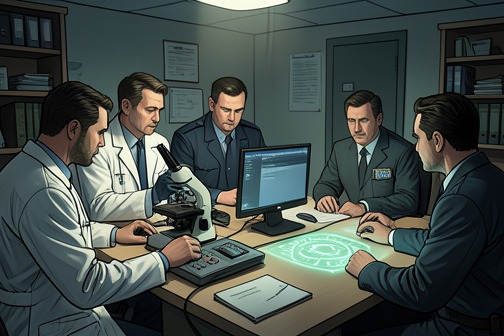
The discovery of a DNA match among the Harrington, Witthuhn, and Cruz murder cases transformed a long-standing suspicion into a forensic link. In late 1996, criminalist [Mary Hong](entity:character-recall-character-mary-hong-da6a8b8bca14) found that the profiles from Keith and Patty Harrington and Manuela Witthuhn matched a profile from the murder of eighteen-year-old [Janelle Cruz](entity:character-recall-character-janelle-cruz-ac71adf90f6f). Cruz’s case had not previously been proposed as connected to the others, despite her home being only two miles from Witthuhn’s in the same [Irvine](entity:location-recall-location-2f62f484d360) subdivision. The result expanded the investigation from two cases to three—and arrived too late for Roger Harrington, who had spent years searching for his son and daughter-in-law’s killer.
## From Suspicion to Cold-Case Review
The possible connection between the Harrington and Witthuhn murders had never been ruled out, but the cases went cold without a decisive lead. Investigators in [Santa Barbara](entity:location-recall-location-433b36b956ee) had raised the possibility of a broader series, while officials in [Ventura](entity:location-recall-location-b509f06b95b7) and [Orange County](entity:location-recall-location-47ece46856d3) were skeptical. The proposal remained unresolved rather than disproved. For Keith’s father, Roger, that uncertainty became a long-running pursuit: he hired a private investigator, offered a substantial reward, and urged friends and co-workers to speak again with investigators. He also consulted a clairvoyant in desperation. None of these efforts yielded the information needed to solve the cases, and the details of the murders continued to occupy his thoughts.
A renewed review of Orange County cold cases created another route into the problem. Between 1972 and 1994, the county had investigated 2,479 homicides and cleared 1,591, leaving nearly 900 unsolved. The lab’s strategy prioritized homicides involving sexual assault, in part because repeat offenders could leave biological evidence suitable for DNA typing. Mary Hong was assigned to concentrate on cold cases. Jim White, who had worked at the lab during the earlier investigations, urged her to focus on the Harrington and Witthuhn cases. He told her, “I always thought it was the same guy.” Hong had not worked at the lab when the murders occurred, and the names meant nothing to her at first; White’s recollection gave the cases priority for review.
## Testing the Cases
In late 1996, Hong retrieved the Harrington and Witthuhn rape kits from the Property Room. The [Orange County Crime Lab](entity:organization-recall-organization-orange-county-cr-d139e8c3654a) had recently adopted PCR-STR testing, a method better suited than the older RFLP process to the tiny or degraded samples often encountered in cold cases. The distinction mattered because evidence preserved for years could be difficult to analyze using a technique that required a larger, intact sample. The new method gave investigators a practical way to revisit biological evidence that had long been stored without producing a useful lead.
The discovery emerged through comparison, not a new tip. As 1996 drew to a close, Hong reviewed a spreadsheet compiling about twenty unsolved cases for which DNA profiles had been developed. The table cross-referenced case numbers and victims’ names with results at five PCR loci, or genetic markers, then in use. Hong already knew that the Harrington and Witthuhn profiles matched. While scanning the other entries, she noticed a further profile that appeared identical. She read the sequence several times and compared it again with the two known profiles before concluding that the match was real. White responded, “Same guy.”
## The Third Case and the Wider Pattern
The matching profile belonged to Janelle Cruz, whose body had been found in her family’s Irvine home on May 5, 1986. No one had previously suggested that Cruz’s murder might be related to the Harrington or Witthuhn cases. Yet Cruz lived in [Northwood](entity:location-recall-location-19fbd527ac42), the same subdivision as Witthuhn, and the two homes were just two miles apart. The difference in age also made the cases seem distinct: Cruz was eighteen, roughly a decade younger than Patty Harrington and Manuela Witthuhn. The geographic proximity and the DNA results therefore supplied a connection that investigators had not reached by comparing the cases on their apparent characteristics alone.
The result also changed the nature of the evidence. Earlier suspicions had rested on investigators’ assessment of similarities among separate crimes; Hong’s comparison established that the biological profiles matched across all three. Its importance lay not only in confirming a link between the Harrington and Witthuhn cases, but in bringing Cruz’s murder into the same investigative frame. The spreadsheet functioned as a tool for seeing relationships that had been obscured when each case was considered in isolation.
## The News Roger Never Received
For Roger Harrington, the breakthrough came after his death. An Orange Coast magazine profile of his search ended with his stated determination: “That’s why I keep living: I don’t want to go till I find out.” The DNA tubes that advanced the investigation were opened and tested in October and November 1996. By December, investigators were ready to call the families, but Roger had died on March 8, 1995, a year and a half earlier. The files had held the possibility of an answer while his search continued without it; when the laboratory finally produced a link, he could not be told.
The result would also have corrected one of Roger’s interpretations of the crime scene. He believed that the killer had covered Keith and Patty’s heads with a bedspread out of remorse. The account makes clear that this was not the reason: after a previous killing had become messy, the killer did not want their blood on him. Roger never learned this explanation, nor the further information about the killer’s history that the investigators could have shared. The DNA match thus marked a major investigative advance while underscoring the painful distance between a family’s search for meaning and the evidence that eventually emerges.
Event 11
Passage of the DNA Identification Act of 1994

The [Passage of the DNA Identification Act of 1994](entity:event-recall-event-1994-dna-e34430d57bfa) gave the FBI authority to maintain a national DNA database and helped establish [CODIS](entity:concept-recall-concept-codis-3bb72ef656b6), a system built to move forensic profiles from local laboratories through state databases to national comparison. Its importance lies in the infrastructure it created: DNA evidence could be compared beyond the jurisdiction where it was collected, while the expansion of that capability remained shaped by law, laboratory practice, and rules governing access to genetic information.
## Legal Authority and the Database Network
The Act established federal authority for a national database, but CODIS operates as a layered system rather than a single storehouse. Local crime laboratories enter unknown crime-scene samples and qualifying suspect samples into state databases. Those databases verify samples and conduct comparisons within the state before profiles are advanced to CODIS for national comparison.
[California](entity:location-recall-location-california-fd5bbc3f2eb4) illustrates the routine flow of information within that structure. Samples entered into its system are automatically uploaded every Tuesday; the state also collects DNA from jails and courthouses. The result is a chain in which local evidence, state-level collection and comparison, and national matching serve distinct functions. A national database depends on those lower levels to gather, process, and pass along profiles.
## From Early Testing to Cold Hits
The national system emerged as DNA testing itself was changing. When the [Orange County Crime Lab](entity:organization-recall-organization-orange-county-cr-d139e8c3654a) began incorporating DNA analysis in the early [1990s](entity:time-recall-time-1990s-e168405d040a), working a case could take up to four weeks. Testing required a comparatively large, well-preserved biological sample; a bloodstain about the size of a quarter could serve as an example. The book contrasts that early process with later methods capable of producing a genetic fingerprint from a smattering of skin cells in hours.
In the mid-1990s, laboratories relied on RFLP analysis, a laborious early profiling method. In December 1995, [Orange County](entity:location-recall-location-47ece46856d3) prosecutors, detectives, and criminalists began submitting evidence from old unsolved cases to a new [California Department of Justice](entity:organization-recall-organization-california-depar-fa9c270bbe8b) laboratory in Berkeley. The state database was still in its infancy, with four thousand profiles of known violent offenders, many of them sex offenders, and the submissions helped it grow.
Six months later, in June 1996, Orange County recorded its first cold hit: crime-scene DNA matched that of Gerald Parker, a prison inmate identified as the serial killer of five women. The match also connected him to an attack on a pregnant woman whose fetus did not survive. Her husband, who had spent sixteen years in prison for the attack after sustaining injuries that caused severe memory loss, was immediately exonerated. Parker was a month from release when the database match was made. The discovery showed how comparison could do more than identify a suspect: it could also overturn a wrongful conviction before a dangerous offender left prison.
## Old Evidence and Institutional Change
The first Orange County submissions produced a result that altered how investigators viewed neglected evidence. Materials that had sat undisturbed for decades in the Property Room could now be reconsidered as potential sources of DNA profiles. The account evokes the stored items as time capsules of lives cut short, while emphasizing the practical burden of unresolved cases: boxes of evidence represented work that had accumulated without a way to make all of it searchable or comparable.
That shift depended on more than a statute or a laboratory instrument. The Act supplied federal authority; laboratory methods made profiles possible; and databases provided a means of comparing them at scale. As the technology became faster and more sensitive, evidence that once seemed too old or too small to be useful could enter a broader investigative process. The Orange County cold hit made that institutional change concrete by linking a developing database to both the identification of a serial killer and the release of an innocent man.
## The Continuing Boundary of Genetic Searches
The book also sets the public database system beside the later possibility of searching commercial genealogy databases. It notes that [23andMe](entity:organization-recall-organization-23andme-30c84968b1f1) had 1.5 million profiles and [Ancestry.com](entity:organization-recall-organization-ancestry-com-76753454bee7) had 2.5 million, creating a potential route from crime-scene DNA to a perpetrator through a genetic relative. But both companies declined to work with law enforcement, citing privacy concerns and their terms of service. The account further identifies privacy and illegal-search-and-seizure concerns as barriers to that approach.
That later debate marks a limit, not an extension automatically authorized by the 1994 Act. A national forensic database and a commercial genealogy service involve different access conditions and expectations. The legal framework that enabled broad comparison within CODIS therefore did not erase the question of where investigators may search, or what kinds of genetic data they may use. The Act’s significance is presented both in the investigative capacity it helped create and in the continuing need to define the boundaries of that capacity.
Event 12
East Area Rapist attacks in Sacramento
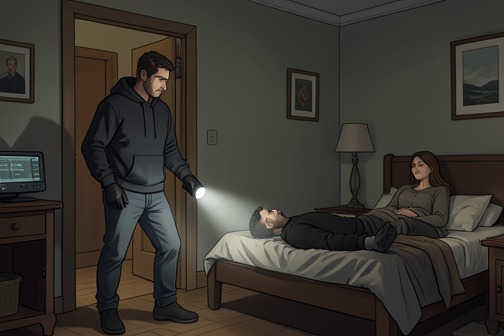
The [East Area Rapist attacks in Sacramento](entity:event-recall-event-east-area-rapist-attack-676b8316e573) turned the home, ordinarily a refuge shaped by familiar routines, into the setting of a prolonged campaign of intrusion and fear. From his first known attack in east [Sacramento](entity:location-recall-location-0fe1c0701977) in June 1976 through his disappearance from the area after a two-year reign of terror, the offender repeated recognizable methods while remaining difficult to identify. His planning unsettled residents, strained investigators, and changed how an entire community moved through daily life.
## Pattern and Selection
The first reported attack described in this account came in mid-June 1976, when the offender entered a young woman’s bedroom in east Sacramento. At first, investigators could have mistaken him for one of many local predatory offenders. His ski mask and gloves hinted at preparation, but the initial attack did not yet make clear how persistent and systematic the series would become. Over the next eleven months, he committed twenty-two rapes.
The attacks developed a consistent pattern. He used a robbery pretext to gain compliance, controlled victims’ movements, and searched through their homes. As the series expanded, he began targeting sleeping couples and used household objects to increase his control over the situation. He also displayed a pattern of avoiding certain forms of contact. These recurring choices made the attacks recognizable as a series, even as they left investigators with no shared, reliable picture of the offender’s appearance.
The [East Area Rapist](entity:expression-recall-expression-east-area-rapist-824613894ac3) did not appear to select targets at random on the night of an attack. Reports suggest that he studied neighborhoods in advance, often moving through canals and drainage ditches and making unauthorized entries into nearby homes. Small, inexpensive, or personal belongings sometimes disappeared; hang-up calls reportedly increased within a few blocks of a later attack. These signs point to reconnaissance: he could consider several possible victims in an area, learn household routines, and prepare alternatives before choosing when to act. The evidence describes a process of neighborhood surveillance as well as attacks on individual residents.
## Investigation and Public Awareness
The investigation met a problem of identification as much as one of evidence. The same young white men were repeatedly stopped, while investigators could not settle on a consistent mental image of the suspect. Individual impressions ranged from a blond man in an army jacket to a man on a bicycle or a real-estate agent. The variety of those impressions captures the uncertainty facing the task force: no single description had become a dependable guide.
After Jane Carson was attacked in October, the [Sacramento County Sheriff’s Department](entity:organization-recall-organization-sacramento-count-e5a3f89f5544) asked local news outlets not to publicize the crimes. Investigators hoped to keep the offender in east Sacramento, where they believed they might contain and catch him. [Richard Shelby](entity:character-recall-character-richard-shelby-7e183aff8811), Carol Daly, and colleagues pursued leads quietly, checking with parole and probation officers and looking into people whose jobs took them into neighborhoods. They left business cards at homes and followed up on tips. Jane Carson was also asked to listen to recordings of two suspects’ voices while blindfolded; she rejected both as the attacker. The department’s restraint did not stop information circulating. Instead, the absence of official details gave rumors room to grow, including false stories about what the offender was doing to victims.
Public awareness changed sharply as attacks continued. Early reports show little recognition of a serial offender; later, victims described waking and suspecting that the intruder was the East Area Rapist. By about a year into the series, fear could also alter how neighbors responded to possible warning signs: some shut their doors, turned off their lights, and withdrew rather than contact police. The resulting silence did not mean that residents felt safe. It reflected a growing sense that even noticing something might not be enough to make intervention feel possible.
The press blackout ended after a particularly tense October, when the offender attacked twice in twenty-four hours. One victim, a thirty-two-year-old mother of two, lived on Kipling Drive in [Carmichael](entity:location-recall-location-37206811bae7). Some residents speculated that the offender was moving into more affluent neighborhoods to draw publicity, though the evidence does not establish that motive. On November 3, five hundred people attended a crime-prevention meeting at Del Dayo Elementary School, where Shelby and Daly tried to answer questions. The following morning, [The Sacramento Bee](entity:organization-recall-organization-the-sacramento-b-8a6f972679a5) published a report identifying a manhunt for a suspect in eight rapes. The public silence that officials had sought to maintain was over.
## A Changed Community
By May 1977, fear had become visible in the built environment and in ordinary routines. Wrought-iron bars went up; residents organized overnight watches, and about three hundred men patrolled east [Sacramento County](entity:location-recall-location-a98ebc72cc81) in pickup trucks equipped with CB radios. Families added hard panels behind doors and windows, while deadbolts were difficult to obtain because orders were backlogged. Requests for backyard floodlights rose from ten a month to six hundred. Even workers entering yards, including meter readers, repeatedly displayed identification and announced themselves.
These precautions registered a collective effort to regain control, but they also marked the narrowing of ordinary life. Residents who once opened windows at night, walked dogs in the evening, and slept through familiar neighborhood sounds began to treat those routines as risks. The attacks therefore had consequences beyond the people directly targeted: the threat altered how neighbors interpreted noise, movement, and access to their homes. The community’s vigilance grew alongside its dread, without bringing a clear resolution.
## Spatial Tactics and Disappearance
The physical layout of neighborhoods formed part of the pattern investigators later tried to understand. The East Area Rapist favored single-story houses, often near a park, open field, or greenbelt. An investigator explained that such homes could make it easier to observe activity from outside and to move around a property without the limited sightlines associated with a two-story layout. In at least one investigated scene, tracking dogs followed a route along fences and side yards, indicating prolonged prowling; their handlers traced an approach at the north-side fence and an exit toward railroad tracks, where the offender likely reached a vehicle. At another described location, an open field and a school stood across the street, a neighboring house was vacant, and the suspect’s scent led toward a house where a pool was under construction. Such details show how access, cover, and routes away from a home could matter, without establishing that every scene followed the same route.
Investigators and residents alike came to feel that the offender was shadowing the whole community, not just the people he attacked. Yet after a two-year period of terror, from 1976 to 1978, he vanished from east Sacramento as mysteriously as he had appeared. His disappearance ended this phase of the attacks without identifying him or dissolving the fear it had created. In the book’s broader account, the Sacramento series is one part of a crime that spanned a decade and a much wider territory; its local history shows how a mobile, elusive offender could reshape a community long before investigators knew who he was.
Event 13
Maggiore couple murders
The [Maggiore couple murders](entity:event-recall-event-e1d901c4f967) were an unsolved double homicide that acquired significance beyond the deaths themselves: the release of possible-suspect sketches became the basis for a theory about the [East Area Rapist](entity:expression-recall-expression-east-area-rapist-824613894ac3)’s apparent departure from [Sacramento](entity:location-recall-location-0fe1c0701977). The timing made the theory compelling, but it did not settle either the identity of the couple’s killer or the reason the attacks in Sacramento largely ceased.
## The homicide and its unresolved place
The available account identifies the case as an unsolved homicide in which a young couple was shot while walking their dog. It does not give their names, the precise date or location of the killing, or a confirmed account of who committed it. Those limits matter: the [Maggiore murders](entity:event-recall-event-maggiore-murders-686d41c25091) are presented here not as an established East Area Rapist crime, but as a separate case whose investigation later became entangled with explanations for his changing pattern of attacks.
The case’s unresolved status left room for competing interpretations. In the account of the East Area Rapist’s movement between regions, the Maggiore homicide matters especially because police released sketches of two possible suspects, and the attacks in Sacramento soon became much less frequent. The sequence raised a question investigators and observers could not answer from timing alone: had the offender recognized himself in a sketch, or had his activity changed for some other reason?
## The sketches and the “scared away” theory
On April 16, 1978, two days after the East Area Rapist attacked a fifteen-year-old babysitter in Sacramento, police released enhanced composite sketches of two possible suspects in the Maggiore homicide. The “scared away” theory held that one sketch must have been uncomfortably accurate, prompting the East Area Rapist to stop attacking in Sacramento. After the sketches appeared, he was attributed only one further rape in [Sacramento County](entity:location-recall-location-a98ebc72cc81), and that attack did not occur until a year later.
The chronology gives the theory its force, but not proof. The account presents the sketches as possible suspects in the Maggiore case, not as an identification of the East Area Rapist. Nor does the later pause establish that he saw the sketches, recognized himself in them, or changed his behavior because of them. The case therefore became a hinge in an interpretation of the series rather than a demonstrated explanation for the change.
## A competing explanation for the shift
[Paul Holes](entity:character-recall-character-paul-holes-323940342fc9) rejected the claim that the offender had necessarily been frightened out of Sacramento. His alternative framework drew on geographic profiling: serial offenders often select targets in the course of ordinary routines, moving between familiar anchor points and observing places that appear vulnerable. Geographic profilers use the distribution of attack locations to reason toward a possible residence and its surrounding buffer zone; they do not need to assume that a public warning or sketch forced an offender to leave a region.
The wider pattern described in the account gives that alternative context, without proving it explains the Maggiore case. The East Area Rapist stalked neighborhoods as well as individuals, often moving through Sacramento’s canals and drainage ditches. Reports described a preference for single-story houses, commonly near a greenbelt or open area, alongside signs of prowling, entries into nearby homes, missing small items, and increases in hang-up calls in the blocks around a later attack. These details depict reconnaissance and preparation across a neighborhood, but they do not identify the Maggiore killer or establish why the attacks shifted.
## Public suspicion and evidentiary limits
As the Sacramento attacks continued, public awareness changed: early reports yielded little sign of a shared threat, while later victims recognized the danger from news and neighborhood talk. Some residents became so fearful that they withdrew indoors rather than respond to suspicious activity. That atmosphere helps explain why the release of a suspect sketch could acquire exceptional meaning. A public image appeared to offer a way to see the hidden offender—and, perhaps, to account for his disappearance from a familiar area.
The Maggiore murders remain distinct from that inference. The evidence here supports the existence of the unsolved double homicide, the April 16 sketch release, and the subsequent reduction in attacks attributed to the East Area Rapist in Sacramento. It also records a theory linking those developments and Holes’s skepticism about that theory. It does not resolve whether the sketch was accurate, whether the East Area Rapist committed the Maggiore murders, or what caused the change in his Sacramento activity.
Event 14
East Area Rapist attacks in the East Bay
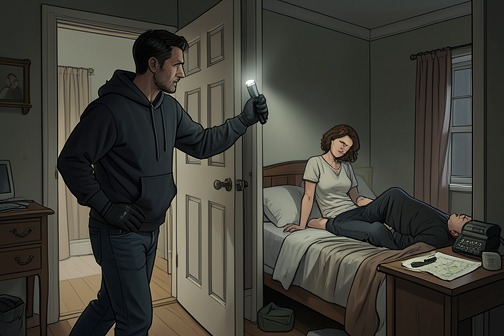
The [East Area Rapist attacks in the East Bay](entity:event-recall-event-91af3c76e232) were an eleven-case series between October 1978 and July 1979, carried out across communities including [Concord](entity:location-recall-location-d8cdb9c9a6a9), [San Jose](entity:location-recall-location-5a8b703c0246), and Fremont. The change from the offender’s earlier [Sacramento](entity:location-recall-location-0fe1c0701977) pattern was not simply a new setting: the attacks traced a different geography, exposed the difficulty of coordinating old cases across agencies, and altered how residents and investigators understood the danger moving through their neighborhoods.
## From Sacramento to the [East Bay](entity:location-recall-location-beb0fb4c899c)
After the [East Area Rapist](entity:expression-recall-expression-east-area-rapist-824613894ac3)’s attacks in Sacramento, he disappeared from the area for the summer and resurfaced in the East Bay in October 1978. [Paul Holes](entity:character-recall-character-paul-holes-323940342fc9) later asked why the offender had stopped attacking in Sacramento and begun a nearly yearlong East Bay spree. One theory held that police had frightened him away by releasing enhanced sketches of possible suspects in the [Brian and Katie Maggiore murders](entity:action-recall-action-brian-and-katie-maggio-6e2374f3819c) on April 16, 1978, two days after an attack on a fifteen-year-old babysitter. Under that theory, one sketch may have resembled the offender. Holes did not accept that explanation as established fact.
Instead, he compared the distribution of the Sacramento and East Bay attacks. In Sacramento, the offender’s movement remained within the northeastern and eastern suburbs, branching out from a local anchor point. In the East Bay, the geography suggested travel along [Interstate 680](entity:location-recall-location-680-292cc7ec19b3), a north-south route through central [Contra Costa County](entity:location-recall-location-815186f9e774). Most attacks occurred near the highway, and half were within a mile of an exit. The contrast suggested a change in the offender’s circumstances and routine; Holes considered the possibility that he was traveling from Sacramento for work and using the distance and jurisdictional boundary to attack. The evidence supported a geographic change, but did not by itself establish where the offender lived or why he moved between areas.
## A pattern built through reconnaissance
The police reports described an offender who selected neighborhoods as well as individual targets. He favored single-story houses, often second from a corner and near a greenbelt, park, or open field. Reports of prowling and unauthorized entries in nearby homes, missing small items, and a sharp rise in hang-up calls within a few blocks could precede an attack. Taken together, these incidents suggested that he was learning residents’ schedules and assessing several possible targets before choosing one.
The physical layout of a house mattered within that pattern. Paul Holes noted that single-story homes were common in the neighborhoods attacked and easier to assess from outside: a prowler could look through windows and move through yards without the same visibility risks presented by second-floor windows. The East Area Rapist also appeared to avoid houses where occupants might have more ways to detect or interrupt him. These observations describe the opportunities he exploited; they do not make residents responsible for his choices.
The [San Ramon](entity:location-recall-location-61fb6b62cb32) attack on [Kathy](entity:character-recall-character-kathy-cb914b1b0058) and her husband David illustrated how timing could make a household especially vulnerable. The couple were in the final hours of moving out of their nearly empty home when the offender attacked. They had a three-year-old son, and told investigators that the attacker did not open or approach the child’s bedroom door. Other families with young children reported the same apparent avoidance. Investigators continued to speculate about how the offender identified households, learned their routines, and knew enough about their layouts to act selectively.
## Community alarm and the police response
The first East Bay attack took place in Concord. After two rapes there, the [Contra Costa County Sheriff’s Office](entity:organization-recall-organization-contra-costa-cou-9732c4f2efb4) warned deputies that the East Area Rapist had moved into their area. A strike force began identifying neighborhoods where he might strike, and officers quietly recorded license plates of vehicles parked by open spaces or otherwise considered suspicious. The response marked a transition from treating the crimes as distant reports to watching local streets for signs of preparation.
Public awareness changed as the attacks continued. Early reports showed little recognition that a serial offender was at large; later, news coverage and neighborhood conversation made victims more likely to suspect that the intruder was the East Area Rapist. That awareness did not always translate into collective action. Some neighbors who saw something unusual retreated indoors, locked their doors, and hoped the danger would pass. The book sets this withdrawal against the ordinary promise of looking out for one another, and the consequences of dismissing a scream, a figure crossing a fence, or a late-night noise as harmless.
The offender’s movements also connected households in ways residents might not have recognized. Stolen objects could turn up near another victim’s home, and some victims shared surnames or occupations. Such links gave the attacks a disturbing neighborhood dimension: the crimes were not isolated intrusions in separate houses but part of a pattern that crossed blocks and drew unsuspecting residents into the same network of evidence.
## Evidence, scent trails, and investigative limits
The East Bay series was difficult to reconstruct decades later because several local departments had disposed of evidence under routine procedures after the cases passed the applicable time limits. The Contra Costa County Sheriff’s Office had retained its evidence. Those files had been kept not as a sign of success but as a record of an unsolved failure, available for a later investigator to take up. The account presents the surviving cases as a relay: work left unfinished by one generation could still be carried forward by another.
In a [Danville](entity:location-recall-location-1c9f36039354) investigation, three bloodhounds followed scent through fences and side yards. Their handlers agreed that the offender had spent considerable time prowling nearby, entered the victim’s yard over the north-side fence, left over the southwest corner of the back fence, and continued south along railroad tracks. The trail ended about half a mile from where the dogs began, at a residential street where investigators believed he may have entered a vehicle. The handlers also cautioned that elapsed time and changes in wind could affect scent. The tracking offered a possible route, not an identified suspect.
A separate neighborhood search after an attack in [Walnut Creek](entity:location-recall-location-b5eeea710294) produced other unsettling encounters, including a drunk driver with a knife and a man who claimed to be searching for a lost cat while carrying photographs of women taken with a zoom lens. These discoveries did not establish that either man was the East Area Rapist. They showed how the investigation unfolded amid other suspicious behavior, where patrol officers had to distinguish leads from unrelated threats.
## Survivors and the aftermath of the cases
The effects of an attack did not end when the offender left. Kathy later contacted the Contra Costa County Sheriff’s Office to protest a book’s portrayal of her, which treated her demeanor and choices as grounds for judgment. Paul Holes and a female colleague invited her to meet them. She was visibly shaken, and Holes let his colleague lead the conversation. The meeting exposed the distance between studying a case file and encountering the person represented by it: Holes had examined preserved evidence from the case years earlier, but had never met Kathy.
Kathy also told the investigators that her marriage to David had ended and that David had once said he thought he recognized the attacker’s voice, though he could not place it. The disclosure left a possible line of inquiry rather than a resolution. In this account, the East Bay series is therefore more than a map of attacks: it is also a history of evidence preserved or lost, of residents learning to interpret danger around them, and of survivors continuing to bear consequences long after the investigation’s immediate pursuit had passed.
Event 15
Queen Ann Lane home invasion
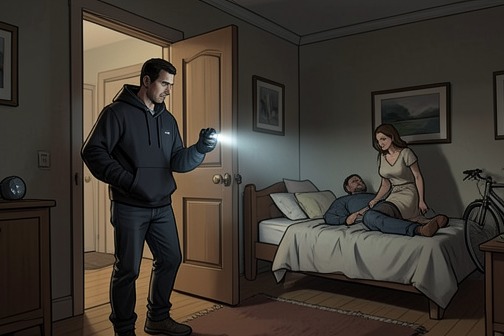
The [Queen Ann Lane home invasion](entity:event-recall-event-queen-ann-lane-fa8647363733) was the first crime investigators later connected to the [East Area Rapist](entity:expression-recall-expression-east-area-rapist-824613894ac3). On [October 1, 1979](entity:time-recall-time-1979-10-1-d802635ea1db), an intruder entered a couple’s home in [Goleta](entity:location-recall-location-7dfb832f0e30), but the woman escaped and her partner evaded him outside. A nearby FBI agent saw the suspect flee on a stolen bicycle and gave chase, though the man escaped on foot.
## The Attack and Escape
Less than a week after Kimo was stabbed, the couple awoke to an intruder carrying a flashlight. He restrained them separately, searched through the house, and demanded money without appearing focused on obtaining it. He then moved the woman into the living room and left her there while he went into the kitchen. She freed herself and ran out the front door, screaming. Her partner, still restrained in the bedroom, managed to get to the backyard and hid behind an orange tree as the intruder searched with his flashlight.
The scream brought their next-door neighbor, an FBI agent, outside. He saw a man pedaling furiously past on a stolen silver Nishiki ten-speed and pursued him by car. A few blocks later, on San Patricio Drive, the agent’s headlights caught up with the cyclist. The suspect dropped the bicycle, jumped a fence between two houses, and disappeared. The couple could provide only a general description: a white man with dark hair, around five feet ten or eleven inches tall, and approximately twenty-five years old.
## Investigative Significance and Turning Point
The witnesses’ accounts preserved a few details beyond the couple’s broad estimate: the agent saw a Pendleton shirt, jeans, tennis shoes, a knife holster, and brown hair as the cyclist passed. The glimpse was brief, and the descriptions did not identify the intruder; investigators later treated October 1 as the earliest crime they could connect to him, not as a moment when his identity was known.
In retrospect, investigators regarded the Queen Ann Lane attack as a turning point. It occurred less than a week after Kimo was stabbed, and they believed it was the night the offender learned he had to be more careful. The narrative marks a consequential change in the available record as well: the couple survived to describe their attacker, but, as the account puts it, none of his victims afterward lived to describe him again. The case therefore stands both as an early linked offense and as the last point in this sequence when surviving victims could offer a direct account of the assailant.
## Neighborhood Reconnaissance and Public Awareness
Investigators later understood the East Area Rapist’s crimes as products not only of stalking individual victims but also of studying whole neighborhoods. Police reports described him moving through [Sacramento](entity:location-recall-location-0fe1c0701977)’s drainage canals and ditches, and documented signs of prowling and unauthorized entry around later victims’ homes. Small, inexpensive, sometimes personal objects went missing; hang-up calls increased within a four- or five-block area before attacks. The pattern suggested advance reconnaissance: he could assess residents’ routines, identify several possible targets, and preserve options for the night he chose to act. This broader pattern offers context for the investigators’ retrospective attention to Queen Ann Lane, but the evidence does not establish that each of these warning signs occurred around that home.
Public understanding changed as the attacks continued. Early reports reflected little awareness of a serial rapist; later, news coverage and neighborhood conversation made the possibility familiar to residents. Some victims recognized the danger when awakened by a flashlight, while other residents, frightened by what they had heard, shut their doors, turned off lights, and withdrew rather than call police. The growing awareness did not necessarily produce collective vigilance: fear could isolate neighbors at the very moment when shared attention might matter.
## The Contingency of Neighborly Attention
The escape depended not only on the couple’s actions but also on a neighbor responding to the woman’s scream. The book sets that response against a broader pattern in which people could hear a disturbance, explain it away as teenagers or a firecracker, and retreat indoors; sometimes the sirens came later. At Queen Ann Lane, attention briefly became action: the neighbor went outside and pursued the fleeing cyclist. That contrast gives the episode significance beyond its place in the investigators’ chronology, while leaving the outcome contingent rather than reassuring. A nearby witness could help preserve a description and prompt an immediate chase, but the suspect still escaped, and the account does not suggest that vigilance alone could ensure protection.
Event 16
Robert Offerman and Alexandria Manning Murders
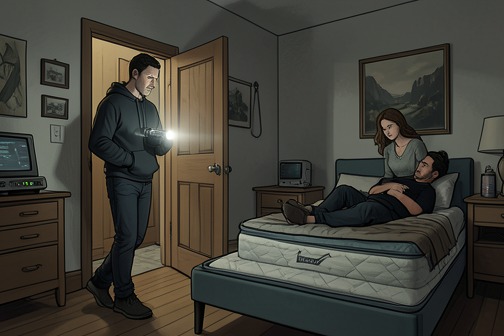
The [Robert Offerman and Alexandria Manning Murders](entity:event-recall-event-3c61b64f3532) were a double homicide discovered on December 30, 1979, at a condominium in [Goleta](entity:location-recall-location-7dfb832f0e30). Clues inside and around the home—forced entry, nylon twine, and the intruder’s apparent movement through nearby properties—made the crime part of a larger pattern investigators struggled to explain. The [Santa Barbara County](entity:location-recall-location-c49d1498a2d0) Sheriff’s Department proposed that the murders might be connected to other attacks, but the theory met skepticism elsewhere, and the case remained unresolved for years.
## Discovery and the scene
On the morning of December 30, friends arrived at 767 Avenida Pequena for a scheduled tennis game with osteopathic surgeon Dr. [Robert Offerman](entity:character-recall-character-robert-offerman-f42f63984b41) and his new girlfriend, [Debra Alexandria Manning](entity:character-recall-character-debra-alexandria-ma-c2f0227f9989). They found a sliding glass door open and received no answer when they called inside. One friend looked down the hallway toward the bedroom, saw a woman on the bed, and initially thought it best to leave without disturbing the couple. After stopping to reconsider, he returned to look more closely. When deputies arrived, Manning’s friend was outside, crying, and told them that two people were dead inside.
Manning was on one side of the waterbed, her wrists bound behind her with white nylon twine. Offerman was at the foot of the bed, holding a piece of the same material. Pry marks suggested that the intruder had forced entry with a screwdriver, probably during the night while the couple slept. Two of Manning’s rings were found hidden between the mattress and bed frame. Investigators considered whether the attacker had presented the intrusion as a robbery, although the concealed rings complicated that explanation.
Investigators believed the intruder may have thrown the twine to Manning and ordered her to bind Offerman. Her work was not tight, and they thought Offerman might have freed himself and tried to fight back. Neighbors reported gunfire at about three in the morning: an initial burst, a pause, and then another shot. The couple were killed. These details offered a possible sequence of events, but they did not identify the intruder or establish precisely what happened inside the bedroom.
## Signs of movement beyond the condominium
The evidence extended beyond the bedroom. Investigators traced a star-shaped pattern left by Adidas running shoes as the intruder moved around Offerman’s condominium. A flowerbed at the vacant unit next door had been trampled. Signs that someone had been staying there were found inside, especially in the bathroom, where another length of nylon twine had been left behind. The neighboring unit thus appeared not merely as a point beside the crime scene, but as part of the intruder’s activity in the area.
Reports also described break-ins and disturbances in the neighborhood during the hours before the murders. At about 10:15 p.m., residents returning to a home on Windsor Court, roughly half a mile away, saw a man run through their living room and escape over a rear fence. They could describe him only as a white man wearing a dark fisherman’s hat and jacket. In the days after the killings, investigators found further pieces of nylon twine at different locations, including a dirt trail beside [San Jose Creek](entity:location-recall-location-4d3a7badb1fc) and a lawn on Queen Ann Lane. The timing of the Queen Ann Lane material was uncertain, but the street was close to the home of a couple who had escaped an earlier attack.
Taken together, the clues suggested that the killer had been moving through the neighborhood before and after entering the condominium, rather than appearing only at the scene of the murders. The reports’ recurring details—twine, pry marks, and running-shoe impressions—offered points for comparison with other crimes, but no single clue by itself resolved the case.
## A proposed connection and an unresolved case
The Santa Barbara County Sheriff’s Department was the first to raise the possibility that the murders belonged to a broader series. Its investigators had two double homicides and a knife attack in which the couple escaped. Officials in [Ventura](entity:location-recall-location-b509f06b95b7) and Orange Counties played down the proposed connection. Ventura investigators, whose own double-homicide case had recently faltered at a highly publicized preliminary hearing, thought [Santa Barbara](entity:location-recall-location-433b36b956ee) had moved too quickly; an [Orange County](entity:location-recall-location-47ece46856d3) investigator also expressed skepticism. In August 1981, newspaper coverage questioned whether the Harrington case and other recent [Southern California](entity:location-recall-location-820a2bba2911) double homicides might be related. The discussion put the possibility before the public, but it did not amount to an accepted conclusion among the agencies involved.
For years, the case yielded no decisive tip. The files were reviewed periodically, but the necessary information did not emerge. Roger Harrington, whose son Keith and daughter-in-law Patty had also been murdered, hired a private investigator, offered a substantial reward, and arranged for friends and coworkers to be interviewed again. He even consulted a clairvoyant in desperation. None of these efforts supplied an answer. His attention returned repeatedly to the fragmented details of the murders, which remained unresolved in his mind as well as in the investigative files.
A later forensic development brought the investigation closer to an answer. Three glass tubes stored in manila envelopes, untouched for fifteen years, were opened and tested in October and November 1996. By December, investigators had results and were preparing to contact families. Roger Harrington had died on March 8, 1995, and never received the news. The later account also explains a detail he had interpreted as remorse: the bedspread covering the Harringtons’ heads was not evidence that the killer felt sorry for what he had done. The explanation given was practical—the killer did not want blood on himself after a previous, messy killing. The eventual testing and reinterpretation sharpened the meaning of the earlier cases, but came too late for a family member who had spent years waiting to learn what had happened.
Event 17
East Area Rapist attack in Danville
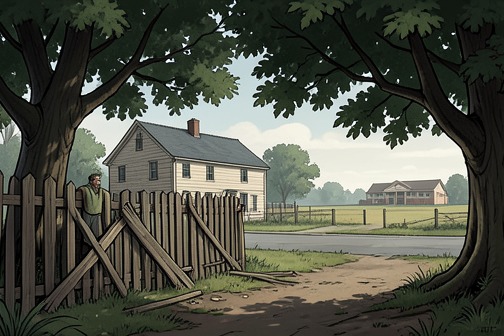
The [East Area Rapist attack in Danville](entity:event-recall-event-d5f5258d9a9f) centered on [Esther McDonald](entity:character-recall-character-esther-mcdonald-8ba34d73945c), who was alone in her home when the intruder entered and went directly to her bedroom. The investigation that followed treated the attack not as an isolated encounter but as part of a pattern of neighborhood surveillance: investigators and tracking dogs pieced together a route through fences and yards toward the railroad corridor. The house and its surroundings—the closed interior doors, an empty property next door, a nearby field and school, and the abandoned rail right-of-way—became evidence of how the attacker selected and moved through a place.
## Setting and Approach
At the time of the attack, a six-foot wooden fence stood near abandoned railroad tracks east of [Danville](entity:location-recall-location-1c9f36039354). Large trees concealed the fence, which buckled under the weight of someone climbing over it. The surrounding landscape offered several connected spaces: yards divided by fences, a rail corridor, and residential streets. A large open field and a school were across the street, while the neighboring house stood empty and was posted for lease. These conditions did not establish why the [East Area Rapist](entity:expression-recall-expression-east-area-rapist-824613894ac3) chose this particular home, but they formed the setting through which investigators later interpreted his approach and departure.
Inside, the intruder bypassed rooms with closed doors and went directly to the master bedroom in the northwest corner of the house. Esther was sleeping alone. The account places him in the doorway, facing the bed from about ten feet away, before he woke her and attacked. The narrative identifies her as Esther McDonald and situates her life before the assault: she was thirty, had married at nineteen, and had spent a decade in a marriage that ended without children. She and a girlfriend had moved from a cold Midwestern state to San Francisco, drawn by the prospect of a sunnier future. That biographical context restores an individual history to a case otherwise reconstructed through the offender’s route and the investigators’ evidence.
## The Scene and the Search
The first deputies alerted by dispatch arrived at 5:19 a.m. The scene held signs of deliberate preparation and interference: knotted white shoelaces, torn strips of orange towel, and cut phone lines. The house was cold because the thermostat had been turned off; the radio had also been switched off, apparently to improve the intruder’s ability to hear. These details gave investigators concrete features to examine while they tried to distinguish the attacker’s movements from the ordinary layout of the home.
Crime-scene investigator [Larry Crompton](entity:character-recall-character-larry-crompton-e8f120b1ff7d) focused on the conditions around the house as well as those inside it. A Realtor’s sign stood in the front yard, the property next door was vacant, and railroad tracks ran behind the home. Together, these observations suggested a setting with limited neighboring occupancy and a route away from the house. The account connects those features to the East Area Rapist’s recurring interest in particular environments, while stopping short of treating any one feature as proof of motive.
Three bloodhounds were brought to the scene. Pita was the first to work: she left through the back patio, moved toward the southwest corner of the yard, and strained toward the fence. Her handler and the officers took her around the yard and out toward the abandoned tracks. Pita stopped about half a mile from the house, at the point where the tracks met a residential street. Betsey and Eli were also used. Their handlers agreed on several conclusions, while noting that wind and the passage of time could alter scent trails. The dogs’ movements suggested that the attacker had spent considerable time in the area, crossing fences and moving through side yards before entering the victim’s backyard from the north-side fence. The interpreted exit ran over the southwest corner of the rear fence and south along the tracks, where he likely entered a vehicle at the cross street.
## Neighborhood Surveillance and Escape
The dog trail gave physical form to a broader investigative picture of the East Area Rapist’s method. Police reports described prowling and illegal entries in homes around intended victims, small items disappearing, and a rise in hang-up calls within a few blocks shortly before attacks. The pattern suggested reconnaissance: the attacker studied a neighborhood, identified multiple possible victims, and learned something about when residents were home. This wider account helps explain why investigators read the dogs’ repeated turns through yards and along fences as evidence of time spent scouting rather than as an incidental route.
The Danville setting also matched a recurring preference for single-story houses. [Paul Holes](entity:character-recall-character-paul-holes-323940342fc9) later explained that a single-story home could be observed from its windows and approached through yards without the visibility a second floor might provide. The book’s account further notes that the East Area Rapist often chose homes near open space and typically not at the very corner of a block. These are presented as patterns drawn from the cases, not as a complete explanation of this attack. At the Danville scene, the field, vacant neighboring house, trees, fences, and rail corridor supplied investigators with specific circumstances to compare against that wider pattern.
The [Iron Horse Regional Trail](entity:location-recall-location-7bbbd85fc811) follows the former Southern Pacific Railroad right-of-way through central Contra Costa. Paul Holes visited the residential street beside it, where agave plants shielded the back of the fence and made it difficult to approach closely. The hounds’ inferred escape route ended at the corner of the victim’s yard, and the nearby street offered a plausible point at which the attacker could have reached a vehicle. The trail and rail corridor thus served two roles in the investigation: they were features of the local landscape and a possible link between the concealed approach and the escape from the scene.
## Significance and Wider Context
The investigation’s reconstruction made the attack legible through small, separate clues: the fence’s position and damage, the victim’s house layout, the disconnected phone line, the switched-off thermostat and radio, and the dogs’ route across the property. No single detail supplied the whole account. The route emerged from combining physical observations with the handlers’ agreement about the dogs’ behavior, while retaining the stated uncertainty that scent conditions can change. That distinction matters: the investigators could infer prolonged prowling and a likely vehicle pickup without claiming certainty about every movement.
The attack also belongs to a larger shift in public awareness surrounding the East Area Rapist cases. Early in the [Sacramento](entity:location-recall-location-0fe1c0701977) attacks, authorities kept details from the press in hopes of containing the offender’s movement, while rumors filled the resulting information vacuum. As coverage became public, fear increasingly shaped how residents interpreted nighttime sounds and suspicious activity. In later accounts, some neighbors described retreating indoors rather than calling police. This community history does not establish that those responses caused or enabled the Danville attack; it shows the broader social landscape in which the crimes were understood. The Danville investigation, by contrast, narrowed attention to a specific house and a traceable path, turning the surrounding geography into evidence of deliberate surveillance and escape.
Event 18
East Area Rapist attack in San Ramon
The [East Area Rapist attack in San Ramon](entity:event-recall-event-f28c43eb241a) was a home invasion during the last hours [Kathy](entity:character-recall-character-kathy-cb914b1b0058) and David spent in their house, making the move itself part of the event’s disturbing context. The attacker assaulted and robbed the couple, while the home’s unusual emptiness initially obscured what had happened. Years later, Kathy’s account to investigators connected the case to questions about the attacker’s possible target and to the lasting effects of the crime on survivors and their relationships.
## Setting and Circumstances
The attack took place in unincorporated [San Ramon](entity:location-recall-location-61fb6b62cb32), where residents had been charged for years for 911 service that did not work. Kathy discovered the failure when she tried to call for help after the assault: instead of reaching emergency dispatch, the receiver emitted a sound indicating that the call had not gone through. The failed call added a concrete institutional failure to an already dangerous night. The service was supposedly available, but the emergency number could not connect her to help.
The couple lived at the end of a quiet court. On October 28, just after five in the morning, dispatch sent a report to the graveyard shift: a home-invasion rape and robbery at Montclair Place. The information arriving over the radio began with a burst of static and was limited, but serious enough to prompt a response. The date and hour placed the attack in the final stretch of the couple’s time in the house; they were in the process of moving out.
## The Attack and the House
A deputy arriving first found Kathy and David calmly waiting at the front door. After checking whether they needed immediate medical attention, he noticed the nearly empty rooms behind them. The few remaining drawers had been pulled open and contained little; closet doors stood open over bare spaces and hanging rods. For a moment, the scene raised the possibility that the intruder had emptied the house. Kathy and David explained that the sparse rooms were the result of their move, not the robbery.
That explanation sharpened the significance of the timing. The [East Area Rapist](entity:expression-recall-expression-east-area-rapist-824613894ac3) had come during the couple’s last few hours in the house, when most of their belongings were already gone. The book identifies this as another instance of the real-estate circumstances that appeared in the cases, and notes that the timing suggested knowledge of the household’s situation. It does not establish how such knowledge was obtained, or that a particular person had supplied it.
Kathy and David had a three-year-old son. They told investigators that the attacker did not open or approach the door to the child’s bedroom. Other victims with small children had reported the same kind of restraint around their children’s rooms. This recurring detail did not answer how the attacker selected households, learned their routines, or understood the layouts of their homes. Instead, it sharpened those questions: investigators and victims were left to consider what he knew and how he had learned it, without a settled explanation.
## Investigation and Later Disclosure
The case’s investigative significance continued long after the attack. In a later meeting with [Paul Holes](entity:character-recall-character-paul-holes-323940342fc9) and a female colleague, Kathy disclosed that David had said afterward that he thought he recognized the attacker’s voice, though he could not identify it. The account was a possible lead, not a confirmed identification: the voice seemed familiar to David, but the source of that familiarity remained unresolved in the evidence presented.
The meeting took place after Kathy had contacted the Sheriff’s Office in anger over her portrayal in [Larry Crompton](entity:character-recall-character-larry-crompton-e8f120b1ff7d)’s book, Sudden Terror. The investigators could not arrange a meeting between Kathy and Crompton, who had retired, so Holes and his colleague invited her to speak with them at the office. Holes recalled that she was shaking and barely made eye contact, which he understood as an effect of the trauma she had experienced. He asked few questions and let his colleague lead the conversation. The account contrasts the distance of a cold-case investigation with its intimacy: Holes had examined evidence from the case, but had not met Kathy face to face before this meeting.
Kathy also told the investigators that she and David had since divorced. The book places their separation among other relationships that did not survive an East Area Rapist attack, without claiming that every marriage ended for the same reason. The attack’s aftermath therefore reaches beyond the immediate crime scene: it includes both the couple’s later separation and Kathy’s return to the case to contest a published account of her experience.
## Broader Context and Significance
The attack belongs to a pattern in which the East Area Rapist appeared to study neighborhoods as well as individual victims. Reports described prowling, unlawful entries, missing small items, and increases in hang-up calls near a future victim’s home. These details support the possibility of reconnaissance across a neighborhood, but they do not establish precisely what the attacker knew about Kathy and David’s move. The distinction matters: the timing invites questions about advance knowledge, while the evidence does not provide a definitive answer.
The book also describes public awareness of the crimes growing over time. As information and rumor spread, people’s reactions shifted from not recognizing a threat to fearing it and withdrawing into their homes. That broader climate helps explain why the attack is presented not simply as an isolated crime, but as part of a series that altered how communities understood safety and how investigators interpreted household details. Still, the San Ramon case resists an easy solution. The failed 911 call, the nearly empty house, the untouched child’s bedroom, and David’s uncertain recognition of the voice each contribute a different fact; none, alone, resolves how the attacker chose the family or what he intended. Kathy’s later meeting with investigators keeps her account central, while underscoring the difference between a survivor’s testimony and conclusions the evidence cannot support.
Event 19
Lyman and Charlene Smith Murders
The [Lyman and Charlene Smith Murders](entity:event-recall-event-f4e055cfbc6f) were a double homicide in [Ventura](entity:location-recall-location-b509f06b95b7) on March 16, 1980, whose first investigation centered on a friend and former business partner of [Lyman Smith](entity:character-recall-character-lyman-smith-53c092da48bd) before forensic testing redirected the case. The discovery that biological evidence from the scene matched profiles associated with the Harrington, Witthuhn, and Cruz murders transformed the case from an apparent local mystery into part of a larger serial investigation—and showed how evidence left behind in a faltering prosecution could later change the meaning of several unsolved killings.
## The crime and the first investigation
Lyman Smith was a prominent Ventura attorney on the verge of a superior court judgeship. [Charlene Smith](entity:character-recall-character-charlene-smith-2b3b308f30cf), his second wife, had once worked as his secretary. On a Sunday morning, Lyman’s twelve-year-old son, Gary Smith, rode his bicycle to his father’s house to mow the lawn. The front door was unlocked. An alarm clock sounded from inside, drawing the boy toward the master bedroom, where he found his father and stepmother dead beneath the covers. Bark fragments were scattered across the carpet, and a narrow piece of wood lay near the bed.
The scene led investigators to consider a friend and former business partner, [Joe Alsip](entity:character-recall-character-joe-alsip-2745d3c3ade2), who had visited the Smiths the night before. His fingerprint was found on a wine goblet, and his minister told police that Alsip had essentially confessed to him. Investigators arrested him, and the police and prosecution entered the preliminary hearing expecting their case to hold. The evidence seemed to point toward someone in the couple’s circle, but the apparent strength of that explanation would not survive the hearing.
Alsip’s defense attorney, [Richard Hanawalt](entity:character-recall-character-richard-hanawalt-ea6e5ed74c80), was known to the investigators for successfully defending drunk-driving cases and for speaking in mixed metaphors and non sequiturs. In his closing argument, however, he also recast the crime scene as consistent with an unknown intruder. He emphasized the binding, the fatal blows delivered with a piece of wood, and the absence of lights in the house, which left open the possibility that the attack had occurred in darkness. A bathroom window afforded a view into the bedroom; nearby was the woodpile from which the piece of wood could have been taken. These details gave the defense a way to challenge the premise that the killer must have been known to the Smiths.
## A case left unresolved
After the preliminary hearing, the [Ventura County](entity:location-recall-location-1b4cf7b67982) district attorney released Alsip for lack of evidence. The investigative team returned to the beginning, divided over what the crime meant: some believed the perpetrator knew the Smiths, while others considered it a random, sexually motivated crime. The case file remained in the investigators’ bullpen for years and was eventually moved into the evidence vault. The hearing had not resolved the competing explanations; it had removed the suspect on whom the investigation had concentrated.
The uncertainty persisted even as investigators explored possible links between separate double homicides. The [Santa Barbara](entity:location-recall-location-433b36b956ee) Sheriff’s Department had raised the possibility that its cases were connected to other killings, but authorities in Ventura and [Orange County](entity:location-recall-location-47ece46856d3) were skeptical. The Smith case likewise did not yield an answer through routine review. Its eventual connection to other murders would come not from a new witness or a confession, but from forensic material retained from the investigation.
## Glass slides and a DNA connection
When [Larry Pool](entity:character-recall-character-larry-pool-1c8a148ee3f6) noticed a [Ventura Police Department](entity:organization-recall-organization-ventura-police-d-d2143656bbf9) case number in a report in the Harrington file, he followed it up. The number led him to the Smith murders. Pool told Ventura investigators that Orange County had an unsolved serial case involving four homicide victims with similarities to the Smith case, and asked them to send any surviving forensic evidence to the [Orange County Crime Lab](entity:organization-recall-organization-orange-county-cr-d139e8c3654a).
The package [Mary Hong](entity:character-recall-character-mary-hong-da6a8b8bca14) opened contained a couple of glass slides. Such slides could be used with swabs collected in a rape kit to help locate sperm under a microscope, but the swabs themselves were usually retained as well. Their absence left the laboratory with less biological material than a criminalist would ideally want. Even so, Hong was able to develop a DNA profile from semen on the slides. On February 17, 1998, Pool received her report: Lyman Smith was excluded as the source, and the profile matched those associated with the Keith and Patty Harrington, Manuela Witthuhn, and [Janelle Cruz](entity:character-recall-character-janelle-cruz-ac71adf90f6f) cases.
The match supplied a forensic connection where earlier suspicions and circumstantial similarities had not been enough. Some investigators in Ventura resisted the result, and Detective Russ Hayes later recalled being astonished and initially unable to believe it. The reaction marked a sharp contrast with the preliminary hearing years earlier: then, investigators had been confident in a suspect they could not substantiate; now, a laboratory result connected the Smith crime to a wider group of killings, though the implications took time to be accepted.
## Loss, delay, and reinterpretation
For Roger Harrington, the father of Keith Harrington, the years without an answer had become an all-consuming search. He hired a private investigator, offered a large reward, and arranged for friends and co-workers to be reinterviewed. He revisited what he remembered of Keith and Patty’s lives and deaths, but the details never formed a complete explanation. The discovery of the DNA evidence would bring the investigation closer to an answer, but the news arrived too late for him: Roger died on March 8, 1995, before investigators tested the slides in October and November 1996 or made calls to the families in December.
The later DNA findings also changed how one detail of the Harrington murders could be understood. Roger had believed the killer covered his son and daughter-in-law’s heads out of remorse. The account instead explains that the killer had previously bludgeoned a couple and did not want their blood on him. That correction underscores the distance between a relative’s effort to make sense of a crime and the explanation eventually suggested by the broader case history. For the Smith murders, too, the retained slides outlasted the failed prosecution and the years in storage: they did not immediately identify a killer in court, but they connected the case to other murders and altered the investigative landscape.
Event 20
Joe Alsip preliminary hearings and dismissal
The [Joe Alsip preliminary hearings and dismissal](entity:event-recall-event-6a1f105188f4) marked a sharp reversal in the investigation of Lyman and [Charlene Smith](entity:character-recall-character-charlene-smith-2b3b308f30cf)’s murders: a case that began with investigators confident in their suspect ended with the prosecution unable to proceed and the investigation back at square one. The hearings did not identify the killer. Instead, they exposed how a central witness’s credibility could collapse, while leaving unresolved whether the murders were committed by someone known to the Smiths or by a stranger.
## Background and the case against Alsip
[Lyman Smith](entity:character-recall-character-lyman-smith-53c092da48bd) was a well-known [Ventura](entity:location-recall-location-b509f06b95b7) attorney nearing appointment to a superior court judgeship. Charlene Smith, his second wife, had formerly worked as his secretary. Their bodies were discovered on March 16, 1980, by Lyman’s twelve-year-old son, Gary Smith, who had come to mow the lawn. The front door was unlocked; an alarm clock sounded from the master bedroom, where the boy found his father and stepmother beneath the covers. Bark fragments and a narrow log lay nearby.
Investigators faced a flood of leads about the couple’s relationships and affairs, as well as business dealings that were not entirely above suspicion. They quickly focused on [Joe Alsip](entity:character-recall-character-joe-alsip-2745d3c3ade2), Lyman’s friend and former business partner. Alsip had visited the Smiths the evening before the murders, and his fingerprint was found on a wine goblet. The minister who spoke with Alsip told police that Alsip had essentially confessed to him. Those circumstances appeared to give the investigation a strong suspect and a witness who could connect him to the crime.
Alsip was arrested, and police and prosecutors entered the preliminary hearing with confidence. They were especially pleased that his attorney was [Richard Hanawalt](entity:character-recall-character-richard-hanawalt-ea6e5ed74c80), whom they knew chiefly for defending people charged with drunk driving. Hanawalt’s courtroom speech could sound disjointed: he reached for mixed metaphors and non sequiturs, and his remarks gave the prosecution little reason at first to expect a carefully assembled challenge. That impression would prove misleading.
## The defense turns to the minister
Anonymous tipsters urged Hanawalt to examine the minister’s past. His investigation uncovered a decades-long pattern, stretching from Indiana to Washington, in which the minister sought police protection in unusual circumstances and tried to insert himself into investigations. The inquiry shifted attention away from the apparent simplicity of the prosecution’s account and toward the reliability of the person whose story had helped make Alsip the focus of the case.
A police radio provided a particularly telling episode. After the minister insisted that he had received threats for turning in Alsip, the police chief gave him a radio. One afternoon, the minister’s voice came over it in an alarm, saying that someone was there and coming for him. Sergeant Gary Adkinson, one of the Smith-case investigators, was at the intersection of Telegraph and Victoria, only a block away, and hurried to the minister’s house. The minister stood inside the front door, holding the radio against his chest. When Adkinson arrived, the minister said the supposed assailant was gone. The speed of Adkinson’s arrival and the minister’s reaction made the incident a concrete part of the defense’s challenge to his account.
Hanawalt also recast the crime scene as evidence of a possible stranger attack rather than a killing by someone within the Smiths’ circle. He emphasized that the couple had been bound with drapery cord and killed with blows from a log, while the house’s lights were off. The bathroom window gave a person outside a view into the bedroom; the firewood pile was only a few yards away, and the log used in the attack was taken from it. These details offered a coherent alternative reading of the scene, but they did not establish the identity of the person who had entered the house.
## Dismissal and the unresolved investigation
After the preliminary hearing, the [Ventura County](entity:location-recall-location-1b4cf7b67982) district attorney released Joe Alsip for lack of evidence. The case against him had not produced a resolution to the murders, and the investigative team returned to its starting point. Investigators remained divided: some believed the killer knew the Smiths, while others thought the crime was random and sexually motivated. The hearing had overturned the confidence surrounding the arrest without replacing it with a settled account of what happened.
The Smith file stayed on a shelf in the investigators’ bullpen for years and, after a decade, was moved to the evidence vault. Its later handling showed both the persistence of the unanswered questions and the limits of what the hearing had accomplished. [Larry Pool](entity:character-recall-character-larry-pool-1c8a148ee3f6) noticed a [Ventura Police Department](entity:organization-recall-organization-ventura-police-d-d2143656bbf9) case number in the Harrington file and learned that it referred to the Smith murders. He asked that remaining forensic material be sent to the [Orange County Crime Lab](entity:organization-recall-organization-orange-county-cr-d139e8c3654a). The package contained glass slides made from swabs collected during the investigation; despite the value of biological material in forensic work, the swabs themselves were not included.
[Mary Hong](entity:character-recall-character-mary-hong-da6a8b8bca14) nevertheless developed a DNA profile from semen on the slides. Her report, received by Pool on February 17, 1998, eliminated Lyman Smith as the source. That result did not identify the killer or settle the competing theories about whether the perpetrator knew the couple. In retrospect, the preliminary hearings were a consequential failure of the prosecution’s case, not a solution: they cleared Alsip from the path of prosecution while leaving the Smiths’ deaths unexplained and the evidence to await later examination.
Event 21
Cherry Domingo and Gregory Sanchez Murders

The murders of [Cheri Domingo](entity:character-recall-character-cheri-domingo-429b1e68b397) and [Gregory Sanchez](entity:character-recall-character-gregory-sanchez-617c4b63ff59) were a double homicide in [Goleta](entity:location-recall-location-7dfb832f0e30), discovered during a real-estate showing at the house where Domingo was temporarily living with her children. The case’s significance extends beyond the crime scene: investigators initially held to a local suspect theory, even after the killings were linked by method to a wider series, until DNA evidence in 2011 connected them to the [East Area Rapist](entity:expression-recall-expression-east-area-rapist-824613894ac3) / [Original Night Stalker](entity:expression-recall-expression-original-night-sta-87cc4e97b196).
## The house and its temporary occupants
For several years, Domingo and her children had lived in a rented guesthouse in Montecito when they were not with their father in [San Diego](entity:location-recall-location-52525e0dc69c). In May, her father’s cousin, known in the family as Aunt Barbara, offered them the chance to house-sit her Goleta home while it was on the market. The house stood on Toltec Way, a quiet cul-de-sac near [San Jose Creek](entity:location-recall-location-4d3a7badb1fc). Neighbors called the wood-shingled, Cape Cod–style property, with its second-story addition above the garage, the big red barn.
Domingo and the children moved into 449 Toltec Way in early June. The move did not make the household feel settled: the property was for sale, open houses were expected, and a sign on the lawn identified it as belonging to Santana Properties. Her daughter Debbi was restless, missed a boyfriend in San Diego, and ran up large telephone bills calling him. A few weeks after the move, following a serious argument with her mother, Debbi packed a bag, got on her bicycle, and left. The house’s provisional status would become a grim circumstance of the killings: it remained a property being shown to prospective buyers.
Domingo’s friend Ellen lived across the street. They spent many evenings together, talking over wine in Ellen’s Jacuzzi about child support, work, and Domingo’s efforts to date again after her divorce. This friendship placed a familiar neighbor close by, but it did not prevent the attack. A neighbor later recalled hearing a gunshot in the night and then a woman’s controlled voice addressing someone. The account suggested a final attempt to calm or deflect the person in the house, though the precise words were uncertain.
## Discovery and crime-scene findings
On Monday morning, a realtor arrived at 449 Toltec Way with a prospective buyer and the buyer’s family. After letting himself in, he found the bodies of a man and a woman in the master bedroom. He immediately took his clients out and called the police. The victims were identified as Sanchez and Domingo.
Sanchez had been found partly inside the closet, with clothing pulled down from the rack covering his head. A flashlight nearby had batteries bearing his fingerprints, indicating that it came from the house. Investigators believed the scraping of the bedroom door against the shag rug may have alerted him to an intruder and that he had fought back. He had been shot, but that wound was not fatal; blunt-force injuries were the cause of death. Domingo was found on the bed, covered by a bedspread that matched the wallpaper. Marks on her wrists were consistent with her hands having been bound. Both victims had been killed with the same blunt instrument.
The scene also preserved indications of how the intruder may have entered and what he may have taken. A small window in the downstairs guest bathroom was open; its screen had been removed and concealed in bushes behind a juniper. Because the window was too small for an adult man to climb through, investigators reasoned that someone had reached inside to unlock the bathroom’s exterior door. On a dusty gardening shelf in the hallway, officers saw the outlines of two recently removed tools. One was a pipe wrench; Domingo’s former husband later thought the other had been a turf plugger. Neither tool was recovered. The ligatures, unlike the suspected tools, were taken away by the killer, a change investigators interpreted as evidence that he was adapting to reduce the evidence left behind.
## A suspect theory and its reversal
[Santa Barbara](entity:location-recall-location-433b36b956ee) investigators considered [Brett Glasby](entity:character-recall-character-brett-glasby-0fecadf26a9b) a potential suspect in 1980. He was a local burglar with a reputation for violence and had a tangential connection to [Robert Offerman](entity:character-recall-character-robert-offerman-f42f63984b41), another homicide victim: Glasby and associates had been prime suspects in the beating of a janitor who worked in Offerman’s office building. Glasby lived in the target area and had access to a .38 Smith & Wesson, the type of gun used in the Offerman and Manning killings. Ballistics testing excluded that gun, however, and investigators never found physical evidence tying Glasby to the crimes.
In 1982, Glasby and his brother Brian were killed in Mexico. They had gone to San Juan de Alima believing they were meeting people for a drug deal; it proved to be a setup, and both brothers were robbed and shot. Despite Glasby’s death and the absence of physical evidence, the Santa Barbara Sheriff’s Department continued to regard him as likely responsible for both the Offerman and Manning killings and the Sanchez and Domingo murders. That position persisted even after [Orange County](entity:location-recall-location-47ece46856d3) investigators linked the double homicides by their methods to the Original Night Stalker, whose last known crime occurred in 1986, four years after Glasby had died.
## DNA identification and the family’s aftermath
The decisive change came in 2011. After earlier efforts had failed, investigators developed a DNA profile from degraded genetic material recovered from a blanket at the Sanchez and Domingo crime scene. The profile conclusively linked the Goleta killings to the East Area Rapist / Original Night Stalker. Glasby, once treated as the likely explanation, was exposed as a red herring; the forensic result connected the case to a serial offender whose crimes had crossed jurisdictions and had not been recognized as one series at the time.
No one told [Debbi Domingo](entity:character-recall-character-debbi-domingo-fb214c5a8808) that her mother’s killer might have claimed other victims. She learned of the broader case only in the early 2000s, when cable true-crime programs began featuring the Original Night Stalker. By then she was working as a prison guard in Texas and had been clean for seven years after nearly a decade of methamphetamine addiction. The account describes her life as having been thoroughly derailed after her mother’s murder. The later DNA link therefore changed more than the classification of the crime: it recast the killing within a larger series, while arriving too late to spare Domingo’s daughter years of not knowing that the person who killed her mother might also have harmed others.
Event 22
Jonestown Massacre

The [Jonestown Massacre](entity:event-recall-event-ebb1027973db) enters the narrative through the news that interrupted ordinary programming in November 1978: more than nine hundred Americans, a third of them children, had died in Guyana. The event’s significance in this account lies both in its scale and in the way its announcement redirected public attention, especially in [Northern California](entity:location-recall-location-2697f0558800), while residents were already living with fear from a separate series of attacks.
## Background and Announcement
By early December, residents of [Contra Costa County](entity:location-recall-location-815186f9e774) had begun to hope they might relax. The [East Area Rapist](entity:expression-recall-expression-east-area-rapist-824613894ac3) had appeared in the area in October and carried out three attacks in twenty-one days; after the third, some residents spent their nights in brightly lit, locked homes. Weeks then passed without another reported incident, though the narrative does not suggest the fear had simply ended.
On November 18, news anchors interrupted regular programming to announce the deaths in a jungle commune in Guyana. Those gathered there had consumed cyanide-laced Flavor Aid at the behest of cult leader Jim Jones. The scale of the announcement abruptly brought a distant catastrophe into people’s homes through television and displaced the routine flow of other news.
## Participants and Context
The dead included members of the Peoples Temple, whose headquarters had been in San Francisco before the church relocated to Guyana. The account also identifies Northern California congressman Leo Ryan among the victims. He had traveled to investigate alleged abuses and was killed at an airstrip shortly before takeoff.
That connection to San Francisco and Northern California made the event particularly immediate for the Bay Area. The narrative places the massacre within a wider public landscape of violence and alarm, without treating it as part of the East Area Rapist’s crimes or suggesting a causal connection between them.
## Public Attention and Narrative Role
The Jonestown Massacre absorbed much of the country’s horrified attention, and particularly rocked the Bay Area. In the chronology of the surrounding account, it arrives as residents are waiting to learn whether the attacks in Contra Costa County have stopped. Fresh horrors elsewhere redirected attention during that pause; they did not establish that the local danger had passed.
The juxtaposition makes public attention itself part of the event’s significance. The broadcast brought the deaths of more than nine hundred people into the foreground, while the quieter interval in the local attacks offered only tentative relief. The narrative holds both realities together: one catastrophe commanding national attention and a community still uncertain whether its own immediate threat had receded.
Event 23
1986 Murder of Janelle Cruz
The 1986 murder of [Janelle Cruz](entity:character-recall-character-janelle-cruz-ac71adf90f6f) was initially treated as a case whose answer probably lay among the young men she knew. A decade later, DNA evidence contradicted that assumption and linked her killer to three other murders, joining her case to the killings of Keith Harrington, Patty Harrington, and Manuela Witthuhn. The shift was more than a new lead: it exposed the limits of an investigation organized around a victim’s immediate circle and gave separate, stalled cases a common forensic thread.
## The scene and its evidence
When officers entered Cruz’s home in [Irvine, California](entity:location-recall-location-140ee4637875), they found physical evidence that could be preserved and tested, but no weapon or obvious explanation of who had entered. Investigators recovered biological trace evidence and tufts of blue fiber from her body. The fibers suggested that fabric had been torn, though they did not by themselves identify a suspect. Tennis shoe prints appeared on the east side of the house. No ligatures or weapons were found at the scene, and a heavy red pipe wrench that had been in the backyard was later determined to be missing.
The neighborhood canvass produced details that seemed potentially useful but did not resolve the case. A window-washing solicitor had distributed yellow flyers the night before the murder. A local boy led police to a broken baseball bat in a nearby field, but it was mostly intact, with a snail crossing its surface and grass growing on it; the object had evidently been there for some time. A neighbor recalled hearing Cruz’s Chevette, with its loud muffler, arrive at about 11:15 p.m., roughly half an hour after her co-worker would have left. He heard the engine stop and a door slam. These observations fixed fragments of the evening, not the identity of the killer.
## The suspect circle
Lead investigator [Larry Montgomery](entity:character-recall-character-larry-montgomery-b9bd1ef6e199) and his colleagues examined Cruz’s recent relationships and contacts. Their inquiry produced a crowded field of young men, each with a different connection to her and a different reason to attract attention. Randy Gill, whom Cruz had known at YMCA camp, had been having sex with her and called on the night she was killed. She had ended their relationship two weeks earlier; he was also reputed to have a drinking problem.
Martin Gomez, an ex-convict Cruz had met at a former workplace, had entered a sexual relationship with her that she later broke off after he became obsessive and controlling. Philip Michaels, a lifeguard she had only recently begun dating, had spent time with her the day before the murder. He was also having sex with her, though he initially denied it. Investigators considered these details alongside the possibility that someone in her orbit had both access and a personal grievance; none of them, by association alone, constituted proof.
Other contacts widened rather than clarified the picture. David Decker, whom Cruz had met at YMCA camp when he was a counselor and she a camper, had last seen her two days before her death. David Thompson worked with her at Bullwinkle’s and was distinct from Ron Thomsen, the last boy known to have seen her alive. Dave Kowalski had visited Cruz at home on the day she died and told her he loved her. He had given her a Seiko watch; it was found beside her body. Bruce Wendt, described in the account as an oddball, had also been at her house shortly before the murder. Cruz’s address book contained a hostile handwritten description beside his entry. These contacts gave the investigation a series of names and circumstances to test, but the profusion of possible leads could also make proximity seem more conclusive than it was.
## Forensic narrowing and a mistaken premise
In early July, laboratory results from [Mike Martinez](entity:character-recall-character-mike-martinez-6dae41d9d591)’s blood sample came back, and he was eliminated as a suspect. A co-worker was eliminated as well. DNA profiling had not yet entered forensic practice, but serology offered investigators some information from the biological evidence. The killer was a nonsecretor, a person whose blood-group antigens do not appear in other bodily fluids. Nonsecretors make up about 20 percent of the population; the killer also had an unusual PGM enzyme type. The [Orange County Crime Lab](entity:organization-recall-organization-orange-county-cr-d139e8c3654a) estimated that the combination appeared in approximately 1 percent of the population.
That result narrowed the possible population, but it did not supply a face or name. Investigators continued to believe that the answer lay close to Cruz, among the young men they had identified. The case thus held two competing kinds of information: a biological profile that could distinguish the killer from many people, and a compelling but unconfirmed social theory about who might have committed the crime. The men in Cruz’s circle were eventually conclusively eliminated, demonstrating that a plausible investigative focus can still be wrong.
## The DNA link and its human cost
Ten years after the murder, investigators developed a DNA profile from the killer. It matched none of the original suspects. Instead, it matched an unidentified killer responsible for three other murders, connecting Cruz’s case with those of Keith Harrington, Patty Harrington, and Manuela Witthuhn. At the Orange County Crime Lab, [Mary Hong](entity:character-recall-character-mary-hong-da6a8b8bca14) stared wide-eyed at the results. The match turned what had seemed to be a local homicide with a long list of personal suspects into part of a multi-case investigation.
The path to that convergence underscored how slowly an unsolved case could move. In the Harrington and Witthuhn investigations, the possible connection had not been ruled out, but the cases had gone cold. Roger Harrington spent years trying to understand the murders of his son and daughter-in-law: he hired a private investigator, offered a large reward, and saw friends and co-workers reinterviewed. None of it produced the needed lead. The breakthrough came not from the expected phone call but from three glass tubes kept in manila envelopes. Tested in October and November 1996, they brought investigators closer to an answer. By December, officials were ready to contact the families.
Roger had died on March 8, 1995, a year and a half before those results. He had believed the killer covered Keith and Patty’s heads out of remorse. The later account explains that the bedspread had a different purpose: the killer did not want their blood on him. The DNA connection therefore carried both revelation and belatedness. It brought cases together and corrected a family member’s understanding of a detail from the crime, but the man who had spent years seeking an answer could not learn what the evidence had established. For Cruz’s murder, the match changed the scale of the investigation; for the families, it did not undo the years in which the cases remained unresolved.
Event 24
DNA match linking the Ventura Smith case to the serial murders
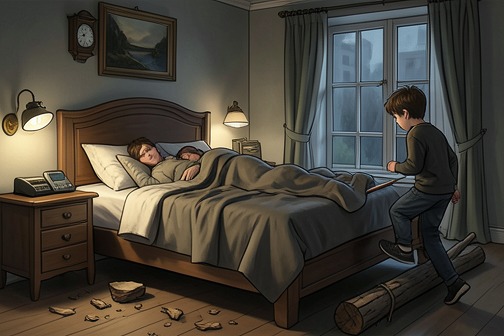
The [DNA match linking the Ventura Smith case to the serial murders](entity:event-recall-event-dna-bb7e33236c67) was a forensic turning point: evidence preserved from the killings of [Lyman Smith](entity:character-recall-character-lyman-smith-53c092da48bd) and [Charlene Smith](entity:character-recall-character-charlene-smith-2b3b308f30cf) connected their case to profiles from the Harrington, Witthuhn, and Cruz cases. Reported on February 17, 1998, the match disrupted years of uncertainty about whether the Smiths had been killed by someone who knew them or by a stranger committing a sexually motivated crime. It established a powerful connection across cases, though the discovery itself did not supply a name or resolve every question about the killings.
## From a stalled investigation to a laboratory comparison
After [Joe Alsip](entity:character-recall-character-joe-alsip-2745d3c3ade2) was released for lack of evidence following a preliminary hearing, the Smith investigation returned to square one. Investigators remained divided: some believed the killer knew the Smiths; others considered the crime random and sexually motivated. The case eventually moved from the investigators’ bullpen to an evidence vault. Its dormant status changed when [Larry Pool](entity:character-recall-character-larry-pool-1c8a148ee3f6) told [Ventura](entity:location-recall-location-b509f06b95b7) police that the [Orange County Sheriff’s Department](entity:organization-recall-organization-orange-county-sh-f63020dcd882) had an unsolved serial case involving four homicide victims with similarities to the Smith murders. Pool asked that the remaining forensic evidence be sent to the [Orange County Crime Lab](entity:organization-recall-organization-orange-county-cr-d139e8c3654a) for examination.
The material that arrived was limited. [Mary Hong](entity:character-recall-character-mary-hong-da6a8b8bca14) opened the package from Ventura and found a couple of glass slides. In a rape kit, swabs are rubbed against slides to make it easier to look for sperm under a microscope; the swabs themselves are ordinarily included as well. Their absence mattered because criminalists seek to work with as much biological material as possible. Even with the slides alone, Hong was able to develop a DNA profile from semen preserved on them. The transfer of old evidence to a laboratory working on a separate serial case thus turned a small, incomplete package into the basis for a consequential comparison.
## The February 1998 result
On February 17, 1998, Pool received Hong’s report. The profile developed from the semen excluded Lyman Smith as its source. That result was important in its own right: it distinguished the biological evidence from one of the victims rather than treating the presence of semen as an unresolved feature of the crime scene. More significantly, the profile matched the profiles associated with the Harrington, Witthuhn, and Cruz cases.
The finding joined the Smith murders to cases that had been investigated as part of a serial pattern. It changed the frame through which the Ventura crime could be understood. The earlier dispute between an intimate or known assailant and a random offender had shaped the Smith investigation; the laboratory comparison supplied evidence that placed the case in a wider series. The match was not a reconstruction of what happened inside the Smith home, nor did it identify the person responsible by name. Its force lay in the connection it established between biological evidence from the Smith case and the three other case profiles.
## Resistance and reinterpretation
The DNA connection did not immediately produce agreement among investigators. Some members of the old guard at the [Ventura Police Department](entity:organization-recall-organization-ventura-police-d-d2143656bbf9) were reluctant to believe the result. Detective Russ Hayes, one of the leads on the Smith case, later recalled being astonished by the connection and described his own disbelief. His reaction reflected the distance between the earlier investigation, organized around competing theories about someone known to the Smiths or a random assailant, and a new conclusion built from laboratory comparison. The evidence required investigators to reconsider a case that had been shelved, not merely add another detail to an active inquiry.
Hayes had developed a theory based on the bathroom window on the north side of the house. From there, he believed, someone could see into Lyman and Charlene Smith’s bedroom; he thought an observer might have seen an intimate moment, become enraged, and entered the home. That remained Hayes’s theory, not a fact established by the DNA match. The forensic result connected the Smith evidence to the other cases, but it did not verify his account of a possible motive or establish what the killer had seen.
## What the match changed—and what it left open
The discovery gave the Smith case a new place in the serial investigation after the case file had spent years on a shelf and then in an evidence vault. Its significance came from the way it crossed an investigative boundary: Pool recognized similarities between the Ventura murders and the [Orange County](entity:location-recall-location-47ece46856d3) serial case, requested a comparison, and Hong obtained a profile from the slides that allowed the cases to be linked. The result also exposed how much could depend on preserved evidence and on investigators recognizing that a case thought to be isolated might belong to a larger pattern.
The match did not erase the uncertainty surrounding the Smith crime scene or settle every question about how the attack occurred. It did, however, undermine the idea that the case should be understood only through the competing local theories that had divided investigators. The profile excluded Lyman Smith and matched those in the Harrington, Witthuhn, and Cruz cases; it did not, by itself, explain the offender’s choices or the circumstances of each crime. The combination of decisive connection and remaining unanswered questions is central to the event’s meaning: laboratory evidence reopened the Smith case to a broader interpretation, even as some investigators struggled to accept what the comparison showed.
Event 25
Public Announcement of the DNA Link Between the East Area Rapist and the Original Night Stalker

The [Public Announcement of the DNA Link Between the East Area Rapist and the Original Night Stalker](entity:event-recall-event-dna-7520a8e5ac3c) transformed a suspected connection between crimes in [Northern California](entity:location-recall-location-2697f0558800) and [Orange County](entity:location-recall-location-47ece46856d3) into a publicly reported forensic finding. The decisive step was not a new eyewitness account but a laboratory comparison: in January 2001, investigators using the same DNA-typing technology confirmed that evidence from the [East Area Rapist](entity:expression-recall-expression-east-area-rapist-824613894ac3) cases matched the Orange County profile. When the news appeared in April, the result connected investigations separated by distance, years, and institutional boundaries—and reached survivors without warning.
## Background and the First Comparison
The connection began with [Paul Holes](entity:character-recall-character-paul-holes-323940342fc9)’s effort to determine whether the unidentified offender behind the [East Area Rapist attacks](entity:event-recall-event-east-area-rapist-attack-4b1e821942c1) had continued his crimes farther south. The East Area Rapist was suspected of having left Northern California, and Holes contacted investigators in [Santa Barbara](entity:location-recall-location-433b36b956ee). That inquiry did not produce a case match there; near the end of the call, a detective suggested that Holes try [Irvine](entity:location-recall-location-2f62f484d360). The lead took him to the [Orange County Sheriff’s Department](entity:organization-recall-organization-orange-county-sh-f63020dcd882) and criminalist [Mary Hong](entity:character-recall-character-mary-hong-da6a8b8bca14) at the crime lab.
Holes described the offender’s pattern and the available forensic characteristics. From 1976 to 1979, the East Area Rapist had committed fifty sexual assaults in Northern California. His attacks involved nighttime entries into single-story homes, often when couples were asleep; victims were bound, women were raped, and thefts tended to involve small personal items rather than the most valuable possessions. Investigators also had physical evidence indicating a size-nine shoe, blood type A, and nonsecretor status. Hong recognized similarities between that profile and cases known to her laboratory.
The first laboratory comparison could test only one gene, DQA1, because the two laboratories used different DNA-typing methods. That marker matched, but the result was a limited point of comparison, not the fuller confirmation investigators would later obtain. The Contra Costa laboratory was not yet eligible to connect to [CODIS](entity:concept-recall-concept-codis-3bb72ef656b6), the state and national DNA databases, either. Hong and Holes agreed to stay in contact and compare their findings again when the Contra Costa laboratory could use the newer technology.
## The 2001 Confirmation
The delay reflected the practical limits of publicly funded forensic work as well as the pace of technological change. The Contra Costa laboratory, which had historically operated with limited resources, took about a year and a half to catch up with Orange County. In January 2001, once STR typing was operational there, Holes asked colleague Dave Stockwell to rerun DNA extracts from the East Area Rapist case. Stockwell confirmed that the three case profiles still shared the same offender profile.
Holes then directed Stockwell to call Mary Hong. This time, the laboratories could compare their results using the same technology. Stockwell and Hong read the markers to one another over the telephone, checking the values on both sides of the comparison. Their successive confirmations culminated in the conclusion that the profiles were a perfect match. The importance of this step lay in the direct comparison of the now-compatible results: the earlier DQA1 agreement had been suggestive, whereas the 2001 STR comparison supplied the confirmation that investigators had been waiting for.
The matching profile connected the East Area Rapist evidence with Orange County crimes that had previously been investigated as separate cases. The book describes the linked set as three cases and elsewhere records that profiles associated with the Harrington and Witthuhn cases matched the profile from the murder of [Janelle Cruz](entity:character-recall-character-janelle-cruz-ac71adf90f6f). Cruz, eighteen, had been found in her family’s Irvine home in 1986; her case had not previously been proposed as connected to the other two, despite the geographic closeness of her [Northwood](entity:location-recall-location-19fbd527ac42) neighborhood to Witthuhn’s home. Taken together, the laboratory work made the Orange County connection broader than a resemblance in methods or geography: it rested on a shared DNA profile.
## Publicity and Its Immediate Impact
The DNA link reached the media on April 4, 2001. Newspapers reported that DNA connected the East Area Rapist to crimes in Orange County, presenting the development as a new lead after decades of separation between the investigations. The announcement marked a public turning point: the investigative connection that had passed through phone calls, laboratory comparisons, and delayed technical upgrades became a story visible to survivors and the wider public.
That visibility came without advance notice to the surviving rape victims. Some encountered the news unexpectedly while picking up the morning paper at the breakfast table. The public revelation therefore carried two different consequences at once: it disclosed a major investigative finding, and it forced survivors to receive that news through newspaper coverage rather than a prior communication from investigators. The article’s arrival was not simply a report about forensic progress; for people whose lives were bound to the earlier attacks, it reopened the history in a startlingly public form.
The coverage also placed detectives [Richard Shelby](entity:character-recall-character-richard-shelby-7e183aff8811) and [Jim Bevins](entity:character-recall-character-jim-bevins-a1494c4a9e14) on the front page of [The Sacramento Bee](entity:organization-recall-organization-the-sacramento-b-8a6f972679a5). By then, twenty-five years had passed since the investigations began, and both men had aged visibly. Their appearance recalled the long institutional life of the case: an early generation of investigators had carried the unresolved crimes through years in which the offender’s identity remained unknown. Shelby and Bevins speculated about what had become of their former nemesis, considering that he might be in a mental institution or dead. Those guesses were not findings, and the DNA announcement did not answer what had happened to the offender after the crimes. It established the connection between cases, not the offender’s later fate.
## What the Link Clarified—and What It Did Not
The DNA finding gave investigators a firm basis for treating the Northern and [Southern California](entity:location-recall-location-820a2bba2911) crimes as the work of the same offender. Other details in the case narrative help explain why investigators saw the connection as meaningful without replacing the genetic evidence. The East Area Rapist had not merely selected individual homes; reports indicated that he observed neighborhoods, looked for opportunities, and learned about residents and their routines. He favored single-story houses, often near open space, and signs of prowling, missing small items, and hang-up calls sometimes appeared in the surrounding blocks before an attack. Such recurring patterns supplied investigative context, while the laboratory match supplied the decisive link.
The announcement also exposed the uneven conditions under which that link had been pursued. The initial comparison was constrained by incompatible methods and a database limitation; the later confirmation depended on the Contra Costa laboratory acquiring STR capability and on investigators coordinating a direct exchange of results with Hong. The interval was therefore not a period in which the evidence simply spoke for itself. It took time, equipment, laboratory capacity, and sustained contact to turn a single matching marker into a confirmed cross-case comparison.
The public announcement resolved one central question while leaving others open. It established that the East Area Rapist and the offender responsible for the linked Orange County crimes shared the same DNA profile. It did not, by itself, identify the man, explain every crime, or tell survivors what had become of him. Its lasting significance lies in both sides of that boundary: a powerful forensic connection became undeniable, while the identity and fate behind the profile remained unresolved.
Event 26
Passage of California Proposition 69

[Passage of California Proposition 69](entity:event-recall-event-69-d786609ba604) expanded [California](entity:location-recall-location-california-fd5bbc3f2eb4)’s DNA database to include all felons, turning a forensic tool into a much broader investigative resource. For [Larry Pool](entity:character-recall-character-larry-pool-1c8a148ee3f6) and Keith Harrington, the law also carried a specific hope: that a larger pool of DNA profiles would identify the [East Area Rapist](entity:expression-recall-expression-east-area-rapist-824613894ac3) / [Original Night Stalker](entity:expression-recall-expression-original-night-sta-87cc4e97b196). The database grew, but the expected answer did not emerge.
## Background: DNA and the Cold Case
The law arrived amid rapid change in forensic DNA testing. When the [Orange County Crime Lab](entity:organization-recall-organization-orange-county-cr-d139e8c3654a) began incorporating DNA analysis in the early [1990s](entity:time-recall-time-1990s-e168405d040a), processing one case could take as long as four weeks, and testing required a relatively large, well-preserved sample. The technology was slow and demanding beside later methods, which could draw a genetic profile from a small scattering of skin cells in hours.
The first databases were also still developing. In the mid-1990s, crime labs relied on RFLP analysis, a laborious approach to DNA profiling. California’s database was in its infancy when [Orange County](entity:location-recall-location-47ece46856d3) prosecutors, detectives, and criminalists began submitting evidence from old unsolved cases to a new [California Department of Justice](entity:organization-recall-organization-california-depar-fa9c270bbe8b) laboratory in Berkeley, where profiles of known violent offenders were being collected. In June 1996, the first cold hit from that effort identified a serial killer and helped exonerate a man who had spent sixteen years in prison. That early success showed what database comparison could do, but it preceded Proposition 69 by years.
## Passage and Purpose
Proposition 69, formally the [DNA Fingerprint, Unsolved Crime and Innocence Protection Act](entity:rule-recall-rule-dna-fingerprint-unsolved-45d81573793d), established an all-felon DNA database in California in 2004. Pool, who had worked on the case for fourteen years, was instrumental in the law’s passage alongside Keith Harrington’s attorney brother, Bruce Harrington. The state’s Department of Justice came to hold the country’s largest working DNA data bank.
The measure widened the reach of DNA collection beyond the limited set of profiles available in the fledgling system. Its significance was practical as well as legislative: a crime-scene sample could be compared against a larger body of known profiles, potentially connecting an unsolved crime with a person already in the system. The law’s title joined three aims—DNA identification, attention to unsolved crimes, and protection of the innocent—in a single measure.
## The Unfulfilled Expectation
Pool and Keith Harrington believed that expanding the database would eventually net the East Area Rapist / Original Night Stalker. The account presents their expectation plainly, then records its failure: the larger database did not produce the match they sought. For Pool, the disappointment was sharp. The contrast matters because database growth and case resolution are not the same thing; a wider search can improve the chance of a match without guaranteeing that the relevant person’s profile is present or that a particular case will be solved.
The law therefore stands in the book both as a major investigative advance and as an unfinished promise. Investigators and advocates had helped build a system capable of identifying offenders through DNA, yet the case that gave the effort urgency remained unresolved. The East Area Rapist / Original Night Stalker’s pattern of neighborhood reconnaissance—selecting possible targets, watching routines, and exploiting opportunities—underscored the investigative problem that a database alone could not answer: how to connect the evidence left behind to an identity.
## Later Limits of the Search
The book contrasts government DNA databases with the much larger commercial genealogy services that later drew [Michelle McNamara](entity:character-recall-character-michelle-mcnamara-add26011e3fd)’s attention. [23andMe](entity:organization-recall-organization-23andme-30c84968b1f1) and [Ancestry.com](entity:organization-recall-organization-ancestry-com-76753454bee7) held millions of profiles, and a crime-scene sample might, in theory, point investigators toward a relative of an unidentified offender. But neither company would work with law enforcement, citing privacy concerns and its terms of service. The possibility of searching those databases thus remained distinct from the state system Proposition 69 had expanded.
Meanwhile, McNamara and [Paul Holes](entity:character-recall-character-paul-holes-323940342fc9) pursued another route through the accumulated case record. McNamara indexed names, places, and objects in official reports, shared findings with investigators, and helped scan materials from sixty-five boxes of files obtained under supervision in January 2016. Those efforts did not alter the law’s scope, but they illustrate the continuing work around its central promise: forensic databases could compare and connect profiles, while investigators still had to assemble the records, evidence, and leads that might make a match meaningful.
Event 27
East Area Rapist attacks
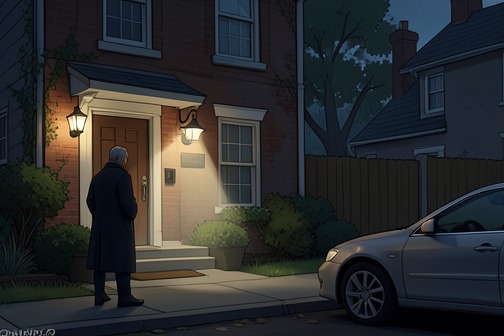
The [East Area Rapist attacks](entity:event-recall-event-east-area-rapist-attack-4b1e821942c1) were a serial crime series whose reach became legible through repeated details: homes chosen for their layout and surroundings, signs of prior prowling, and movements between cities that resisted a simple explanation. Investigators and later researchers reconstructed not only individual attacks but also the preparation around them—the offender’s attention to neighborhoods, the clues left along routes, and the limits of what geography could establish. The result was a portrait of deliberate selection and apparent local familiarity, without a confirmed identity or a settled account of every journey.
## Reconnaissance and the Choice of Neighborhoods
The police reports suggested that the [East Area Rapist](entity:expression-recall-expression-east-area-rapist-824613894ac3) surveyed whole neighborhoods, not only the people he eventually attacked. Before an assault, nearby homes could show signs of prowling or unlawful entry, and small objects might disappear. Hang-up calls rose in the four- or five-block area around a later attack. Taken together, these details indicated that the offender was gathering information about residents and their routines, and considering multiple possible targets before acting. The reports support a pattern of preparation; they do not establish the precise decision process behind any individual attack.
The locations themselves also shared features. The offender favored single-story houses, often the second home from a corner and near a greenbelt, park, or open field. A house’s layout could make it easier to assess activity from outside, while yards and fences offered routes through a block. In an account of one house built in 1972, [Paul Holes](entity:character-recall-character-paul-holes-323940342fc9) noted that a second story could expose someone prowling outside to observation from above. The house was L-shaped and occupied roughly a quarter acre, yet resembled other crime-scene houses closely enough to seem interchangeable with them. That repetition made ordinary residential design part of the investigative question, without proving that any single feature caused an attack.
## Attacks, Routes, and Uncertain Leads
Evidence from a [Danville](entity:location-recall-location-1c9f36039354) crime scene offered a partial reconstruction of movement. Three bloodhounds—Pita, Betsey, and Eli—worked the area, and their handlers agreed on a likely route: entry through a north-side backyard fence, departure over the southwest corner of a rear fence, and travel south beside the railroad tracks. At a cross street, the offender may have entered a vehicle. The dogs’ movement along fences and into side yards also suggested extended prowling. Their handlers cautioned that time and small changes in wind could alter scent pools, so the route was an inference from tracking evidence rather than a complete account of the offender’s movements.
A separate case in [Walnut Creek](entity:location-recall-location-b5eeea710294) showed how a setting could help investigators think about access and escape without resolving identity. Across from the house stood a large open field and a school; the neighboring house was vacant and for lease, and construction of a pool was underway at another nearby house. Dogs tracked the offender’s scent around a corner, where he appeared to have reached a vehicle. Police patrols after the attack also encountered other suspicious activity, including men whose behavior prompted stops. Those encounters were not proof that the men were connected to the series; instead, they illustrate the difficulty of distinguishing a meaningful lead from the surrounding nighttime noise.
An October 28 report from Montclair Place recorded another revealing circumstance: [Kathy](entity:character-recall-character-kathy-cb914b1b0058) and her husband were in the last hours of moving out when the offender came to their nearly empty home. The couple had a three-year-old son. They told investigators that the offender did not open or approach the child’s bedroom door. Other victims with young children had noticed similar restraint around their children’s rooms. The cases left investigators asking how the offender identified households, learned their routines, and acquired knowledge of interior layouts; the evidence did not settle how he obtained that information.
## Public Awareness and the Neighborhood Response
The reports also trace a change in community awareness. During roughly the first dozen attacks, public knowledge of a serial offender was slight. As media coverage and neighborhood discussion grew, residents increasingly recognized the possibility that the East Area Rapist was nearby. About a year into the attacks, victims described waking to a flashlight and recognizing the danger through what they had heard. Some said their responses were shaped by accounts that the offender sought frightened victims.
Greater awareness did not necessarily produce collective vigilance. The narrative distinguishes early inaction caused by ignorance or inertia from a later retreat into self-protection: neighbors who saw or heard something might lock their doors, turn off lights, and withdraw rather than check on others or call police. In the book’s account, ordinary explanations for a scream, a figure crossing a fence, or a sound in the night could delay action; sirens might come later. This contrast matters to the series’ social setting. The offender’s movements connected households, while fear and uncertainty could leave those households isolated from one another.
The reports also describe objects crossing between homes: cigarettes taken from one victim appeared outside another home, and jewelry stolen from a neighbor was later found at a different victim’s house. Pills or bullets taken from one location turned up in a neighbor’s yard. Some victims shared surnames or occupations. These links could function as clues, but they also made the offender seem present across a wider area than any one encounter could reveal. They do not show that every apparent connection was part of a single deliberate design.
## Geographic Reach and Limits of the Profile
Paul Holes divided the attacks into broad geographic phases: [Sacramento](entity:location-recall-location-0fe1c0701977) first, then [Modesto](entity:location-recall-location-b44defde8cc2) and [Davis](entity:location-recall-location-69c05f2f85cf), followed by the [East Bay](entity:location-recall-location-beb0fb4c899c) and [Southern California](entity:location-recall-location-820a2bba2911). He considered the pattern of attacks in Sacramento evidence of intimate familiarity with the area. In his assessment, the offender crossed the region early in the series rather than appearing only around one possible institution such as Sacramento State. He treated a Sacramento history as likely, while acknowledging that a history in [Goleta](entity:location-recall-location-7dfb832f0e30) remained possible and that the reasons for attacks in [Irvine](entity:location-recall-location-2f62f484d360) were unknown.
The movement between Modesto and Davis posed a sharper question. The two cities are about 110 driving miles apart, and the second Modesto attack and second Davis attack occurred only 22 hours apart. Holes noted that the Modesto case included a cab driver who picked up a strange man from an airport and dropped him near new construction south of the attack location; in the Davis case, shoeprints led from the victim’s house toward the [University of California, Davis](entity:organization-recall-organization-university-of-ca-5868a7086a3d) airport. He considered whether the offender might have flown between the places for work, perhaps in connection with land development. This was a hypothesis prompted by the timing and clues, not an established account of the offender’s employment or travel.
[Geographic profiling](entity:concept-recall-concept-geographic-profiling-e7b2bf822eac) offered a way to narrow a large suspect pool by comparing crime locations with possible home or work anchors. [Michelle McNamara](entity:character-recall-character-michelle-mcnamara-add26011e3fd)’s August 2014 note about [Carmichael](entity:location-recall-location-37206811bae7) as a possible central clearing or buffer zone reflected continued reconsideration of the map after years of research. The book estimates that the offender was, with reasonable certainty, one of roughly 700,000 people living in [Sacramento County](entity:location-recall-location-a98ebc72cc81) in the mid-to-late [1970s](entity:time-recall-time-1970s-2f89f32df2c9). Its profile draws on 29 distinct locations associated with confirmed attacks and nearly 100 likely related burglaries, prowler reports, and other incidents. In geographic-profiling terms, buffer zones are areas where a serial offender may live while avoiding crimes immediately near home.
The profile remained a tool for prioritizing possibilities, not a means of naming the offender. The method was not formally established until the late [1980s](entity:time-recall-time-1980s-3c00692f91a5), after much of the series, and the Southern California crimes were not generally recognized as connected to the East Area Rapist until DNA evidence linked them. The book therefore reasons that the offender likely lived in Southern California during the period of those crimes, while cautioning against excluding someone solely because no such residence can be established. Sacramento, where the offender was most prolific, provided a stronger basis for geographic analysis; connections to [Stockton](entity:location-recall-location-5ecf5b252f49), Modesto, Davis, and other locations remained less certain. The attacks’ enduring significance lies partly in that tension: a dense pattern of documented choices and movements could narrow the field, but it could not, by itself, turn an unknown offender into a known person.
Event 28
Original Night Stalker murders
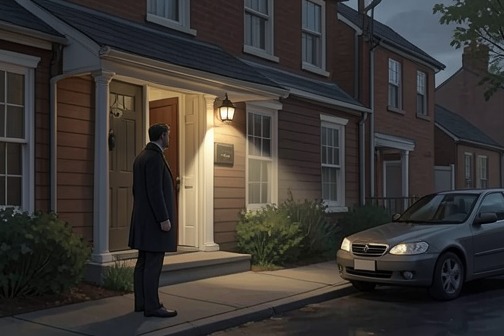
The [Original Night Stalker murders](entity:event-recall-event-original-night-stalker-be5c04912fb6) were the lethal escalation of a serial crime series that had already terrorized communities through rape, burglary, and prolonged neighborhood surveillance. The account places the murders within a broader pattern of preparation and misdirection, then marks a decisive change in the offender’s methods: victims who had once been left alive were now killed, and the crime scenes became part of a series whose scale and geography would take years to understand.
## Scale and Scope
The murders belonged to a vast body of crimes rather than a small cluster of isolated scenes. The offender had raped more than fifty women and murdered at least ten people; investigators and later researchers faced more than fifty-five crime scenes and thousands of pieces of evidence. The scale matters to the account’s portrait of the case: it was a puzzle whose complete design was known only to the perpetrator, while the people trying to reconstruct it had to work from fragments spread across places and years.
The murders are recalled alongside the [East Area Rapist](entity:expression-recall-expression-east-area-rapist-824613894ac3)’s earlier pattern of prowling and reconnaissance. Police reports described a perpetrator who appeared to study neighborhoods as well as individuals: he favored single-story houses near open fields, parks, or greenbelts; entered nearby homes; and left small items missing. Reports of hang-up calls rose in the blocks around an attack. These incidents suggested that the eventual target was selected from a wider field of possible victims, with the offender gathering information and preserving options before a chosen night. This pattern provides context for the murders without making every act of surveillance itself a murder.
## The Shift to Murder
The account presents the murders as a change in the offender’s operating pattern. After roughly three years, the earlier script no longer supplied sufficient stakes; the series moved from assaults in which victims were left alive to killings. That shift altered the consequences for victims and the time available to investigators. A rapist who left victims bound in their homes had, the narrator observes, allowed a limited interval for escape from the neighborhood. Murder changed that calculation: the offender could leave without the same urgency because discovery might be delayed.
The murders of Lyman and [Charlene Smith](entity:character-recall-character-charlene-smith-2b3b308f30cf) in [Ventura](entity:location-recall-location-b509f06b95b7) give this change a specific date and setting. The offender killed the couple on March 13, 1980, and their bodies were not found for three days. The interval is significant in the account not as a procedural detail alone, but as evidence of how the new pattern changed the conditions of flight. The violence had moved beyond the earlier series’ established rhythm, and the delay before discovery gave the killer time that a surviving victim might have denied him.
The method also remained tied to the homes he entered. In the Smith murders, as in the account’s description of his broader practice, the offender used objects found at the victims’ residences, including a fireplace log, crowbar, and wrench. He did not need to arrive equipped with a conspicuous set of tools; the domestic environment supplied what he used. This detail connects the killings to the earlier incursions into private homes while underscoring the altered purpose of those incursions.
## Geography and Recognition
The crimes’ geography complicated their recognition as a single series. The [Southern California](entity:location-recall-location-820a2bba2911) offenses were not generally identified as East Area Rapist crimes while they were occurring; the link was established later through DNA evidence. The account argues that, because the connection was not then recognized, the offender’s movement between Northern and Southern California should not automatically be explained as a deliberate attempt to frustrate geographic profiling. [Geographic profiling](entity:concept-recall-concept-geographic-profiling-e7b2bf822eac) did not acquire a formal name until the late [1980s](entity:time-recall-time-1980s-3c00692f91a5), after the relevant offending, and therefore could not have been the established investigative procedure he was evading.
The more direct inference in the account is that the offender was living in Southern California during the period when he committed crimes there. It treats this as the logical conclusion from the chronology and the later recognition of the linked offenses, while cautioning that a Southern California residence should not be an absolute requirement for considering a suspect. The distinction is important: the murders were eventually read as part of a larger series, but that later coherence should not be mistaken for knowledge investigators possessed at the time.
## Disappearance and the Case’s Unfinished Shape
The account places the offender’s disappearance after May 4, 1986. It entertains the possibilities that some observers believed—that he had died or gone to prison—but does not accept either as established. Instead, it presents the end of the known crime series as an unresolved break. Age may have slowed him, the narrator suggests, but the account’s larger explanation is that the balance was changing: memories faded and paper records deteriorated, while technology improved and the investigative pursuit gained ground.
That ending does not close the murders; it changes the terms on which they could be approached. The series had left victims, families, investigators, and communities with consequences that outlasted the offender’s known activity. Its eventual reconstruction depended on connecting scenes that had once appeared geographically and institutionally separate. In this telling, the murders are both a point of escalation and a test of how far evidence can reach across time: the crimes stopped, but their pattern remained unfinished until new methods could bring the scattered record into focus.
Event 29
Maggiore murders

The [Maggiore murders](entity:event-recall-event-maggiore-murders-686d41c25091) were the February 1978 killings of [Brian Maggiore](entity:character-recall-character-brian-maggiore-bfe9ef3dedbd) and [Katie Maggiore](entity:character-recall-character-katie-maggiore-035267bc13cb), who were shot while out walking their dog in [East Sacramento](entity:location-recall-location-fd49c2ba321a). Their deaths became entangled with the investigation of the [East Area Rapist](entity:expression-recall-expression-east-area-rapist-824613894ac3) when later-discovered reports described prowling and break-ins near the crime scene. The possible connection sharpened the case’s significance without resolving its central question: the murders were never conclusively linked to the East Area Rapist.
## The Murders and Nearby Activity
Decades later, [Michelle McNamara](entity:character-recall-character-michelle-mcnamara-add26011e3fd) stood with Detective [Ken Clark](entity:character-recall-character-ken-clark-ffab28aaf468) outside the scene of the double homicide. Clark believed the East Area Rapist had shot the young couple. The police reports he had recently located described prowling and break-ins in the area that night, with activity moving closer and closer to where Brian and Katie Maggiore were ultimately killed. The reports made the killings appear to sit within a sequence of suspicious neighborhood activity, though they did not establish who was responsible.
The reports drew attention to a broader pattern identified in the East Area Rapist cases. He appeared to survey neighborhoods as well as individual people, often entering nearby homes and taking small or personal items before an attack. Hang-up calls reportedly increased within a few blocks of some targeted homes. Investigators and later readers could therefore regard the activity around the Maggiore crime scene as suggestive, but the general pattern could not by itself prove that the same offender was present.
## The Composite and the Unsettled Link
Witnesses obtained a good look at the suspect, and a composite image was released. After its release, the East Area Rapist’s activity shifted west to [Contra Costa County](entity:location-recall-location-815186f9e774). The chronology encouraged a theory that the image had frightened him away from [Sacramento](entity:location-recall-location-0fe1c0701977). Clark believed he had been spooked; [Paul Holes](entity:character-recall-character-paul-holes-323940342fc9) did not accept that explanation. The sequence permits the theory but does not settle the reason for the shift, or establish that the Maggiore murders belonged to the East Area Rapist’s series.
Clark showed McNamara the composite and considered it the closest available image of the offender. Its importance lay in the prospect of recognition, but it was still an approximation rather than an identification. The image and the timing of the offender’s westward movement remained clues to weigh, not proof that closed the gap between the murders and the East Area Rapist cases.
## Records, Missed Leads, and Reassessment
Clark’s renewed review extended beyond the composite to old police reports, including traffic stops and Peeping Tom incidents that had not been treated as relevant at the time. He was troubled by how weak or incidental judgments could shape the handling of a suspect. In one instance, a suspect was reportedly allowed to go after a relative offered an anecdote that investigators treated as reassuring; another person’s physical feature was also used to discount him. Clark’s examples exposed the fragility of some past screening decisions, though the account does not establish that either judgment concerned the person responsible for the Maggiore murders.
The later inquiry thus reopened a field of possible connections without producing a conclusive identification. Reports of prowling, witness views, the composite, and the change in the East Area Rapist’s apparent geography each carried potential significance, but their combined force remained uncertain. The case illustrates how a clue may acquire fresh meaning when records are reread while still falling short of proof.
## Significance and Continuing Uncertainty
The murders occupy an unsettled boundary between a documented homicide and a suspected connection to a larger series. Clark’s archival work made the nearby prowling and break-ins newly legible as possible signs of the East Area Rapist’s presence; Holes’s disagreement with Clark’s explanation for the subsequent move west preserved the uncertainty rather than resolving it. The evidence supports continued scrutiny of the connection, not a definitive attribution.
McNamara’s account presents the case through that tension: a close look at records that were once overlooked, a composite that seemed unusually promising, and interpretations that diverged even among investigators. The murders remain consequential not because the suspected link was proven, but because the recovered details made the question harder to dismiss and left it open.
Event 30
Davis East Area Rapist attacks
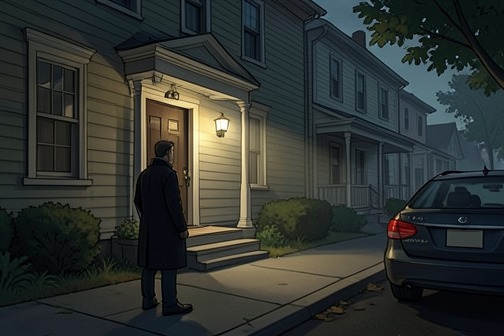
The [Davis East Area Rapist attacks](entity:event-recall-event-davis-east-area-rapist-766f9c9d3111) were a cluster in the [East Area Rapist](entity:expression-recall-expression-east-area-rapist-824613894ac3)’s movement beyond [Sacramento](entity:location-recall-location-0fe1c0701977), and their timing and settings became important to [Paul Holes](entity:character-recall-character-paul-holes-323940342fc9)’s attempt to reconstruct how he traveled. The accounts describe attacks on people living in markedly different homes, including an apartment building and a planned neighborhood. Holes placed [Davis](entity:location-recall-location-69c05f2f85cf) within a wider sequence linking Sacramento, [Modesto](entity:location-recall-location-b44defde8cc2), the [East Bay](entity:location-recall-location-beb0fb4c899c), and [Southern California](entity:location-recall-location-820a2bba2911), but treated the reason for the attacker’s movements as a hypothesis rather than a settled conclusion.
## Davis in the Geographic Sequence
In his initial geographic assessment, Holes divided the East Area Rapist’s attacks into four phases. The first was centered in Sacramento; the second included Modesto and Davis; the third moved into the East Bay; and the fourth extended into Southern California. [Stockton](entity:location-recall-location-5ecf5b252f49), he explained, belonged with the Sacramento phase because the attacker returned to Sacramento after an attack there. Modesto marked a change: after reaching that city, he did not return to Sacramento until after moving through the East Bay.
Within the second phase, the attacker toggled between Modesto and Davis, cities Holes put about 110 driving miles apart. The chronology sharpened his interest: the second Modesto attack and the second Davis attack were only twenty-two hours apart. Holes thought this pattern might have had a work-related explanation, rather than being a deliberate effort to confuse law enforcement. That interpretation offered a possible organizing principle for the movements, but the evidence presented does not establish what the work was or whether it belonged to the attacker.
## The June Apartment Attack
Attack number thirty-four occurred at approximately 3:50 a.m. on June 7, 1978, two days after the East Area Rapist’s first attack in Modesto. The victim was a twenty-one-year-old [University of California, Davis](entity:organization-recall-organization-university-of-ca-5868a7086a3d) student who lived in a multistory apartment building. [Larry Pool](entity:character-recall-character-larry-pool-1c8a148ee3f6) later called the building a structural anomaly: it was the only multistory dwelling the attacker was known to have targeted. The exception stands out against the broader pattern of single-story homes described in the case materials, but the record does not explain why this particular building was selected.
Holes discussed the possibility that the close timing of the Modesto and Davis attacks might reflect air travel. In the Modesto case, a cab driver had picked up a strange man from the airport and dropped him near new construction south of the victims’ location. In the Davis case, shoe prints from the victim’s home led back toward the University of California, Davis airport. Holes asked whether the attacker could have flown into Modesto for one attack and then flown to Davis for the next. The juxtaposition of the airport lead and the footprints made the idea discussable; it did not prove that the same person used a plane, or that the two traces established a route between the attacks.
## Attacks in [Village Homes](entity:location-recall-location-village-homes-f6e67b34884d)
The accounts also describe attacks in Village Homes, a Davis development whose streets were named after The Lord of the Rings. Developer Michael Corbett and his wife, Judy Corbett, had driven the development; Holes noted that Corbett was a fan of the books. The detail situates the investigation in a particular planned neighborhood, while the attackers’ movements and the victims’ homes remain the focus of the case narrative.
One victim was a thirty-two-year-old housewife whose husband was in bed beside her. The attacker restrained both adults and was also confronted with their ten-year-old son, whom he confined in a bathroom. He searched the house, returned to the woman, and assaulted her. Before leaving, he took seventeen rolls of pennies. The theft is a concrete detail in the account, but the evidence does not say why he chose those coins or what he did with them.
The third Davis victim was a thirty-three-year-old woman who had recently separated from her husband. Her sons were asleep in another room. The attacker used threats against the children to compel her compliance, then assaulted her; the narrative reports that he cried before leaving. This attack, number thirty-seven, occurred at 2:40 a.m. on July 6, 1978. A three-month pause followed, after which the East Area Rapist resurfaced in the East Bay. The sequence gives the Davis attacks a discernible endpoint while also placing them within a broader pattern of movement and interruption.
## Reconnaissance, Interpretation, and Limits
The wider Sacramento reports describe an offender who studied neighborhoods as well as individuals. Before attacks, there could be prowling, unlawful entries into nearby homes, missing small belongings, and a rise in hang-up calls within a radius of four or five blocks. The account interprets these recurring signs as reconnaissance: selecting a neighborhood, considering several possible victims, and learning when residents were home. This broader pattern provides context for the attention investigators gave to residential settings, but it should not be mistaken for proof of how any particular Davis attack was planned.
Holes likewise described why single-story homes could offer practical advantages to a prowler: their interiors could be observed from windows, while a second floor might expose someone moving through yards to view from above. Against that general pattern, the multistory apartment attack in Davis remains an exception, not evidence that the pattern did not exist. The Davis material also records families and children being present, and in one case the attacker did not approach the young child’s bedroom; investigators and victims elsewhere wondered how he learned household layouts and personal routines. The accounts leave that knowledge unexplained.
The sequence therefore supports two different levels of conclusion. The dates, attack numbers, victim circumstances, stolen pennies, airport-related clues, and three-month hiatus establish a detailed chronology. Holes’s proposed work-related travel and possible flights connect some of those details into a theory, but remain possibilities. The attacks in Davis matter both as individual crimes and as a geographic hinge in the investigation: they link the Modesto movement to the larger eastward and southern progression without resolving how the attacker traveled or what brought him to each location.
Event 31
Walnut Creek East Area Rapist attacks
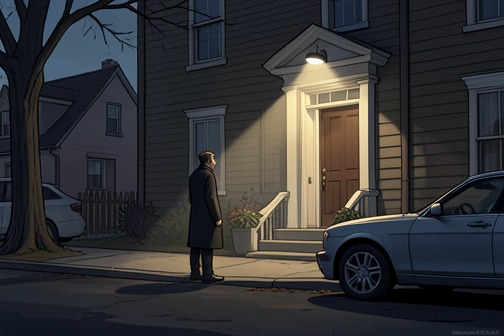
The [Walnut Creek East Area Rapist attacks](entity:event-recall-event-walnut-creek-east-area-b14d52fc5284) were two assaults in [Rancho San Miguel](entity:location-recall-location-6b1660e6f11d) in June 1979, separated by only 23 days. The return to a second home a short distance from the first made the neighborhood itself part of the event: the offender was not simply entering houses, but exploiting the layout of a residential area and moving through it with apparent familiarity.
## Setting and Preparation
Rancho San Miguel was an unusual [Walnut Creek](entity:location-recall-location-b5eeea710294) subdivision: of its 563 houses, 375 were modern Eichler homes. Their rear glass walls, sliding doors, and high fences gave the houses a strong inward orientation, with private backyards screened from the street. Parks and schools made the neighborhood attractive to residents, while open ground and fenced yards shaped how someone could watch, enter, and leave without being easily seen.
The attacks fit a broader pattern described in [Sacramento](entity:location-recall-location-0fe1c0701977) police reports. The [East Area Rapist](entity:expression-recall-expression-east-area-rapist-824613894ac3) appeared to survey neighborhoods as well as individual residents, often around single-story houses near a greenbelt or open field. Before an assault, reports recorded prowling, unlawful entries into nearby homes, missing small objects, and increases in hang-up calls within a few blocks. This activity suggested that he was gathering information and keeping several potential targets in play, rather than choosing a home at random on the night of an attack.
## The First Attack
On June 2, 1979, the East Area Rapist attacked a seventeen-year-old babysitter in an Eichler home in Rancho San Miguel. Anonymous calls that had followed her to the houses where she babysat did not come that night. Their sudden absence did not indicate that the danger had passed; the account presents it as a silence that concealed a change in approach. The young woman was at the kitchen table when she heard something in the house and the assailant appeared from a hallway. He said little, restrained her with plastic cable ties, and assaulted her.
The surroundings provided both openings and possible routes of observation. At the time, a large field and a school lay across the street, and the neighboring house was vacant. Tracking dogs followed the offender’s scent around the corner, toward a house where a swimming pool was being built, where investigators believed he had entered a vehicle. That route connected the house to the wider neighborhood: the attack’s setting included not only the point of entry, but also nearby vacant space and a possible way out.
The police response also took place against a landscape in which suspicious behavior could have more than one explanation. Officers patrolling after the assault stopped a drunk driver carrying a knife and sheath, and separately encountered a man who said he was looking for a lost cat; photographs of unsuspecting women taken with a zoom lens were in his car. These encounters did not identify the East Area Rapist. They show the difficulty of sorting the relevant trail from other alarming activity in the same suburban night.
## The Return
Twenty-three days after the first attack, the East Area Rapist returned to Rancho San Miguel. The second Eichler was only about a hundred feet from the first. This time, the victim was thirteen years old; her father and sister were in the house but did not know what was happening. The dogs again pulled their handlers around a corner and stopped at the same location as before, in front of the house where the pool was under construction.
Afterward, the girl asked investigators whether the assailant had ever gone back. Their answer was that he had not. The reassurance and the geography sit uneasily beside each other: the evidence does not say he returned to the same house, but it establishes that he came back to the same neighborhood and attacked again almost within sight of the first location. For residents and investigators, the distinction between one home and the surrounding streets was consequential.
## Pattern and Significance
The two assaults reveal a method built around preparation, opportunity, and repetition. The East Area Rapist’s apparent attention to neighboring homes and possible targets, together with the recurring route indicated by tracking dogs, makes Rancho San Miguel more than a backdrop. Its houses, fences, open areas, and access routes formed the environment in which he could observe, approach, and leave. The available evidence supports a reconstruction of his movements, but not a complete account of what he knew about either household or how he chose between them.
The assaults also show how a return can change the meaning of an earlier event. The first attack might have appeared to be an isolated intrusion; the second, so close in both time and distance, made the neighborhood’s exposure unmistakable. In the wider series, public awareness and fear grew as reports circulated, and some neighbors came to respond to possible danger by withdrawing behind locked doors rather than intervening. Rancho San Miguel’s attacks concentrate that larger problem in a small area: the offender’s repeated presence connected homes and residents, while leaving them uncertain about what had been observed, who might be next, and whether the danger had actually moved on.
Event 32
Goleta murders
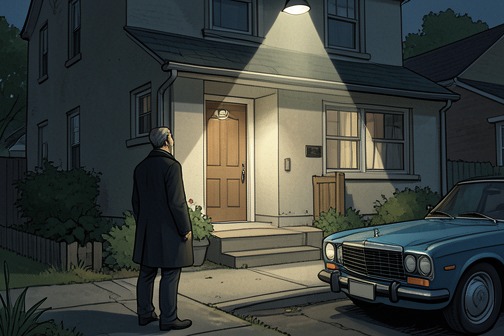
The [Goleta murders](entity:event-recall-event-goleta-murders-f15040353e63) were part of a series of attacks in northeast [Goleta](entity:location-recall-location-7dfb832f0e30) between 1979 and 1981, including the killings of [Robert Offerman](entity:character-recall-character-robert-offerman-f42f63984b41) and [Debra Alexandria Manning](entity:character-recall-character-debra-alexandria-ma-c2f0227f9989) and, later, [Cheri Domingo](entity:character-recall-character-cheri-domingo-429b1e68b397) and [Gregory Sanchez](entity:character-recall-character-gregory-sanchez-617c4b63ff59). The crimes unfolded in a compact residential area shaped by [San Jose Creek](entity:location-recall-location-4d3a7badb1fc), where the route between homes and the surrounding landscape became important to understanding how the attacker moved—and, decades later, to connecting the killings to the [Golden State Killer](entity:character-recall-character-golden-state-killer-105b3ef0ea21).
## Setting and Background
The attacks took place in an unassuming neighborhood occupying less than two square miles, about eight miles west of [Santa Barbara](entity:location-recall-location-433b36b956ee). San Jose Creek begins in the mountains north of the area, cuts through tract homes, and continues toward the Pacific Ocean. Investigators found shoe tracks and nylon twine ligatures along the creek that were thought to have been dropped accidentally. Their presence suggested that the attacker moved through the creek corridor, rather than simply approaching the homes from the visible street network.
The location of the first attack described in this sequence helps explain the importance of that less visible route. The Queen Ann Lane house stood behind another house and could not be seen from the street. The creek path, by contrast, offered a way to notice it. The contrast between an ordinary residential block and a path that might be familiar mainly to people who had spent time there as children made the landscape part of the investigation: the route was both a means of moving through the neighborhood and a clue to how the attacker might have known it.
Cheri Domingo and her children had moved into a house at 449 Toltec Way in early June, after Cheri’s father’s cousin offered them the chance to house-sit while the property was for sale. They had previously lived in a rented guesthouse in Montecito. The Toltec Way home was in a quiet, leafy cul-de-sac beside San Jose Creek, and the family’s stay was understood to be temporary: the house was being shown to prospective buyers, with a for-sale sign on the lawn. That unsettled domestic circumstance preceded the attack there, though the account does not establish that it caused or enabled it.
## Attacks and Killings
On [October 1, 1979](entity:time-recall-time-1979-10-1-d802635ea1db), an attack occurred at the concealed Queen Ann Lane house. The victims survived. A neighbor who was an off-duty FBI agent pursued the fleeing suspect, who escaped on a stolen ten-speed bicycle. The agent remained in radio contact with deputies on their way to the area, but the suspect was not apprehended. Ray, recalling the incident in a later conversation, said that the attacker could have been caught that night and that he had anticipated what the deputies would do. His remarks underline the importance of the escape in retrospect without resolving why the pursuit failed.
On December 30, 1979, Robert Offerman and Debra Alexandria Manning were murdered in Offerman’s Goleta condominium. Their deaths were one of the two double homicides in the series. The evidence provided here establishes the date, location, and victims, but does not give a detailed account of the attack. A later note about the case records that one detective needed psychiatric leave after the Offerman and Manning scene; another investigator described it as the worst crime scene he had seen. Those remarks convey the lasting professional impact of the case without supplying further details about what occurred inside the condominium.
The other double homicide took place on July 27, 1981, when Cheri Domingo and Gregory Sanchez were murdered by an intruder at the Toltec Way house. In the days before the killings, Cheri’s daughter, [Debbi Domingo](entity:character-recall-character-debbi-domingo-fb214c5a8808), had left home following a serious argument. Debbi had spoken with her mother by phone the day before the murders. The account preserves this family context alongside the crime’s date and location, but does not establish that Debbi’s departure had any connection to the attacker’s actions.
## Movement and Investigation
The book places the Goleta attacks within a wider pattern of neighborhood surveillance attributed to the [East Area Rapist](entity:expression-recall-expression-east-area-rapist-824613894ac3). In other cases, police reports described prowling, unauthorized entries into nearby homes, missing small objects, and a sharp rise in hang-up calls within a few blocks of an attack. The pattern suggested that the offender studied a neighborhood and its residents in advance, preparing options rather than choosing a target only on the night of an assault. These observations provide context for the Goleta investigation, but they are not presented as a complete, incident-by-incident account of what the attacker did there.
In Goleta, the creek and the hidden position of the Queen Ann Lane house offer specific reasons investigators and later researchers examined routes through the area. The physical clues along San Jose Creek supported the conclusion that the attacker had moved through the neighborhood’s less visible spaces. The account also describes the overgrown path, large trees, rocks, rope swings, and drainage features that made the creek corridor distinct from the surrounding tract homes. Adults who had grown up there recalled that boys had built a BMX track in the area in the mid-[1970s](entity:time-recall-time-1970s-2f89f32df2c9). These details raise a question of familiarity with the terrain, but do not identify who had used the path or prove how the attacker learned the neighborhood.
## Aftermath and Significance
The murders at Toltec Way remained unsolved for decades. Crime-scene tape marked the quiet cul-de-sac after the killings, and about thirty years later DNA from the scene connected the double homicide to the Golden State Killer. That connection changed the meaning of the Goleta crimes: the deaths of Cheri Domingo and Gregory Sanchez were no longer isolated from the wider series of attacks investigated across [California](entity:location-recall-location-california-fd5bbc3f2eb4). It also brought the earlier Queen Ann Lane escape and the killings of Robert Offerman and Debra Alexandria Manning into a broader account of the offender’s activity in Goleta.
The series is defined by the tension between its ordinary setting and the difficulty of seeing danger move through it. The homes stood among familiar streets, while the creek supplied a less exposed route through the neighborhood; the first suspect escaped despite an armed law-enforcement connection and deputies being on their way. The later DNA link provided a decisive association that the immediate pursuit had not achieved. Together, those circumstances make the Goleta murders a record of both repeated violence and delayed identification, with the neighborhood’s geography remaining central to how the events are reconstructed.
Event 33
Elaine Davis disappearance
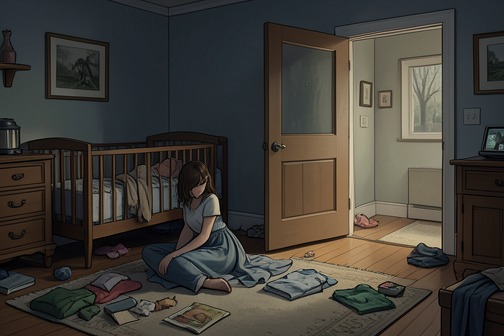
[Elaine Davis disappearance](entity:event-recall-event-elaine-davis-disappeara-d1739cd4f4f4) is the 1969 disappearance of seventeen-year-old Elaine from her family’s home in [Walnut Creek](entity:location-recall-location-b5eeea710294), a case whose scattered clues did not yield an answer for decades. Her belongings surfaced at several locations, while remains found in [Santa Cruz](entity:location-recall-location-a49558aa33e4) were misidentified and buried under the assumption that the woman was older. The eventual correction established that Elaine had died, though the account does not identify who was responsible or explain how she disappeared.
## Disappearance from the [Davis](entity:location-recall-location-69c05f2f85cf) Home
On Monday, December 1, 1969, Elaine’s mother left their home on Pioneer Avenue in north Walnut Creek to pick up Elaine’s father from work. When her parents returned at about 10:30 p.m., Elaine was gone. Her three-year-old sister remained asleep in her crib, and the house appeared undisturbed. Elaine was seventeen, a straight-A student with sandy blond hair and a heart-shaped face. She was nearsighted and had left behind the glasses she badly needed. The ordinary domestic details sharpen the uncertainty: nothing in the house seemed to signal what had happened, and the account supplies no explanation for her absence.
Elaine had planned to sew a brass button onto her navy peacoat. The button was later found in a field behind the house. Other belongings appeared farther away: her brown loafer, with its gold buckle, was found on [Interstate 680](entity:location-recall-location-680-292cc7ec19b3) in Alamo, and a housewife spotted the navy peacoat on a remote stretch of highway in the Santa Cruz Mountains, about seventy-five miles away. These separate discoveries traced a scattered route but did not, at the time, establish what had happened to Elaine.
## An Unidentified Woman in Santa Cruz
Eighteen days after Elaine vanished, a woman’s body came ashore at Lighthouse Point in Santa Cruz. A radiologist estimated that the woman was between twenty-five and thirty years old, an assessment that ruled out seventeen-year-old Elaine. The unidentified woman was buried in an unmarked grave, and the Davis disappearance went cold. The mistaken age assessment left the family’s central question unresolved even as investigators had, unknown to them, encountered Elaine’s remains.
Decades later, the distance between the two cases narrowed through a review of the old file. During a drive through [Contra Costa County](entity:location-recall-location-815186f9e774), [Paul Holes](entity:character-recall-character-paul-holes-323940342fc9) experienced the area not as a first-time visitor but as a landscape of past investigations; Walnut Creek brought back the mystery of the missing girl. A Walnut Creek police detective nearing retirement brought Elaine’s file to Holes thirty-one years after her disappearance. Reviewing it, Holes concluded that the radiologist had lacked a sound basis for determining the woman’s age. He joined other officials in seeking an exhumation.
## Identification and Aftermath
The remains were buried twenty-five feet deep on the side of a hill. After officials located the plastic body bag, Elaine’s identity was confirmed. Her father had died; her mother was living in [Sacramento](entity:location-recall-location-0fe1c0701977). Two days after the exhumation, Walnut Creek detectives asked Elaine’s mother to meet with them, and her younger sister came from out of town. They told the two women that the remains were Elaine’s.
The identification resolved one crucial uncertainty: Elaine had not simply disappeared into an unknown fate, and the unidentified woman buried in Santa Cruz had been her all along. It did not, in the account, supply an explanation for her disappearance or name a responsible person. The case’s movement from a quiet, apparently undisturbed home to belongings found across a wide area, then to a misidentified burial and a late identification, makes the limits of early conclusions part of its history. The delay ended the uncertainty about Elaine’s identity, but not every question surrounding her disappearance.
Event 34
Elaine Davis identification

[Elaine Davis identification](entity:event-recall-event-elaine-davis-identifica-7406781a49a2) was the 2000 resolution of a mistaken exclusion that had kept a missing teenager’s identity separate from the remains of an unidentified woman for thirty-one years. The case was reopened when [Paul Holes](entity:character-recall-character-paul-holes-323940342fc9) challenged the original age assessment, leading to an exhumation, the identification of Elaine, and a brief, consequential reunion between her remains and her family.
## Disappearance and the Jane Doe
On December 1, 1969, seventeen-year-old Elaine disappeared from her family’s home on Pioneer Avenue in [Walnut Creek](entity:location-recall-location-b5eeea710294). The house showed no sign of disturbance, and Elaine had left behind the glasses she needed because of her nearsightedness. The small clues that surfaced afterward pointed in different directions: a brass button she had meant to sew onto her navy peacoat was found in a field behind her home; a brown loafer with a gold buckle turned up on [Interstate 680](entity:location-recall-location-680-292cc7ec19b3) in Alamo; and a housewife later spotted a petite girl’s navy peacoat on a remote stretch of highway in the [Santa Cruz](entity:location-recall-location-a49558aa33e4) Mountains.
Eighteen days after Elaine vanished, a woman’s body came ashore at Lighthouse Point in Santa Cruz. A radiologist estimated that the woman was twenty-five to thirty years old, and officials concluded that the body was not Elaine. The unidentified woman was buried in an unmarked grave, while Elaine’s disappearance went cold. The age estimate thus became a consequential barrier: it separated a body already recovered from the family still searching for Elaine.
## Review and Exhumation
Thirty-one years later, a Walnut Creek police detective nearing retirement brought Elaine’s case file to Paul Holes. Reviewing the old material, Holes concluded that the radiologist could not have made an accurate age determination from the bones. He joined other officials in seeking permission to exhume the unidentified woman, reopening a question that the original estimate had appeared to settle.
The grave was on the side of a hill, twenty-five feet deep. During the exhumation, shovels struck a plastic body bag containing bones. The physical recovery made it possible to correct the earlier assessment and pursue the identification that had eluded investigators for decades.
## Identification and Family Aftermath
Elaine’s father had died; her mother was living in [Sacramento](entity:location-recall-location-0fe1c0701977). Two days after the exhumation, Walnut Creek detectives asked to speak with her. Elaine’s younger sister came from out of town for the meeting, where the detectives told the family that they had identified Elaine. The confirmation ended the uncertainty about where Elaine’s remains were, but it arrived after her father could hear it.
The family buried Elaine. A week later, her mother died. The sequence gives the identification a painful closeness: after decades without an answer, the family received confirmation and laid Elaine to rest, only for her mother’s life to end soon afterward.
## Significance
The identification turned on revisiting a judgment that had been treated as conclusive. Holes’s review did not begin with a newly discovered body or a fresh eyewitness account; it began with a case file and recognition that the original estimate of age was unreliable. The exhumation connected the unresolved disappearance to remains already in an unmarked grave, showing how a mistaken interpretation can prolong a family’s search even when the evidence has been recovered.
For Elaine’s family, the result supplied the answer to the question of her identity, not a full account of what had happened to her. Its timing also shaped its meaning: the father was already dead, and the mother died shortly after the burial. The case therefore closes one essential uncertainty while preserving the human cost of how long that uncertainty endured.