
The Online Sleuths and the Cuff Links
I'll Be Gone in the DarkThis thread traces Michelle’s use of online researchers, public records, and a stolen keepsake as she turned a private fascination with the case into a cooperative investigative effort.
increasing Bearing strength in each event
 decreasing
Bearing strength in each eventdecreasingA Digital Case Community

Finding the Message Board
The Cuff-Link Search
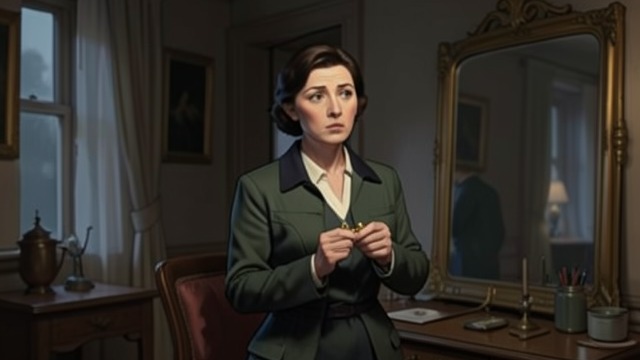
A Stolen Heirloom
Searching the Inventory
Michelle reviewed a list of distinctive items stolen during the attacks, looking for objects that might still be recognizable decades later. One entry described a pair of gold cuff links with the initials N.R., taken in Stockton in 1977.
She compared the police report’s rough drawing with online listings and found a similar pair offered by a vintage store in Oregon. The match was visual rather than conclusive, but the initials and design made the listing worth pursuing.
A Sudden Purchase
Michelle paid for overnight shipping, then told her sleeping husband that she thought she had found the killer. In reality, she had found an object that might have belonged to the victims, not the person who stole it.
The moment captures how a small lead could feel enormous after long hours of searching. The cuff links gave her a concrete item to pursue, but the distance between locating a suspected artifact and identifying an offender remained vast.
Turning Over the Find

From Online Lead to Police Evidence
A Researcher’s Dilemma
Michelle called The Kid to discuss the purchase and quickly recognized that the cuff links should be examined by investigators. She worried that they might see her action as an unauthorized intervention, but she also knew that keeping the item would serve little purpose.
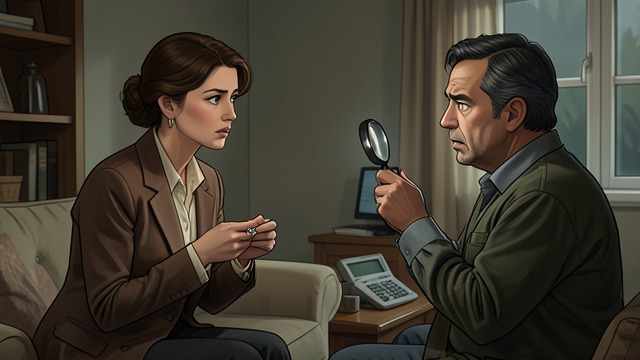
A scheduled interview with Larry Pool gave her a chance to explain the discovery directly. She brought the cuff links in a small bag, uncertain how the cautious investigator would react to a lead obtained through an online store.
A Warm Reception
Pool listened, examined the item, and responded with a small smile. His acceptance mattered to Michelle because it showed that the relationship between an outsider and the official investigation could be collaborative rather than adversarial.
The exchange did not establish that the item was authentic. Its immediate importance was that the lead entered the investigative process, where it could be checked against people who knew the original jewelry.
The Cuff Links Disproved
An Elimination, Not a Break
Victims Compare the Image
Pool sent the victims a high-resolution photograph of the cuff links. They remembered the family heirloom but were careful not to claim a match simply because they wanted the object to be theirs.
They consulted another relative who knew the jewelry better. The comparison showed that the purchased pair was not the one stolen in Stockton, ending the lead as an identification of the missing heirloom.
What the Dead End Taught
Michelle was disappointed, while Pool appeared accustomed to the process of testing and eliminating possibilities. The experience clarified that a resemblance could start an investigation but could not substitute for confirmation from reliable sources.
The cuff links were returned to their proper status: a mistaken lead rather than a recovered clue. The episode also showed how productive research depended on investigators’ willingness to follow an idea to a negative result.
Building a Shared Archive

Records in the Box Room
The Mother Lode
Michelle and Paul Holes obtained permission to review a large collection of Orange County case files. They selected boxes and bins to bring to Los Angeles, where Michelle turned part of her daughter’s playroom into a workspace for organizing and scanning the material.
The files contained reports and supplemental details that had not been readily accessible to the wider team. Digital copies made the records searchable and offered investigators another way to locate neglected names, witnesses, and suspicious incidents.
A Public and Private Effort
Michelle passed research and organized findings to investigators, while online contributors continued to examine maps, directories, and case records. The work depended on trust: researchers needed access to information, and official investigators needed confidence that the material would be handled responsibly.
The collaboration did not yield a completed identification in the book. It did create a broader archive and a method for continuing the search, making research itself one of the lasting contributions of the amateur community.
Around 2011
July 3, 2012
The day after ordering the cuff links
A few days after the item reached Orange County
January 2016 to the final months of Michelle’s research
