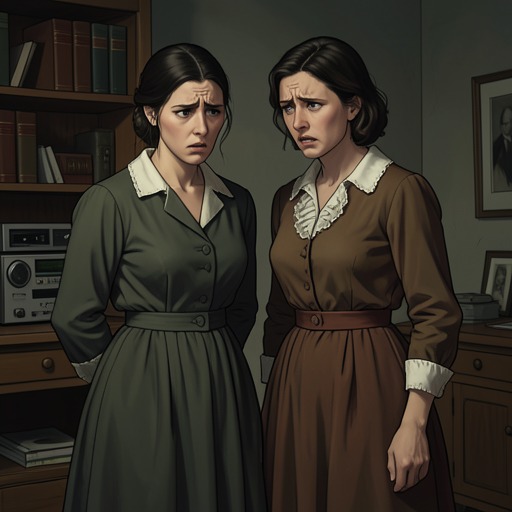
Cheri Domingo
I'll Be Gone in the DarkCheri Domingo, born Cheryl Grace Smith, was a young mother whose warm relationship with her children and patient approach to parenting were tested by family upheaval and her daughter’s adolescence. After moving with her children to a house in Goleta in 1981, she and Gregory Sanchez were murdered there. The case remained unresolved for decades, its eventual DNA connection placing their deaths within the crimes of the East Area Rapist / Original Night Stalker.
Family and Early Life
Cheri met Roger Domingo, an electronics technician in the Coast Guard who was two years older, while she was in high school. They married in San Diego on September 19, 1964, shortly after she turned eighteen. Their daughter, Debbi Domingo, was born the following August, and their son, David, arrived almost exactly a year later. Roger left the Coast Guard and became first a Methodist minister and later a middle-school teacher. In 1975, the family moved to Santa Barbara.
Debbi recalled her first twelve years with a sense of warmth: home-baked cookies, picnic lunches at Nojoqui Falls Park, and parents who joined their children on the monkey bars and at the beach. Cheri and Roger were physically active, and family life initially carried an easy, outdoors-oriented character. That recollection matters against the later account of a household increasingly divided by adult conflict and adolescent rebellion.
A strain developed in Cheri and Roger’s marriage. In an interview, Roger recalled their picnics and visits to Solvang, but shifted from speaking of what they did together to describing what Cheri liked: dancing and parties. The account leaves the precise source and implication of that wording uncertain; it does establish that their social preferences differed. They separated in December 1976. Roger returned to San Diego, while Debbi and David divided their time between their parents in San Diego and Santa Barbara.
Motherhood and Family Strain
Cheri was patient with Debbi when she broke curfew or failed to check in, believing that the behavior was typical teenage testing of limits and would pass. The two sometimes tried on clothes together or ate at Pancho Villa, and strangers mistook them for sisters. They enjoyed the mistake as a sign of their closeness: their bond was not only maternal but companionable.
That closeness did not spare them conflict. Debbi began using the separation between her parents to resist rules, threatening to move to the other parent whenever one pushed back. She changed schools at least half a dozen times, sometimes in the middle of a school year, and by July 1981 her previously good grades had fallen. Cheri and Roger, rarely in agreement, both disapproved of Debbi’s older boyfriend in San Diego. As arguments escalated, Cheri’s reminders that she was the parent were described as hesitant rather than forceful. Friends urged her to set firmer limits.
The family’s separation also brought practical pressures. In June 1981, Cheri and her friend Ellen were laid off from their jobs at Trimm Industries, a small computer-furniture manufacturer. Cheri rented an IBM Selectric typewriter and worked on their résumés as they looked for new employment. At the same time, she was dealing with disputes with Roger over child support and deciding where she and the children would live.
The Move to Goleta
For several years, Cheri and the children had lived in a rented guesthouse in Montecito when they were not staying with Roger. In May 1981, Aunt Barbara offered them the chance to house-sit her Goleta home while it was for sale and she moved to Fresno. The house stood at 449 Toltec Way, on a quiet cul-de-sac near San Jose Creek. Ellen lived just across the way, one of the reasons the arrangement appealed to Cheri.
Cheri and the children moved in during early June. The house was temporary by design: it was being shown to prospective buyers, and a for-sale sign stood on the lawn. Debbi did not settle into the change. She missed her boyfriend in San Diego and ran up large telephone bills calling him. A few weeks after the move, following a serious argument with Cheri, she packed what she could, got on her bicycle, and left. Four days after a later clash at the Klein Bottle Crisis Shelter, Debbi called about retrieving a swimsuit she had left at the house. Cheri refused. The exchange marks a change from her earlier leniency: after advice from Ellen to impose consequences, she held a boundary even when Debbi’s immediate request was limited to collecting a personal item.
The Goleta house was also where Cheri sought friendship and considered a new future. Most nights she crossed the street to Ellen’s home; the two talked about work, love, and Cheri’s difficulties with Debbi. Cheri had begun trying personal advertisements and professional dating services. One prospective date left his name at work as Marco Polo, a joke that made her laugh. Ellen understood her as a romantic who hoped to marry again and imagined a lasting love. Cheri had also recently ended an intermittent relationship with a younger man she had known for years. The narrative places her connection to Gregory Sanchez in this period, though it does not establish every detail of their relationship.
Murder and the Long Unanswered Case
A neighbor heard a gunshot and then a woman speaking to someone in a controlled manner, apparently telling the person to take it easy. Investigators later believed that a sound from the bedroom door may have alerted Sanchez to an intruder and that he fought back. The account suggests the woman’s words may have been Cheri’s last, but does not present that identification as certain.
On Monday morning, a Realtor entered 449 Toltec Way to show the property and found Cheri and Sanchez dead in the master bedroom. He immediately took his prospective clients out and called the police. The house’s pending sale, which had made the family’s new home feel provisional, became the circumstance that brought the bodies to light. Cheri’s murder was part of the double homicide of her and Sanchez; at the time, the identity of the killer remained unknown.
The case’s eventual resolution came not from a witness’s call but from forensic evidence. In 2011, investigators successfully developed a DNA profile from degraded material recovered from a blanket at the crime scene. The profile conclusively linked the Goleta murders to the East Area Rapist / Original Night Stalker. That finding reclassified the crime within a wider series, but it arrived long after the people closest to Cheri had endured years without an answer.
Family Aftermath and Significance
Debbi was fifteen when she learned that her mother had died. She told her grandmother, who initially took the news as a joke. Debbi moved to San Diego almost immediately afterward, and Cheri’s side of the family gradually receded from her life. A remark she overheard from her grandmother—expressing relief that another relative, rather than Debbi’s mother, had died—remained with her. Later attempts by Debbi to reconnect with her grandmother and aunt received no response.
Roger, too, was left searching for an explanation. He obsessed over the details of Keith and Patty’s murders, hired a private investigator, offered a substantial reward, and arranged for friends and co-workers to be reinterviewed. He even consulted a clairvoyant when other avenues failed. The evidence did not cohere for him before his death on March 8, 1995. Investigators tested three glass tubes in October and November 1996 and prepared to contact the families with the results, but Roger had died a year and a half earlier.
Cheri’s story is thus bound to more than the final crime scene. The account shows a mother trying to preserve closeness while her family fractured, a woman facing job loss and a move while seeking companionship, and a daughter whose grief was followed by estrangement. The delayed DNA link eventually identified the killer’s broader pattern, but it could not restore the chance for Cheri’s family to learn that answer together.