Joe Alsip preliminary hearings and dismissal
I'll Be Gone in the DarkThe Joe Alsip preliminary hearings and dismissal marked a sharp reversal in the investigation of Lyman and Charlene Smith’s murders: a case that began with investigators confident in their suspect ended with the prosecution unable to proceed and the investigation back at square one. The hearings did not identify the killer. Instead, they exposed how a central witness’s credibility could collapse, while leaving unresolved whether the murders were committed by someone known to the Smiths or by a stranger.
Background and the case against Alsip
Lyman Smith was a well-known Ventura attorney nearing appointment to a superior court judgeship. Charlene Smith, his second wife, had formerly worked as his secretary. Their bodies were discovered on March 16, 1980, by Lyman’s twelve-year-old son, Gary Smith, who had come to mow the lawn. The front door was unlocked; an alarm clock sounded from the master bedroom, where the boy found his father and stepmother beneath the covers. Bark fragments and a narrow log lay nearby.
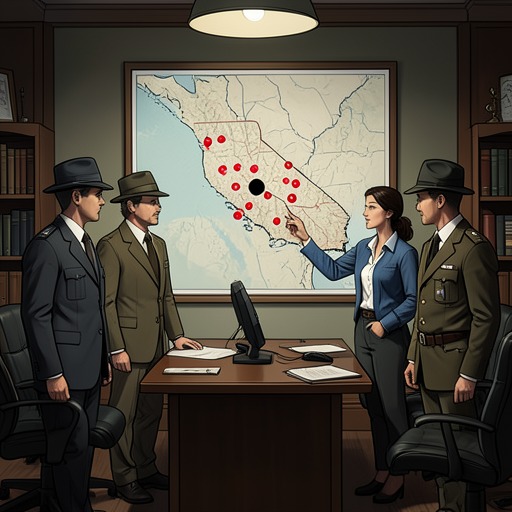
Investigators faced a flood of leads about the couple’s relationships and affairs, as well as business dealings that were not entirely above suspicion. They quickly focused on Joe Alsip, Lyman’s friend and former business partner. Alsip had visited the Smiths the evening before the murders, and his fingerprint was found on a wine goblet. The minister who spoke with Alsip told police that Alsip had essentially confessed to him. Those circumstances appeared to give the investigation a strong suspect and a witness who could connect him to the crime.
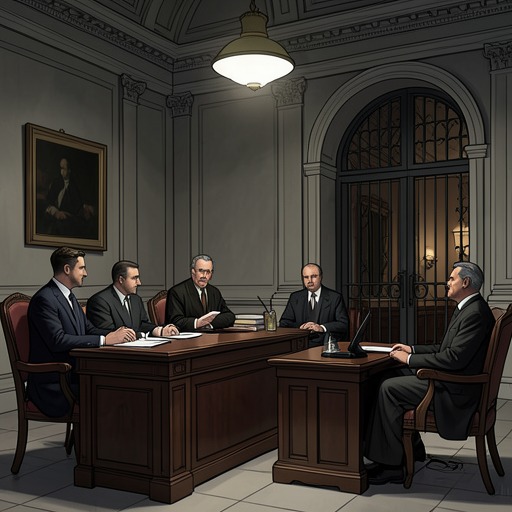
Alsip was arrested, and police and prosecutors entered the preliminary hearing with confidence. They were especially pleased that his attorney was Richard Hanawalt, whom they knew chiefly for defending people charged with drunk driving. Hanawalt’s courtroom speech could sound disjointed: he reached for mixed metaphors and non sequiturs, and his remarks gave the prosecution little reason at first to expect a carefully assembled challenge. That impression would prove misleading.
The defense turns to the minister
Anonymous tipsters urged Hanawalt to examine the minister’s past. His investigation uncovered a decades-long pattern, stretching from Indiana to Washington, in which the minister sought police protection in unusual circumstances and tried to insert himself into investigations. The inquiry shifted attention away from the apparent simplicity of the prosecution’s account and toward the reliability of the person whose story had helped make Alsip the focus of the case.
A police radio provided a particularly telling episode. After the minister insisted that he had received threats for turning in Alsip, the police chief gave him a radio. One afternoon, the minister’s voice came over it in an alarm, saying that someone was there and coming for him. Sergeant Gary Adkinson, one of the Smith-case investigators, was at the intersection of Telegraph and Victoria, only a block away, and hurried to the minister’s house. The minister stood inside the front door, holding the radio against his chest. When Adkinson arrived, the minister said the supposed assailant was gone. The speed of Adkinson’s arrival and the minister’s reaction made the incident a concrete part of the defense’s challenge to his account.
Hanawalt also recast the crime scene as evidence of a possible stranger attack rather than a killing by someone within the Smiths’ circle. He emphasized that the couple had been bound with drapery cord and killed with blows from a log, while the house’s lights were off. The bathroom window gave a person outside a view into the bedroom; the firewood pile was only a few yards away, and the log used in the attack was taken from it. These details offered a coherent alternative reading of the scene, but they did not establish the identity of the person who had entered the house.
Dismissal and the unresolved investigation
After the preliminary hearing, the Ventura County district attorney released Joe Alsip for lack of evidence. The case against him had not produced a resolution to the murders, and the investigative team returned to its starting point. Investigators remained divided: some believed the killer knew the Smiths, while others thought the crime was random and sexually motivated. The hearing had overturned the confidence surrounding the arrest without replacing it with a settled account of what happened.
The Smith file stayed on a shelf in the investigators’ bullpen for years and, after a decade, was moved to the evidence vault. Its later handling showed both the persistence of the unanswered questions and the limits of what the hearing had accomplished. Larry Pool noticed a Ventura Police Department case number in the Harrington file and learned that it referred to the Smith murders. He asked that remaining forensic material be sent to the Orange County Crime Lab. The package contained glass slides made from swabs collected during the investigation; despite the value of biological material in forensic work, the swabs themselves were not included.
Mary Hong nevertheless developed a DNA profile from semen on the slides. Her report, received by Pool on February 17, 1998, eliminated Lyman Smith as the source. That result did not identify the killer or settle the competing theories about whether the perpetrator knew the couple. In retrospect, the preliminary hearings were a consequential failure of the prosecution’s case, not a solution: they cleared Alsip from the path of prosecution while leaving the Smiths’ deaths unexplained and the evidence to await later examination.