Michelle McNamara–Paul Holes Investigative Collaboration
I'll Be Gone in the DarkMichelle McNamara–Paul Holes Investigative Collaboration describes the partnership between a crime writer working from the outside and an investigator inside the case. Their work joined systematic research to active law-enforcement inquiry: McNamara organized case materials, identified possible connections, and sent findings to investigators, while Holes assessed leads and shared investigative developments with her. The collaboration became notable not simply for its exchange of information but for the trust that allowed an outsider to become, in Holes’s view, a detective partner.
An Online Introduction
Their connection began in 2011, after McNamara published her first True Crime Diary story about the East Area Rapist / Original Night Stalker, before she had begun using the name Golden State Killer. Holes shared a link to her story on the A&E Cold Case Files forum, then the only place where people were having a dialogue about the case. McNamara wrote to him immediately. The exchange linked two people approaching the same unresolved investigation from markedly different positions: she had begun as a writer and researcher, while he was a law-enforcement investigator.
The origin matters because the relationship did not begin as an assigned professional partnership. It grew out of an online discussion in a small forum and developed through direct communication. McNamara’s first story served as a point of contact; the correspondence that followed opened a channel through which the two could compare discoveries and questions. The collaboration would eventually reach beyond their original exchange, but its starting point remained a writer’s public account and an investigator’s response to it.
Records, Research, and Shared Leads
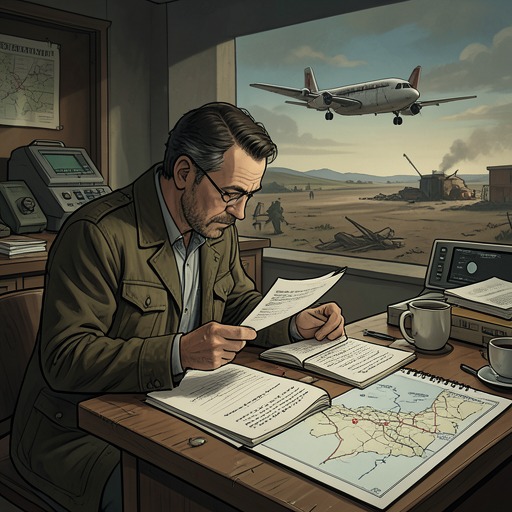
When McNamara began work on the Los Angeles magazine feature that became the basis for her book, official case files started arriving in her possession. She read them closely and built an index of the people, places, and objects named in the reports. The index had three practical aims: making investigative details easier to retrieve, distinguishing individuals and locating people who might merit attention because of later geographic movement, and finding repeated names or possible connections among victims. This was structured case research, not simply a retelling of published accounts.
The material called for careful cross-referencing because the crimes involved patterns extending beyond a single victim or house. Police reports described the East Area Rapist stalking neighborhoods as well as individuals, moving through canals and drainage ditches, and appearing to select areas with particular kinds of homes and nearby open space. Reports also recorded signs of prowling and illegal entry around intended victims’ homes. McNamara’s method of indexing names, places, and things was designed to make just such scattered investigative information usable together, though the evidence does not attribute any particular finding about these patterns to her index.
She cultivated relationships with active and retired investigators, and those connections developed into open exchanges of information. She passed investigators her findings along with the Master List. Holes later described her as a natural investigator whose insight and persistence added value to the case. Her work thus moved between independent research and communication with law enforcement: she could pursue names and connections in the records, then submit the resulting leads to people positioned to investigate them.
A Reciprocal Investigative Partnership
Holes characterized their collaboration as a continuing exchange rather than a one-way transfer of tips. When he became excited about a lead, he sent it to McNamara; when she found a name in the records, she sent it to him to look into. They had their own promising suspects and communicated by email, building excitement as a possibility seemed to sharpen, then confronting the disappointment when DNA eliminated a suspect. The investigation’s repeated reversals were shared between them: a lead could feel momentarily decisive without surviving forensic scrutiny.
That rhythm helps explain why Holes regarded the partnership as both practical and personal. McNamara was not merely receiving updates; her independent work generated material he could follow up. Nor was she working in isolation: Holes supplied investigative leads and engaged with the connections she uncovered. Holes said she earned not only his trust but that of the task force, and that she began as an outsider and, over time, became one of them. His account presents their private-public partnership as unusual in a criminal investigation, built through sustained contribution rather than formal appointment.
The wider case made that persistence consequential. In Sacramento, public awareness of a serial rapist grew from near silence as media coverage and community talk increased; fear and changing neighborhood behavior became part of the record surrounding the crimes. For investigators and researchers alike, the task was to distinguish useful information from rumor, connect details across reports, and test suspicions rather than mistake excitement for proof. The evidence does not make McNamara responsible for any particular investigative outcome, but it shows how her organized research and her working relationship with Holes helped keep material and possible leads in circulation.
The Last Exchange and the Partnership’s Significance
Holes last saw McNamara face-to-face in Las Vegas, where they spent considerable time talking about the case. Her last email to him was dated Wednesday, 4/20. As usual, she told him she was sending files that she and her researcher had found and thought he should know about. Holes did not know that their Las Vegas meeting would be their final face-to-face conversation; the email itself continued the familiar routine of sharing newly found material and anticipating further contact.
That closing detail captures the partnership in its working form. Even at the end of the recorded exchange, McNamara was searching, organizing, and sending information for Holes to consider. The account does not provide a resolution to the case within this relationship, nor does it claim that every shared lead proved useful. Instead, it documents a sustained method: independent research made legible to investigators, investigative knowledge returned to a trusted collaborator, and both participants enduring the high hopes and forensic eliminations that came with the search. Their collaboration matters as a rare bridge between public-facing case research and an active task force, formed through communication, tested through evidence, and maintained by reciprocal effort.