Queen Ann Lane home invasion
I'll Be Gone in the DarkThe Queen Ann Lane home invasion was the first crime investigators later connected to the East Area Rapist. On October 1, 1979, an intruder entered a couple’s home in Goleta, but the woman escaped and her partner evaded him outside. A nearby FBI agent saw the suspect flee on a stolen bicycle and gave chase, though the man escaped on foot.
The Attack and Escape
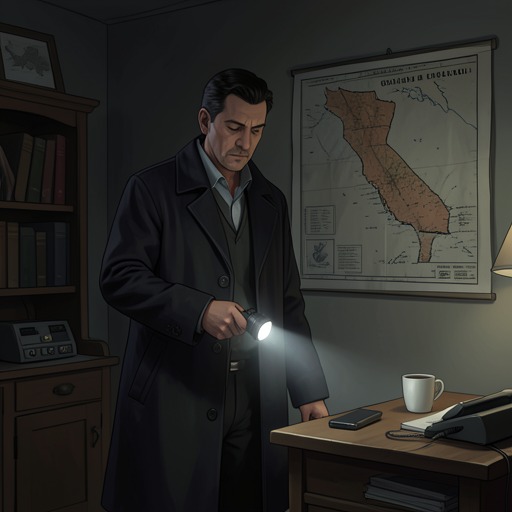
Less than a week after Kimo was stabbed, the couple awoke to an intruder carrying a flashlight. He restrained them separately, searched through the house, and demanded money without appearing focused on obtaining it. He then moved the woman into the living room and left her there while he went into the kitchen. She freed herself and ran out the front door, screaming. Her partner, still restrained in the bedroom, managed to get to the backyard and hid behind an orange tree as the intruder searched with his flashlight.
The scream brought their next-door neighbor, an FBI agent, outside. He saw a man pedaling furiously past on a stolen silver Nishiki ten-speed and pursued him by car. A few blocks later, on San Patricio Drive, the agent’s headlights caught up with the cyclist. The suspect dropped the bicycle, jumped a fence between two houses, and disappeared. The couple could provide only a general description: a white man with dark hair, around five feet ten or eleven inches tall, and approximately twenty-five years old.
Investigative Significance and Turning Point
The witnesses’ accounts preserved a few details beyond the couple’s broad estimate: the agent saw a Pendleton shirt, jeans, tennis shoes, a knife holster, and brown hair as the cyclist passed. The glimpse was brief, and the descriptions did not identify the intruder; investigators later treated October 1 as the earliest crime they could connect to him, not as a moment when his identity was known.
In retrospect, investigators regarded the Queen Ann Lane attack as a turning point. It occurred less than a week after Kimo was stabbed, and they believed it was the night the offender learned he had to be more careful. The narrative marks a consequential change in the available record as well: the couple survived to describe their attacker, but, as the account puts it, none of his victims afterward lived to describe him again. The case therefore stands both as an early linked offense and as the last point in this sequence when surviving victims could offer a direct account of the assailant.
Neighborhood Reconnaissance and Public Awareness
Investigators later understood the East Area Rapist’s crimes as products not only of stalking individual victims but also of studying whole neighborhoods. Police reports described him moving through Sacramento’s drainage canals and ditches, and documented signs of prowling and unauthorized entry around later victims’ homes. Small, inexpensive, sometimes personal objects went missing; hang-up calls increased within a four- or five-block area before attacks. The pattern suggested advance reconnaissance: he could assess residents’ routines, identify several possible targets, and preserve options for the night he chose to act. This broader pattern offers context for the investigators’ retrospective attention to Queen Ann Lane, but the evidence does not establish that each of these warning signs occurred around that home.
Public understanding changed as the attacks continued. Early reports reflected little awareness of a serial rapist; later, news coverage and neighborhood conversation made the possibility familiar to residents. Some victims recognized the danger when awakened by a flashlight, while other residents, frightened by what they had heard, shut their doors, turned off lights, and withdrew rather than call police. The growing awareness did not necessarily produce collective vigilance: fear could isolate neighbors at the very moment when shared attention might matter.
The Contingency of Neighborly Attention
The escape depended not only on the couple’s actions but also on a neighbor responding to the woman’s scream. The book sets that response against a broader pattern in which people could hear a disturbance, explain it away as teenagers or a firecracker, and retreat indoors; sometimes the sirens came later. At Queen Ann Lane, attention briefly became action: the neighbor went outside and pursued the fleeing cyclist. That contrast gives the episode significance beyond its place in the investigators’ chronology, while leaving the outcome contingent rather than reassuring. A nearby witness could help preserve a description and prompt an immediate chase, but the suspect still escaped, and the account does not suggest that vigilance alone could ensure protection.