The Social Worker
I'll Be Gone in the DarkThe Social Worker is a Sacramento resident who became an influential participant in online efforts to investigate the East Area Rapist / Original Night Stalker case and an informal link between message-board researchers and local investigators. Her work joins personal memory to collective case analysis: she lived through the attacks, later revisited a troubling experience of her own, and became deeply involved in helping solve the case, while recognizing that the pursuit could consume her.
Identity and Background
In 2012, the Social Worker was described as almost sixty and as someone who had lived in Sacramento during the height of the East Area Rapist’s attacks. She had been a young mother at the time and remembered the community’s terror rising to a nearly debilitating level around the fifteenth rape. That history situated her participation in the investigation within firsthand memory of the period, rather than interest in an abstract crime story.
Her first meeting with Michelle McNamara took place in a cramped office at a troubled high school in east Sacramento. Although they were strangers, they quickly fell into a shared shorthand about the case. The Social Worker greeted McNamara energetically in the parking lot; during their conversation she retied her ponytail and drank from a can of Rockstar. The encounter conveys how quickly their common subject became the basis for familiarity, and how readily the Social Worker could discuss the case with someone new to it.
Message-Board Work and Investigative Role
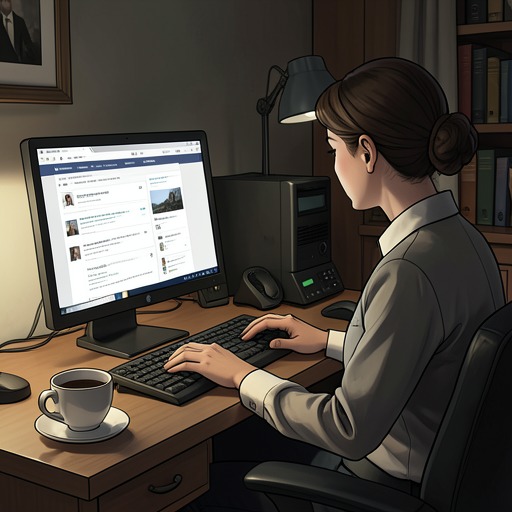
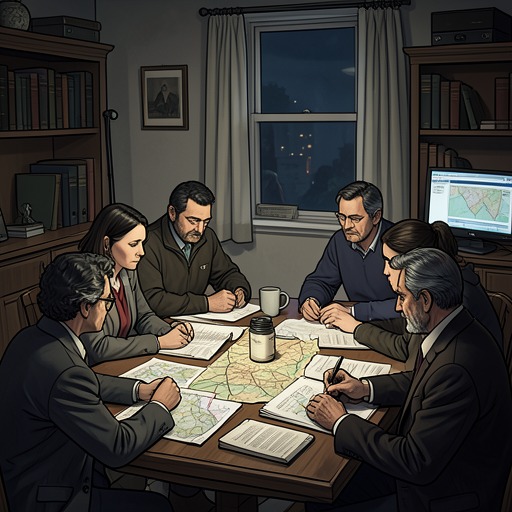
The Social Worker was one of the de facto leaders of the A&E Cold Case Files message board community, a forum whose members analyzed the East Area Rapist / Original Night Stalker case in detail. By the time McNamara encountered it, the board had more than one thousand topics and twenty thousand posts. The Social Worker’s role was not simply that of a frequent participant: she functioned as a gatekeeper between Sacramento investigators and the online community, while having begun to work informally with investigators about five years before McNamara’s 2012 visit.
That position created friction. Some board members were suspicious of one another and used pseudonyms; disagreements and accusations were part of the community’s life. Certain posters resented the Social Worker because they felt she hinted at confidential information but refused to disclose it when pressed. Her access to new information was nevertheless acknowledged. The tension around her role reflected the difficulty of bringing volunteer researchers close to an investigation without treating them as entitled to everything known by law enforcement.
In July 2011, she posted a drawing of a decal reportedly seen on a suspicious vehicle near the scene of one of the Sacramento rapes and asked other members to help identify it. She suggested that it might be associated with Naval Air Station North Island, while making clear that the identification was unconfirmed and that no record had been found. The post shows her using the board to solicit leads while retaining the distinction between a possibility and a verified finding. More broadly, McNamara came to understand that the web investigators were not working entirely apart from law enforcement: investigators were subtly steering their efforts, and the Social Worker helped connect those worlds.
Personal Connection to the Case
The Social Worker’s involvement also grew from a memory she revisited years later. While channel surfing, she caught the end of a Cold Case Files episode and recognized the offender’s later crimes with horror. An uneasy recollection then led her to contact a detective with the Sacramento Police Department. The detective confirmed that, before the East Area Rapist’s practice of phoning victims had been publicized, she had filed three police reports about an obscene caller and stalker whom she said knew everything about her. She came to believe that the caller was the East Area Rapist / Original Night Stalker; the confirmed reports establish that she had reported the calls, not that the caller’s identity was proven.
She told McNamara that she felt spiritually called to help solve the case, but also stressed the need to protect oneself from being consumed by it. The warning stood in contrast to the extent of her own involvement. McNamara and the Social Worker spent four hours discussing the case, and the Social Worker’s husband would signal her at dinner parties when he sensed she was about to turn the conversation back to it. She had even dined with a suspect and afterward bagged his water bottle for DNA. The account does not say that the sample produced a result; its significance is the degree to which investigative habits had entered her ordinary life.
Role and Limits
The Social Worker’s position combines persistence with restraint. She helped sustain a research community, brought potentially useful details to its attention, and maintained an informal connection with Sacramento investigators. At the same time, the board’s complaints about her guardedness show that this intermediary role was contested: sharing too little could frustrate volunteer researchers, while sharing confidential information was not hers to do freely.
Her account also makes clear that the case’s reach extended beyond its documented attacks. She recalled the fear of the period, reported a history of calls that she later associated with the offender, and devoted substantial time to investigating the case. Yet she did not present involvement as uncomplicated devotion. Her caution that the work could consume a person, echoed by her husband’s attempts to redirect conversation, gives her commitment a boundary. She is therefore portrayed both as a practical connector in a distributed investigation and as someone whose personal connection makes distance from the case difficult.