Art as Healing and Atonement
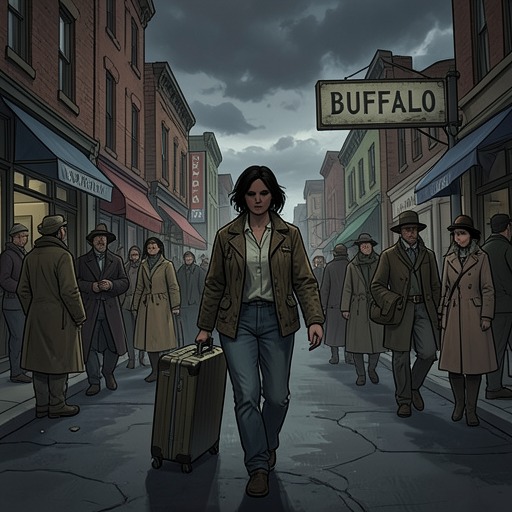
I'm Still Here- What didn't kill me made me stronger and sharperArt as Healing and Atonement describes how creative work becomes a means of self-expression, recovery, and reparative care in the lives of Janae Morrison and the people around her. Painting does not erase the losses or compulsions that shape Janae’s past; instead, it gives her a way to inhabit the present, be seen for more than her suffering, and make an image that helps another person face grief. The novel’s movement from private drawing to public artistic achievement makes art part of a broader reconstruction of identity and family.
Origins in Vulnerability and Self-Expression
Janae’s connection to art appears alongside her decision to seek help. Asked what she expects from counseling, she identifies healing, stopping drug use, and not cutting herself as intertwined goals. Inya’s office, with its books, awards, and carefully arranged surroundings, inspires Janae to create. The scene establishes art not as an alternative to treatment but as a language through which Janae can recognize and develop a self beyond the crises she brings into counseling.
That creative identity takes shape through drawing, painting, and attention to particular places. Janae recalls spending summers at Charlotte Beach, drawing and relaxing there. The memory links art to a time and setting where she could make things and be absorbed in them. Later, Jensen Brick McCall points her toward an art contest at a Pasadena supply store. Janae is hesitant, but Jensen treats her work as worth showing and encourages her to submit it. His support matters because it casts her artistic ability as something with a future, rather than merely a private refuge from present pain.
Making, Being Seen, and Rebuilding Trust
At the art store, Janae chooses brushes, sketch pads, an easel, paint, and an apron; Jensen carries the supplies and keeps the contest flyer for her. He tells her that he sees her at her best when she paints and draws. The encouragement is specific: he is responding to an activity she already pursues, not assigning her an identity from outside. Art becomes a point of connection in their relationship, allowing Jensen to affirm Janae without reducing her to her addiction, self-harm, or past relationship with Robert Walters.
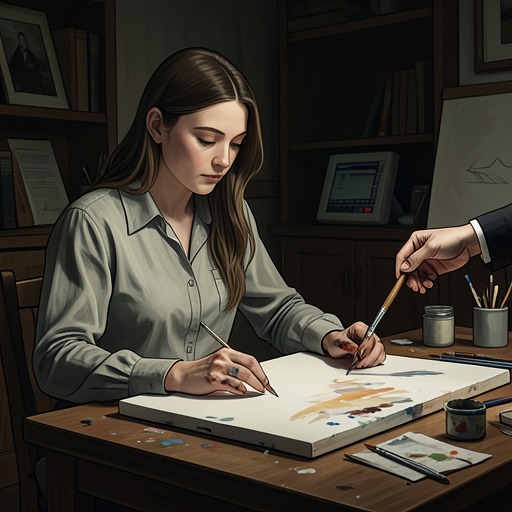
Jensen later finds Janae painting at her easel, brush behind her ear and hair tied in a bun. When she sleeps, he checks for drugs, razors, and other objects she might use to harm herself; instead, he finds drawings throughout the room. They include Jensen wearing headphones, Ginger Pearl cooking, Los Angeles locations, and a beach with waves and a surfer. The contrast is important: Jensen’s vigilance registers the ongoing risks of Janae’s recovery, while the drawings show what is also present in her life—attention, memory, imagination, and an emerging sense of belonging. The art gives physical form to a world that includes the people and places she is beginning to care about.
Art, Trauma, and the Return of the Past
An art festival also exposes the limits of treating creativity as an uncomplicated escape. Among paintings, metalwork, glass, fabric, and acrylic, Janae is initially in her element, but the setting recalls an earlier festival she attended with Robert. That memory brings back her first use of cocaine and her first sexual experience with him, which she now understands as neither loving nor mutual in the way she once hoped. The artistic environment thus holds two histories at once: present fascination with works of art and an involuntary return to the circumstances of addiction and exploitation.
Janae’s response is to recognize the past and try to leave it behind, rather than pretend that artistic pleasure has made it disappear. The scene places recovery within a pattern of recurrence: a place associated with creativity can also reactivate painful memory. Art offers a way to direct attention and make meaning, but it does not guarantee that trauma will stay silent. The distinction keeps the novel’s account of healing grounded in continuing effort rather than a sudden cure.
The Portrait as an Act of Atonement
The most direct joining of art and repair occurs on the fifth anniversary of Delia’s death. Janae sits with Inya as Inya speaks of the ordinary things she longs to do with her daughter and the fact that she cannot bring her back. Inya describes feeling so overwhelmed by grief that she might break things; Janae asks whether doing so would help the pain. Their exchange makes room for sorrow without turning it into a command to destroy. Janae then reveals the portrait on the easel, an image she has made in honor of Inya’s daughter.
Janae has portrayed Delia as an angel associated with forgiveness, restoration, and love. The wings are spread, an image that Janae connects with healing souls. The painting does not claim to restore Delia to her mother or settle the circumstances of her death. Its work is different: it gives Inya an image through which to remember her daughter’s innocence and feel that her life has been honored. Inya responds by touching the painting, kissing it, and apologizing for failing to protect Delia. She also promises to help young women so that they will not face the same consequence. The portrait makes Janae’s artistic skill a form of witness, while Inya’s response turns grief toward an intention to care for others.
Creative Work and a Future Beyond Survival
The novel carries this development into Janae’s later life. Her paintings sell for six figures, and she has painted portraits for the White House. These achievements mark public recognition of a talent that first appears in private rooms and in Jensen’s encouragement. They do not cancel the history of addiction, self-harm, or painful memory; they show that Janae’s life is no longer organized solely around those experiences.
Art also connects the novel’s ideas of purpose and repair across generations. Grace McCall, the nurse who saved Jensen Brick McCall after a botched abortion, had urged him to believe he had a purpose. Jensen, in turn, supports Janae’s art and recognizes the person she is when she creates. Janae’s gift for Inya transforms that support into an act of care for someone grieving Delia. The completed arc is not that art heals every wound, but that making, seeing, and offering an image can help people acknowledge pain, affirm another person’s life, and imagine obligations beyond their own survival.