Black Girl Lost
I'm Still Here- What didn't kill me made me stronger and sharper“Black Girl Lost” names a painful self-image rather than a fixed identity: the sense of being unwanted and out of place that Janae Morrison carries from childhood into adulthood. The phrase gathers together her loneliness, racialized rejection, and struggle to believe in her own worth, but the book repeatedly sets that despair against the care and creative promise that keep her life from being defined by it.
Childhood and the Making of the Phrase
Janae recalls that childhood felt painful, strange, and lonely. She wanted to fit in, yet felt chosen to stand out in peculiar ways; books became an escape from realities she could not readily change. The phrase “Black Girl Lost” gives shape to that early sense of dislocation, even as her description of herself as a dreamer with a small seed of faith leaves open the possibility of another future.
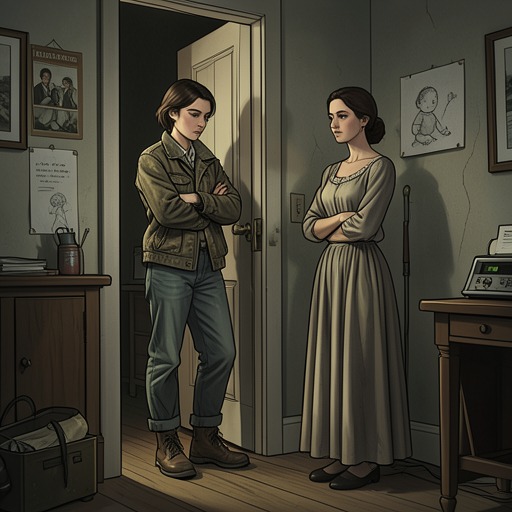
That future was supported by her Aunt Cookie and Uncle Khalid, who took Janae and her brother into their home at 561 Gates Avenue when their mother could not provide a safe haven. Her aunt fed them oatmeal with evaporated milk, butter, and sugar, left notes by Janae’s bowl urging her to write something great, and found money for necessities such as decent shoes and trips. Her uncle introduced her to art galleries, music festivals, cultural events, and college classes, and encouraged her after she lost her first election. Their home and attention offered an alternative to foster care and to the drugs and alcohol Janae saw around her; their love, she says, helped keep her from going down that path.
The deaths of two sisters—one at six months and another at three—also shaped Janae’s search for meaning. She wondered why they had died while she remained alive, a question that echoes in the book’s recurring concern with why she is still here. Rather than treating “lost” as merely a description of hardship, the phrase carries the unresolved question of how a person makes a life after grief and early insecurity.
Art, Education, and the Possibility of a Different Self
Reading and art become ways for Janae to imagine beyond the limits imposed by her surroundings. At the High School of Graphic Communication Arts in Manhattan, she encountered new possibilities and discovered a passion for writing. Her teacher Ms. Javitch pushed her to write and read more and to reach her creative potential. Janae identifies her greatest barrier not as a lack of ability but as the difficulty of believing she was good enough.
Her uncle’s encouragement gave that ambition practical as well as emotional support. He bought her first suitcase, attended events when her mother could not, and exposed her to cultural spaces beyond the neighborhood. Those acts contrast with the image of a girl who is simply lost: Janae is also a young artist and writer being urged to claim a future, though the assurance of others does not immediately dissolve her self-doubt.
Rejection, Colorism, and Public Shaming
The phrase acquires sharper social meaning through Janae’s experiences of race, skin tone, and body image. In the account of a failed late-term abortion, Gloria says she does not want a dark-skinned baby and fears that a Black child would be ugly and ridiculed. The procedure fails, and the babies are born alive. The scene places Janae’s sense of being unwanted within a wider pattern in which skin color is treated as a reason to deny a child care and belonging.
As an adult, Janae’s relationship with Robert Walters exposes another form of humiliation. After he denies their affair publicly and casts himself as a rescuer, the media’s assumptions about her weight and appearance help make his account seem more credible. Janae, who is 5 feet 7 inches and weighs 240 pounds, contrasts herself with his light-skinned, conventionally attractive wife and recalls having been treated as the “ugly fat chick.” The insult is not just private insecurity: it becomes part of the public story used to discredit her.
Robert’s denial intensifies the injury. Janae possesses videos, texts, emails, and love letters documenting the affair, but he ignores her, changes his phone number, and rejects her at his apartment. After he shoves her out, she gives an SD card and other material to YNN News producer Jessica Brown. The evidence makes the affair public, but the exposure follows a period in which Janae’s account was dismissed through the very stigma she feared: that she was a drug user and an untrustworthy misfit.
Online Visibility and the Returning Image of Loss
On the bus, Jensen Brick McCall searches Facebook for Janae after she blocks him. He sees her artwork and childhood photographs alongside the fresh cuts hidden beneath her long sleeves. Her online presence therefore holds incompatible versions of her: a creative life visible in the drawings and paintings, and a private pain that a stranger notices only when a sleeve shifts. When one cut bleeds onto his pants, her self-harm can no longer remain entirely concealed.
The same browsing draws Jensen toward his own thoughts about an absent mother, while Janae sleeps with her head on his shoulder. He imagines the mother who might have collected him from school or arrived at Christmas with gifts, then sees Janae’s raised sleeves and bleeding arm. The juxtaposition links two different forms of abandonment without making them identical: each carries a longing for care, while Janae’s marks show how distress has entered her present body.
“Black Girl Lost” thus persists as an account of how rejection can become a person’s own language for herself. Yet the book places that language beside the actions that resist it: relatives who provide safety, teachers and mentors who cultivate creative work, and the survival of a voice willing to record painful truths. The phrase registers Janae’s wounds, but it does not erase the relationships, art, or agency through which she continues to make herself visible.