Chyna
I'm Still Here- What didn't kill me made me stronger and sharperChyna is one of the central lost figures in Jensen Brick McCall’s life: a girl he met in foster care, protected as a younger sister, loved more deeply than she could return, and ultimately failed to save from gang violence. Her death is not merely a tragedy in Jensen’s backstory. It becomes the wound around which he organizes his escape from Syracuse, his cooperation with Detective Dartes, his search for the mother he calls his murderer, and his eventual effort to become someone capable of protecting others.
Identity and Foster-Care Background
Chyna and Jensen grew up together in the Parkerburg foster home, where their first encounter involved defending themselves against her sexually predatory sons. That shared danger created an immediate bond. Jensen had already lived through abandonment, homelessness, rape, and repeated foster placements, often being reduced to the label “the foster kid.” Chyna became the closest thing he had to family in a world where both of them were trying to find a place that would accept them.
Jensen describes Chyna as heavy-set, attractive, and physically formidable, with braided hair usually gathered into a bun and a complexion he compares to Gabrielle Union’s. She was known for fighting and was strong enough to be initiated into the gang. Her toughness, however, did not erase her vulnerability. Jensen understands her as someone seeking love after a rough and twisted life, sometimes entering relationships with men from the Brick town gang despite the danger surrounding them.
Bond with Jensen
Chyna treated Jensen as a big brother and repeatedly insisted that friendship was safer than romance, even though he was in love with her. His feelings therefore remained divided between protective sibling attachment and unreturned romantic desire. He looked after her in their last foster home because the other children were boys whose attention was sexual and threatening. Losing her later feels to him like losing a little sister, but also like losing the one person he loved in an explicitly personal, intimate way.
Their relationship is shaped by the same deprivation that shapes Jensen’s other attachments. Neither had a stable family, and both adapted themselves to hostile homes and social groups in order to survive. Jensen joined the .357 Murder Mafia Swift because its members seemed to offer the permanent family he had never known; Chyna’s presence made that substitute family more bearable, even as the gang’s code ultimately placed her in danger. Their bond gives the gang’s violence a domestic dimension: the people Jensen calls brothers are also the people who destroy the woman who functioned as his sister.
Betrayal and Murder
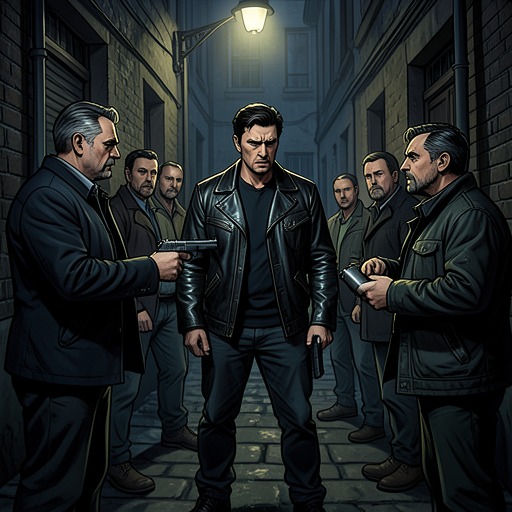
Chyna violated the gang’s code by becoming involved with Trey from the rival Brick town gang. Jensen warned her that associating with him would lead to her death and begged her to step back before the gang discovered it. She also spoke with federal authorities and admitted that she had informed on the gang. According to the later account given to Jensen, she told the gang that she was the one who had talked to the Feds, while protecting Jensen by refusing to identify him as the informant.
The gang answered her disclosure with extreme violence. Chyna was taken behind the projects, brutally raped, and tortured; her son, Mortez Payne, was shot in the face, and Chyna was murdered with a hot curling iron inserted into her womb. The killing is presented as both gang punishment and a consequence of a system that treats women’s bodies as territory on which loyalty can be enforced. Her death also reveals the limits of Jensen’s imagined gang family: its promises of protection and belonging collapse into betrayal, torture, and murder when the code is threatened.
Jensen blames himself because he stood among the gang members and did nothing to save Chyna or Mortez. He later describes his silence as having murdered them, even though the gang carried out the physical killing. This distinction matters to his arc. The law can arrest the gang, but Jensen remains imprisoned by memory and guilt. His idea of “life imprisonment of the mind” names the punishment he assigns himself for choosing fear and belonging over intervention.
Death, Testimony, and Consequences
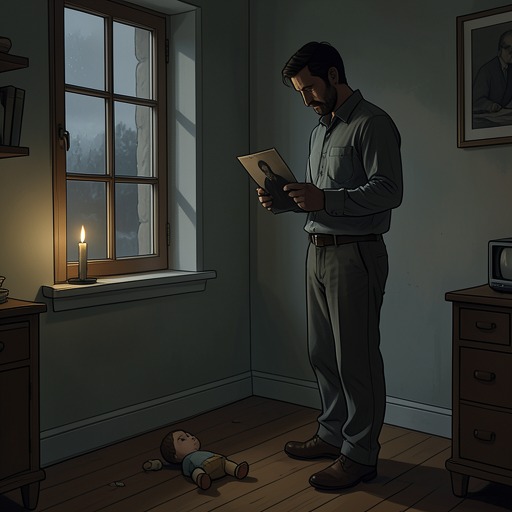
After the murder, Jensen held Chyna’s cold body and Mortez’s body in his arms, closed their eyes, and rocked them. Mortez still held the Transformer Jensen had given him for Christmas. The specific object turns the killing into a violated domestic scene: a child’s gift remains present when the child is gone, while Jensen’s physical act of closing their eyes becomes the only care he can still provide.
Chyna’s last words redirect Jensen’s guilt. She tells him that she was destined to die, that she had also informed on the gang, and that he should not try to save her at the cost of his own life. Her request is that he become somebody great and preserve his future rather than live in dishonor. She tells him she loves him as a brother and would rather die than continue living under the gang’s terms. Jensen nevertheless experiences her death as his own crime, because he believes that allowing it to happen made him complicit.
The following day, Jensen goes to Detective Dartes and reports the crimes. For weeks he provides Dartes and his partner with details, videos, and audio recordings of gang offenses. His cooperation leads to an early-morning raid in heavy snow in which twenty-two men, including the gang leader, are arrested with drugs, weapons, and money. The evidence includes boxes of weapons, heroin concealed in iced-tea cans, water, cocaine, and pounds of marijuana. In exchange for his testimony, Jensen receives immunity from serving time and a bus ticket out of Syracuse.
His betrayal of the gang is therefore both an act of revenge and an act of attempted repair. He tells himself that he sold their souls to the devil for Chyna, Mortez, and Grace, and that justice must occur so Chyna can rest. Yet legal success does not release him emotionally. The raid destroys his makeshift family, leaves him expecting retaliation, and sends him away with only a duffel bag and the guilt he carries for failing to protect the dead.
Narrative Significance and Afterlife
Chyna’s death gives Jensen’s life a direction beyond survival. He leaves Syracuse determined to find the person he calls his murderer—his birth mother, whose attempted late abortion and abandonment define his earliest trauma—but the search begins through Chyna’s death. Her murder teaches him that belonging founded on violence is conditional and that silence can become a form of participation. It also produces his promise never to let another woman die without attempting to help her.
Chyna remains present through recurrence and substitution. When Jensen meets Janae Morrison, he sees the same hurt and the same struggle to belong that he recognized in Chyna. That resemblance creates tenderness but also danger: Jensen’s new relationship is burdened by unresolved grief, and Janae’s addiction and self-harm activate his fear of losing another woman. His memories of Chyna therefore function as both an ethical warning and an emotional template, binding care to vigilance and love to the expectation of catastrophe.
By the end, Chyna’s absence is part of the family Jensen constructs rather than a wound that simply disappears. Jensen becomes a husband and father, gives his kidney to Gloria Simpson Picoult, and sits within a family table that would have been unimaginable during his foster-care years. Chyna does not return, and her murder is not undone. Its enduring consequence is that Jensen’s survival becomes a form of testimony: he carries her death, remembers the child who died with her, and tries to turn the guilt of having failed them into a life organized around protection, truth, and the possibility of chosen family.