Janae Leaves Buffalo for California
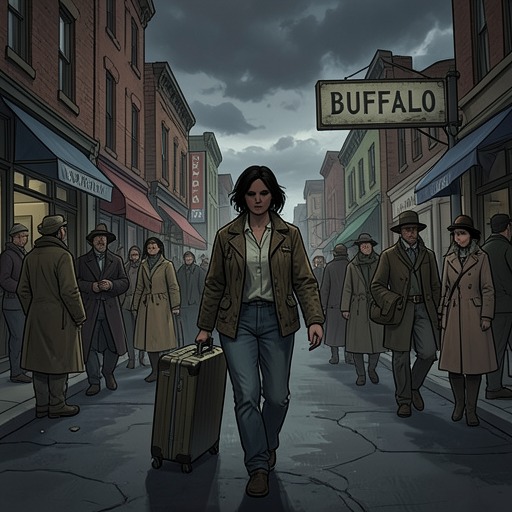
I'm Still Here- What didn't kill me made me stronger and sharperJanae Leaves Buffalo for California is the turning point at which Janae Morrison acts on the danger and exclusion surrounding her after she exposes Robert Walters. Her departure is neither a clean victory nor a simple flight: the evidence she releases breaks through his public story, but it also makes her recognizable, unwelcome, and afraid for her safety. She boards a bus toward California carrying cash and a ticket, leaving Buffalo with no settled plan beyond getting away.
Background and Public Reversal
Before Janae leaves, Robert Walters has presented himself to the media as a benefactor whose interest in her was limited to her artwork. At a press conference he denies their relationship, describes himself as trying to help a troubled young woman, and casts her as the aggressor. The public account places his respectability against Janae’s appearance and reputation; people find his version more credible, and her claim is treated as the fantasy of a disgruntled woman.
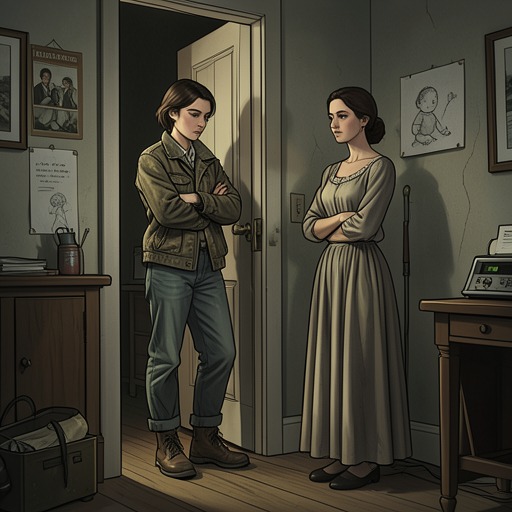
That account conceals a sustained affair. Robert had approached Janae when she was trying to sell her art, bought her art supplies, paid for art classes, and took her to New York to see works by artists of the Harlem Renaissance. He had praised her and promised a future together, even as his wife, Elizabeth Mourning-Walters, befriended Janae and included her in her social circle. The contrast between those private assurances and his public denial gives Janae’s disclosure its force: she is not merely disputing a rumor but confronting a carefully maintained public image.
Evidence, Exposure, and the Decision to Leave
Janae gives Jessica Brown, an executive producer at YNN News, an SD card containing evidence of Robert’s conduct, along with messages, emails, and other records. Jessica recognizes the material as a major story, but her warning is less triumphant than the prospect of exposure might suggest. She tells Janae that Buffalo’s Black elite will close ranks around Elizabeth and that Janae may lose the ability to find work or sell her art in the city. Jessica urges her to leave for the West Coast and start over, while acknowledging that Robert pursued her and that the evidence implicates him.
The warning makes clear that public truth will not restore Janae’s place in Buffalo. People recognize her from the news, whisper, stare, and point. A passerby insults her and rejects the possibility that Robert could have desired her. The public’s judgment reproduces the same logic as Robert’s denial: Janae’s body is treated as proof that her account cannot be true. Her departure follows not only from exposure of the affair, but from the social punishment directed at her for making that exposure.
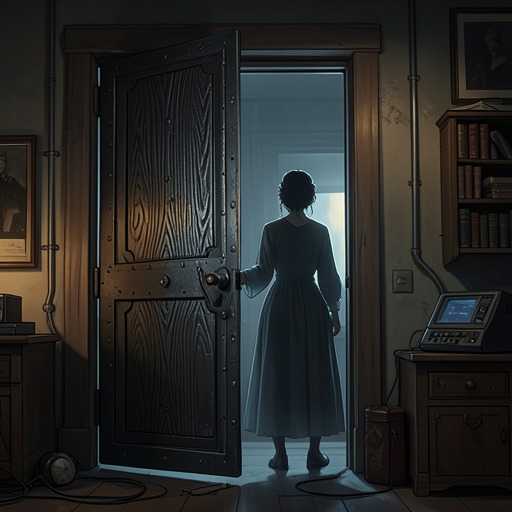
Under this pressure, Janae experiences a self-harm crisis. She turns to cutting in an attempt to manage the shame and pain, then watches the television coverage of the scandal. The broadcasts show images of Robert using cocaine and intimate material that contradicts his public denial; a recording captures his declarations of love and promises to leave his wife. Meanwhile, Janae receives threatening messages and an abusive voicemail from Elizabeth. The scandal confirms her account, but confirmation does not make her feel safe: it intensifies the backlash and sharpens the need to leave.
The Journey and Its Immediate Stakes
Janae hides her face beneath a hood and takes a taxi to the bus station. She has cash and a ticket, but California is an uncertain choice rather than the destination of a fully formed plan; she cannot explain why she chooses it, only that it may be where she needs to be. At the station she sketches a tall man sitting nearby, wearing red Beats headphones and listening to music. She gives him the drawing, which includes two tears on his cheeks, reflecting the sadness she sees in him and feels herself. He compliments her skill, and she returns his smile.
The brief exchange changes abruptly when the man approaches her as she boards. He tells her that the councilman’s wife sent him to take care of her. Janae reacts physically, with a pounding heart, shaking hands, and rapid breathing. The statement turns a passing encounter into a new source of danger and uncertainty: the stranger knows she is the person being targeted, and she does not yet know what his presence means. As the bus leaves, she looks out the window and says goodbye to Buffalo.
Consequences and Significance
The journey separates Janae from a city where she has become both the subject of a scandal and its designated villain. Her evidence exposes the gap between Robert’s public performance and their private relationship, but the reaction demonstrates that truth alone cannot undo unequal social power. The cost is immediate: threats, hostility, likely exclusion from the networks on which her work depends, and the loss of the place she has called home.
Her departure also takes place against a second danger that is not visible in the news coverage. Later, gang members circulate posts seeking the person who informed on the 357 murder gang. Janae realizes that her photograph is absent because nobody suspects her of betraying her brothers; her search for her birth mother has made leaving seem plausible. She understands that she had chosen her own freedom over theirs, while others read her departure as a different kind of journey. The escape therefore carries a concealed risk alongside its visible cause: Janae is fleeing the consequences of exposing Robert while also moving under the cover of a family search.
The event closes on departure rather than resolution. California offers Janae a chance to begin elsewhere, but not certainty, safety, or a clear plan. The bus carries her away from the community that has rejected her and toward an unfamiliar man whose stated connection to the councilman’s wife immediately complicates the promise of escape.