Janae's Self-Harm Crisis and Hospitalization
I'm Still Here- What didn't kill me made me stronger and sharperJanae's Self-Harm Crisis and Hospitalization is a turning point in which private distress becomes a medical emergency. Jensen finds Janae unconscious on the floor, with blood across the carpet, and calls 911 before gathering her into his arms. Her crisis exposes both the danger of her self-harm and the fragile trust between the two characters: he is frightened of losing another person he loves, while she has already asked that he not be made to leave her.
The Crisis and Its Immediate Context
The discovery is especially painful because Jensen remembers Janae promising not to cut herself again. Her arms and legs bear numerous cuts, and the sight draws him into the role of protector even as he is overwhelmed by fear. He pleads for her not to be taken from him, a response shaped by his own history of abandonment and repeated loss. Earlier, he had described himself as having survived circumstances in which he was expected to die; the deaths of people close to him, including Chyna and friends from Brick town, had made each new threat of loss feel cumulative rather than isolated.
When paramedics, police officers, and firefighters arrive, they ask whether Janae is suicidal or using drugs and why she has so many cuts. Jensen says that he is a close friend and explains that she recently lost a boyfriend to murder, exaggerating the truth to protect her. He lets the responders treat Janae and take her away by ambulance, but also removes the safe from the room because he trusts no one. His actions combine practical intervention with guardedness: he seeks help for Janae while remaining alert to what others might do with what they find.
Hospital Assessment and the Limits of Care
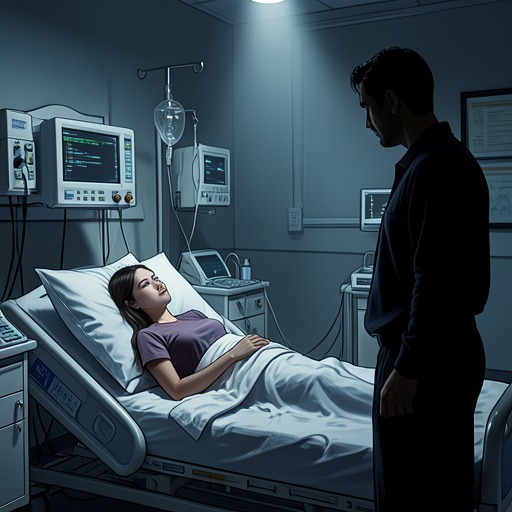
At the hospital, Janae asks that Jensen be allowed to stay: she identifies him as her best friend and says she has no family. Her plea makes the emergency more than a clinical episode; in the immediate aftermath of self-harm, his presence is the connection she is trying to keep hold of.
A staff member explains that a suicide attempt would ordinarily lead to three days of evaluation in the hospital’s mental-health department. But Janae has no insurance or reliable way to cover the costs, and the hospital does not participate in Medicaid. The usual assessment therefore gives way to a constrained choice: sign an agreement to enter a free, intensive dialectical behavior therapy program, or be sent to the county facility. The proposed program combines group and individual counseling and can help participants obtain health insurance; the staff member describes it as intended for people who cut themselves.
Janae agrees and signs the paper. Before leaving, the staff member gives them a brochure and the program’s address, along with information about mental health. The crisis thus ends not with an extended hospital stay but with a required step toward outpatient care, made possible by a program offered in the shadow of the hospital’s financial and coverage limits.
Recovery, Trust, and Continuing Vulnerability
The emergency does not make Janae’s distress disappear; later scenes show the wounds and pressures that remain after she has agreed to seek help. As she rests beside Jensen, the cuts on her arm sting, while her sister’s voice returns with the revelation that Robert is the father of the child Janae is carrying. The scene places physical pain beside a new family betrayal, suggesting how several unresolved injuries press on her at once without reducing the crisis to any single cause.
Janae’s later encounter with Inya turns on the fear that seeking help will expose her to judgment. Inya offers assistance directly, and Janae says she does not want to be criticized. Inya answers by rejecting the label of bad energy that has weighed on Janae and asks her to repeat that she is not bad energy. The exchange offers a different kind of response from the emergency assessment: not a diagnosis, but a deliberate challenge to the condemning identity Janae has absorbed.
Her recovery remains precarious. Janae later admits that she is using cocaine to forget her mother’s rejection and her own mistakes, and that she does not know how to stop. Jensen sees her drug use alongside the healed cut marks on her arm; his decision to leave follows her concealment and the resulting breach of trust. The episode’s aftermath is therefore not a simple progression from crisis to safety. Janae accepts a route toward counseling, but the later return of addiction and relationship conflict shows how much work remains to keep that first agreement from becoming the whole story of recovery.
Witnessing and the Longer Arc of Recovery
Inya’s help carries the weight of her own history. She tells Janae that she once used Sherm and crack, lost her nine-year-old daughter to murder during a period of addiction, and made several attempts to take her own life before getting clean and dedicating herself to helping others. That disclosure does not erase the difference between counselor and client, but it makes Inya a witness whose authority comes partly from having endured devastation herself. Her insistence that Janae is not bad energy counters the shame that has attached itself to Janae’s distress without pretending that reassurance alone can resolve it.
The novel’s later ending gives Janae a future beyond the crisis: one year later, she and Jensen are married and become parents to Grace Pearl McCall on Christmas Day. This outcome does not establish that the emergency or the counseling agreement cured her self-harm, and the intervening return of cocaine use makes any simple recovery narrative untenable. Instead, the crisis remains one point in a longer, uneven struggle, while the ending places Janae within a family she has helped build and a life that continues after the moment when Jensen feared losing her.