Jensen Brick McCall and Chyna's Sibling-Like Friendship
I'm Still Here- What didn't kill me made me stronger and sharperJensen Brick McCall and Chyna's Sibling-Like Friendship began in foster care, where mutual protection gave two unwanted young people a form of family but never erased the difference between how each understood their bond. Chyna saw Jensen as a brother; he loved her as both his closest friend and someone he wished could love him differently. Her death turned that unresolved affection into one of the defining griefs of his life.
Formation in Foster Care
Jensen and Chyna met while living in the same foster home, the Parkersburg home. Their first encounter came amid danger: the home’s four other boys were trying to sexually assault them, and the two fought back. The violence they faced together established a protective bond before either could rely on the household as a safe family. Jensen later described looking out for Chyna because the boys were focused on exploiting her; his role in her life was shaped by the need to keep her safe.
Chyna regarded Jensen as her big brother, and their closeness took on the character of a sibling relationship. Jensen, however, wanted more than that. He was in love with her, while she believed that remaining his best friend was safer than becoming his lover. The mismatch did not cancel their affection, but it left Jensen carrying a private longing inside a relationship whose terms Chyna had set differently.
Their foster-care histories made the bond especially consequential. Jensen had been passed among homes and knew himself as the foster child rather than as someone securely claimed by a family. In that context, Chyna was not simply a friend from the same household: she became one of the few people he could think of as his own. Later, when asked whether he missed her, he explained that they had lived together in their last foster home and that losing her felt like losing a little sister. His protective care was therefore both practical—he had intervened against the boys around them—and a response to the family neither had reliably found elsewhere.
Loyalty, Longing, and Conflicting Stories
Jensen’s attachment to Chyna endured even where their understanding of it diverged. He was in love with her, but she treated him as a brother and considered friendship the safer bond. He knew she was involved with men from a rival gang and warned her that crossing into their world could put her life at risk. His warnings did not change her choices, and his knowledge of the danger would later sharpen his sense of helplessness: he had seen the threat coming, but could not make her step away from it.
After Chyna’s death, an associate offered Jensen a harsher account of her conduct. He claimed that Chyna had betrayed both the gang and Jensen, had been selling drugs to Grace behind Jensen’s back, and had helped cause Jensen’s expulsion from the Parkersburg home. Jensen rejected the claim that she had deliberately betrayed him, insisting that she had been like a sister. Yet the accusations unsettled the loyalty through which he remembered her: the dead friend he mourned might also have kept secrets and contributed to painful events in his life. The novel leaves that tension inside Jensen’s grief rather than resolving it into a simple judgment of Chyna as either wholly faithful or wholly false.
Death, Guilt, and the Work of Loyalty
Chyna’s murder made Jensen’s unreturned love inseparable from a failure he believed was his own. He had warned her about the danger of crossing into the rival gang’s territory, but when the threat became real, fear kept him from saving her and her son, Mortez Payne. He understood her death not only as violence done to someone he loved, but as the consequence of his own silence and inability to act. The distinction between being unable to protect her and having abandoned her did not quiet his self-accusation; in his mind, the two had become nearly impossible to separate.
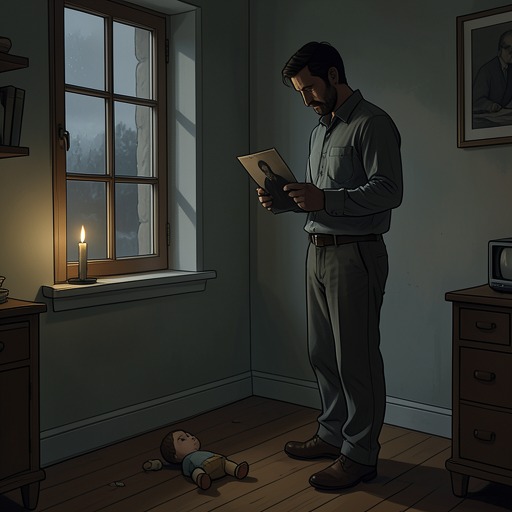
The memory he carried was physical and intimate. After the killings, Jensen held Chyna’s cold body and Mortez Payne in his arms, rocked them, and closed their eyes. The child still clutched the Transformer Jensen had given him for Christmas. That small gift remained in the scene as evidence of the ordinary tenderness that had existed alongside the danger surrounding them: Jensen had been a protector and a friend to Chyna, and a caring presence in her son’s brief life, but neither role had been enough to prevent their deaths.
Chyna’s last words to Jensen placed the responsibility for his future against the violence of her own ending. She told him he was meant to survive and could make it out of the neighborhood, while she believed she was destined to die. She also insisted that her betrayal of the gang was her own choice, not his fault, and asked him not to save her but to promise he would become somebody great. Her kiss on his cheek and declaration of love gave him a form of recognition he had longed for, but not the romantic answer he had wanted: she called him her brother, affirming the closeness between them in the very moment that their separation became permanent.
The promise did not absolve Jensen. He continued to say that he had allowed Chyna and Mortez Payne to die, and the deaths of Chyna and Grace McCall weighed on him as evidence of what his fear and silence could cost. He framed his decision to report the crimes to Detective Dartes as an attempt to secure justice for Chyna and let her rest. The next day, he went to the officer and disclosed the crimes; later, he spent weeks providing investigators with details and recordings. His cooperation helped bring the gang’s weapons and drugs into view and gave Jensen a way out of Syracuse, but it could not undo what had happened. Leaving the city therefore became both an escape from the past and an effort to carry his promise somewhere it might still matter.
Even after finding his birth mother, Jensen admitted in a later conversation that Chyna’s death remained on his conscience, including despite the things she had concealed from him. He described losing her as losing the closest thing he had to family after Grace McCall died. The persistence of that grief shows why the friendship cannot be reduced either to the idealized sister he mourned or to the damaging secrets others attributed to her. Jensen’s loyalty survives the discovery of possible betrayal, while his love remains marked by the fact that Chyna had loved him as a brother. Their bond endures in that unresolved form: intimate, protective, unequal in its romantic meaning, and finally bound to a loss Jensen could neither prevent nor forgive himself for.
The Image of Chyna He Carried
Jensen’s memory of Chyna was also intensely personal in its details. He recalled her braided hair gathered in a bun and her as beautiful, despite her heavyset build; he admired her fighting ability, noting that she hit hard and would take on any man. That toughness was not merely a trait he loved from a distance: it was part of how she survived and how she became involved with the gang. His account holds admiration beside worry. Chyna was capable of defending herself, yet her search for love left her vulnerable to relationships that Jensen believed endangered her.
Her place in Jensen’s life becomes clearer against his larger hunger for belonging. He joined the .357 Murder Mafia Swift because it promised people who would have one another’s backs and would not abandon him. But even a gang could not turn his longing for a home into security; he came to feel that he remained a guest there, as he had in foster care. Chyna’s friendship mattered in that landscape not because it solved his isolation, but because their shared history made care tangible: they had faced danger together, and he had tried to protect her. The relationship’s lasting force lies in that imperfect refuge—real affection shaped by unequal hopes, secrets, and the violence neither of them could escape.