Post-heart-attack recovery
I'm Still Here- What didn't kill me made me stronger and sharperPost-heart-attack recovery in the novel centers on Ginger Pearl’s massive heart attack, triple-bypass surgery, and the family’s vigil as she returns to consciousness and begins a prolonged period of rehabilitation. The crisis is medical, but its meaning for Jensen Brick McCall is also shaped by an earlier lifetime of abandonment and loss: this time, the person he fears losing survives, and he can meet her bedside as her grandson.
The emergency and return of a heartbeat
The crisis unfolds in urgent physical actions. As paramedics arrive, Jensen presses on Ginger Pearl’s chest, breathes into her mouth, and listens for a heartbeat. He repeats the effort, counting to fifteen between breaths, and pleads for her to breathe. Police officers pull him away so the emergency responders can take over. Gloria Simpson Picou, Jensen’s birth mother, is also present, holding her husband and begging for Ginger Pearl to live; Janae Morrison is crying, while another family member shakes uncontrollably. The scene gathers the family around the same person, but in different forms of helplessness and fear.
A defibrillator is used, and the procedure recalls Jensen’s memory of Grace McCall lying on the floor, with foam at her mouth and no intervention succeeding. That earlier death shadows the present emergency: Jensen has already watched a loved one die despite attempts to save her. Ginger Pearl’s response breaks that grim pattern. Her foot kicks, her fingers move, she coughs, and she looks at him. The paramedics announce that she is alive and take her away for treatment. The small movements matter because they are the first evidence that this emergency may end differently from the losses Jensen has known.
Diagnosis, surgery, and the family vigil
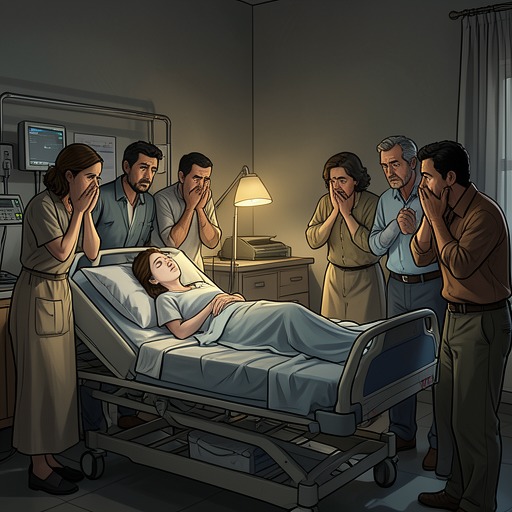
The diagnosis establishes the severity of what happened: Ginger Pearl has suffered a massive heart attack and needs triple-bypass surgery. At the hospital, her relatives wait together, watching the news, drinking coffee, and taking naps in shifts. Their vigil is practical as well as emotional; the shifts allow them to remain present through an uncertain period instead of leaving one person alone to bear the wait.
The later report brings cautious relief. A doctor tells the family that Ginger Pearl has made it, that her vital signs are stable, and that she will need months of rest and rehabilitation, along with continued medication and dietary care. Survival is not presented as an instant return to health. The operation has carried her through the immediate danger, but her recovery will depend on sustained attention after the crisis has passed.
Bedside recovery and renewed kinship
When the doctor says Ginger Pearl has asked for Brick, Jensen removes his hat and identifies himself as her grandson. In the recovery room, a nurse checks her vital signs. The monitor beeps; her skin is pale, her blood pressure is stable, her heart rate is good, and she is breathing. Her gown lies open over the incision down her chest. Jensen kisses her forehead and holds her hand. Ginger Pearl manages to tell him that she will stay alive for him, and he thanks her.
The bedside encounter also gives Jensen a chance to name the change in their relationship. He tells her that he has forgiven her and that the family is there. The statement arrives while she is still physically vulnerable, with a nurse placing an oxygen mask and reminding Gloria that Ginger Pearl needs to keep it on. Forgiveness here does not erase Jensen’s history with his birth mother; it sits alongside the immediate work of keeping Ginger Pearl alive and the visible presence of relatives around her.
Care extends beyond the relatives at the bedside. One caregiver recalls that Gloria fed her every day and gave her shelter when she was homeless and struggling with drug use. She promises to put her life right, pursue nursing school, and spend twelve hours a day caring for Gloria, with another helper taking the next shift. The promise turns past assistance into reciprocal care: Gloria’s earlier hospitality becomes part of the network supporting her family during illness.
The crisis in Jensen’s history and the family’s future
The emergency strikes a life already marked by repeated bereavement. Jensen recalls being abandoned as an infant, living in foster homes, and losing people who had offered him belonging. He has also grieved Chyna and friends from his youth. Most immediately, the memory of Grace McCall’s death rises during the attempt to revive Ginger Pearl. The narrative therefore makes the heart attack more than a medical interruption: it forces earlier losses into the present, as Jensen watches for the signs that once failed to come.
Ginger Pearl’s survival gives that repetition a different ending, though not a simple one. The doctor’s warning about months of rest, rehabilitation, medication, and diet makes clear that survival begins a demanding period rather than closing the matter. Jensen’s presence at her bedside, his identification as her grandson, and his expressed forgiveness show how the family relationship is being lived through concrete acts of attention while recovery remains uncertain.
A later Christmas scene places that recovery within the family’s longer reconstruction. Jensen describes sitting at the head of a family table with Janae Morrison and their daughter, Grace Pearl McCall, while Ginger Pearl holds her great-granddaughter and continues her tradition of placing a small piece of crystal around each grandchild’s neck. Jensen also says that he has given Gloria a kidney so she can watch her other children grow up. That later donation concerns Gloria’s kidney disease, not Ginger Pearl’s heart operation, but it extends the book’s account of illness and kinship: survival leads into continuing care, and a family once shaped by abandonment gathers around children and elders alike.