Robert Walters
I'm Still Here- What didn't kill me made me stronger and sharperRobert Walters is a councilman and community figure whose polished public identity conceals a pattern of sexual manipulation, drug involvement, and emotional exploitation. He presents himself as a humanitarian helping Janae Morrison through art, yet his relationship with her produces addiction, scandal, family conflict, and lasting trauma. Even after his death, the truth about Robert continues to reorganize the lives of Janae, his wife Elizabeth Mourning-Walters, his sister-in-law, and the child conceived through his overlapping affairs.
Public Image and Private Deception
Robert’s public defense depends on contrast. The media presents him as a respectable man attempting to rescue a troubled young artist, while Janae is depicted as unstable, sexually immoral, and responsible for the scandal. At a press conference, Robert claims that his only relationship with Janae was business, that he would never sleep with an obese woman, and that his loyalty to his wife is firm. He says he went to the hotel only to offer Janae alternatives and insists that he did not know about her drug use. This account turns him into the community’s virtuous protector and Janae into the guilty party.
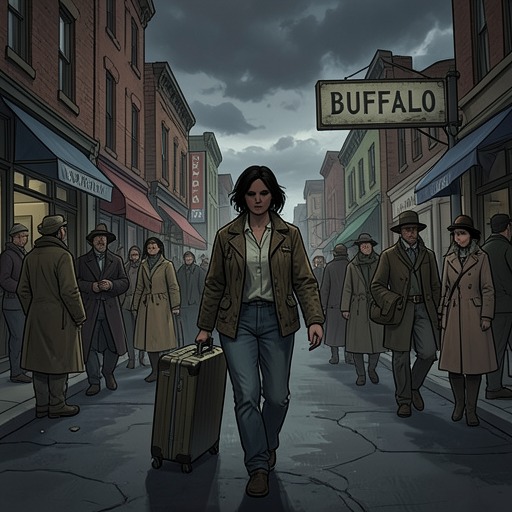
Janae’s testimony dismantles that performance. She met Robert at an art showcase, where he commissioned her to paint his portrait. After he became excited by the finished work, he pulled her into his arms and kissed her. He then cultivated intimacy through long telephone conversations, coffee and lunch invitations, financial assistance with art supplies and tuition, and an invitation to a New York art exhibit. Their trip included a stay at the Peninsula hotel and dinner at a five-star restaurant, after which their sexual relationship began. Robert’s attention mattered to Janae partly because she believed a handsome man like him would not desire a larger woman, making his repeated assurances that she was beautiful and that he loved big women especially powerful.
Robert’s influence also operated through material and cultural access. He took Janae to New York to see the work of artists associated with the Harlem Renaissance, including Aaron Douglas, Jacob Lawrence, Romare Beardan, Leslie Boiling, and Augusta Savage. He bought her supplies, paid for classes, and displayed her portrait in his office. These gestures connected artistic aspiration with romantic dependence, allowing Robert to sell Janae a future while maintaining the authority to withdraw affection. When she tried to end the relationship after discovering his marriage, he called, texted, and begged for forgiveness, claiming that he could not imagine his life without her.
Affairs, Addiction, and Collateral Damage
Robert’s relationship with Janae was not an isolated betrayal. Janae states that they were lovers, made love at least a hundred times, and used drugs together. She later recognizes that the first cocaine use and the loss of her virginity occurred at the same art festival connected with him, and she concludes that the encounter was not love. Robert therefore links two histories that Janae must later separate: the artistic life she wants to recover and the drug-dependent relationship that helped destroy her confidence.
His conduct also damages the women around him by turning them against one another and then using their shame to protect himself. Elizabeth had befriended Janae, bought her clothes and shoes, and introduced her to an elite social circle, even as Robert maintained the affair behind her back. Janae is publicly reduced to a “whore” and a “misfit,” while Robert preserves the role of the benevolent master of community opinion. His denial makes Janae doubt whether anyone will believe her, and the resulting humiliation contributes to her self-harm crisis, drug addiction, and estrangement from her sister.
The deception expands when Janae learns that Robert was also sleeping with her sister. The sister discovers that she is pregnant with his child and feels foolish for believing that he loved her. Janae later states plainly that she and Robert slept together and that a baby was created. At a family gathering, the additional disclosure that Robert is the father of the sister’s baby reveals that he was having simultaneous relationships with both women. The affair is thus not merely a private violation of marriage; it becomes a structure of betrayal that contaminates friendship, sisterhood, pregnancy, and the family’s understanding of itself.
Death and Immediate Consequences
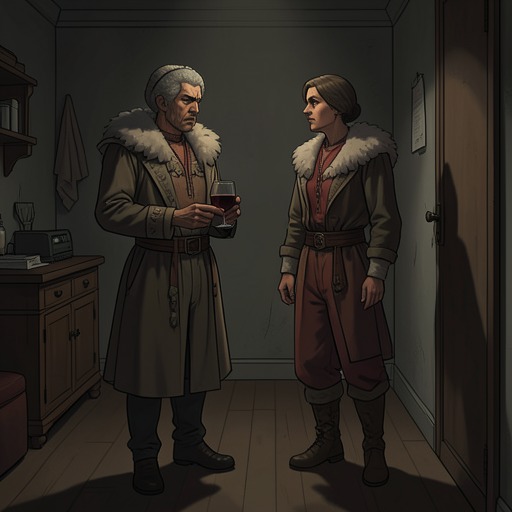
Robert’s death is reported as a single self-inflicted gunshot wound to the head, but the surrounding account complicates the initial description. Elizabeth admits that she shot him in the head and explains publicly that she was exhausted by his affairs and lies. She speaks of her betrayal by Janae and of the trust that Robert and the women around him had damaged, while also acknowledging that she still loved him and prayed for him. Her confession confirms that Robert’s duplicity has produced a final act of violence within his marriage.
For Janae, the news is both personal and destabilizing. Social media fills with memorial messages for Robert, while her name remains linked to his and to Elizabeth’s. She sits in the room provided by Ginger Pearl, physically distressed and emotionally overwhelmed, grieving Robert as her first love even while knowing that he helped injure and addict her. Elizabeth’s statement that she cannot hate the women who fell under Robert’s spell underscores the contradiction at the center of his legacy: he is mourned as a beloved man, yet the survivors must live with the damage created by his desire and deception.
Robert’s death also functions as a forced separation from the past. At an art festival in Los Angeles, Janae remembers that she first used cocaine and lost her virginity with him at the earlier festival. The setting that once joined art, sex, drugs, and Robert’s memory now becomes a place from which she must escape. His absence does not erase his power immediately; instead, it leaves Janae to decide whether his version of her identity will survive him.
Legacy in Family and Recovery
Robert’s final influence is biological as well as emotional. The revelation that he fathered the baby carried by Janae’s sister extends his betrayal into the next generation. Yet the child’s existence also becomes part of a larger family story that no longer belongs to Robert alone. In the later Christmas account, Janae gives birth to Grace Pearl McCall, and the family gathers around a new child, while Robert’s role is reduced to one element in the history the survivors have rebuilt.
Robert’s death marks the boundary between the identity he assigned to Janae and the identities she develops afterward. In therapy, Inya tells her that she is not “bad energy” and asks her to repeat the statement until she believes it. Janae’s recovery therefore answers Robert’s earlier portrayal of her as a broken woman whom he alone could save. Art, treatment, family connection, and her relationship with Jensen Brick McCall provide alternatives to Robert’s script of rescue and shame.
Robert remains crucial to the narrative because he embodies the difference between appearance and responsibility. He uses public compassion, artistic patronage, romantic language, and social standing to make exploitation resemble benevolence. The survivors’ work is to name the pattern accurately: his interest in Janae was not simply mentorship, his promises were not proof of love, and his affairs were not harmless private mistakes. Once that truth is spoken, Robert loses the authority to define the women he entangled, even though the consequences of his actions continue to shape their grief, recovery, and family future.