Two Misfits Theme
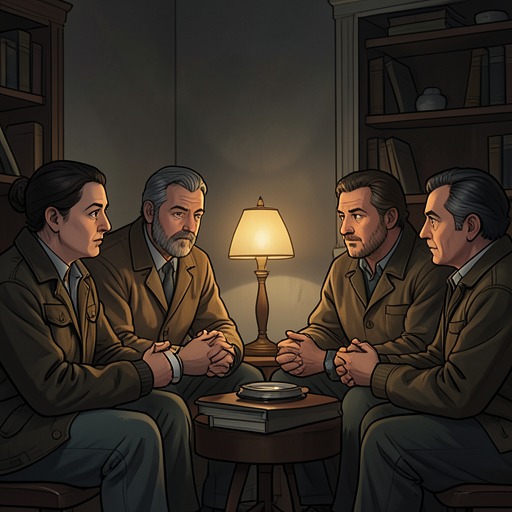
I'm Still Here- What didn't kill me made me stronger and sharperThe Two Misfits theme gives the relationship between Jensen Brick McCall and Janae Morrison its governing tension: each longs for a love that feels real, while each carries injuries that make trust difficult. Their connection is neither a simple rescue nor a cure. It grows between two people who recognize one another’s pain and must confront how easily the desire for closeness can become entangled with fear, secrecy, and the impulse to withdraw.
Meaning and Origins
The phrase Two Misfits names a shared condition rather than a claim that Jensen Brick McCall and Janae Morrison have identical histories. Jensen’s life has been marked by abandonment and instability. He recalls sleeping on library steps, being raped, enduring intolerable living conditions, and being treated as the foster kid. The account frames his survival as an experience that has repeatedly placed him outside the secure homes and ordinary expectations available to others. His search for purpose begins in part with trying to understand the life he was left to lead.
Janae’s pain takes a different form. She describes having been judged and taught to expect love to be ugly, and connects her cutting to a desperate wish for someone to care enough to tell her she is loved. By the time she and Jensen become close, she is trying to stop cutting and has not used drugs or felt a desire to use them; drawing and thoughts of Jensen occupy her attention. Their sense of being misfits thus joins distinct experiences of deprivation without erasing the difference between them: both want affection, but neither enters the relationship untouched by earlier harm.
Recognition and the Risk of Closeness
Their first movement toward each other is physical before it is secure. Janae feels her stomach flutter and her pulse rise into her throat as Jensen draws close and puts an arm around her waist; she cannot explain why being near him feels right. The moment does not settle what their relationship will become. When their noses touch, Jensen hesitates over whether to kiss her, and Janae is equally unsure whether joining their lives will help them or destroy them. Their attraction therefore carries the theme’s central uncertainty: recognition offers hope, but it cannot guarantee safety.
What binds them is not simply the wish to be loved, but the fear that intimacy will expose how much remains unhealed. Janae links her self-harm to longing for someone to care, while Jensen says he wants to guard her with his life despite not understanding the strength of his connection to her. When he later places her hand over his heart, the beat beneath it makes his vulnerability tangible: he realizes that he is feeling love at the very moment when he had been supposed to make her disappear by killing her. The reversal turns the idea of two misfits into more than a shared label. The person Jensen was meant to destroy becomes someone whose life he wants to protect, while Janae’s willingness to reach for him gives their bond a possibility neither can yet treat as certain.
When Intimacy Meets Relapse
The hope that closeness might help them heal is tested when Janae returns to cocaine. She explains that she thought she could hide her addiction and uses drugs to forget both her belief that her mother does not love her and the mistakes she cannot escape. She says she does not know how to stop. Her explanation makes the relapse more than a setback: the substance is bound to the old wound of feeling unloved, while concealment puts the trust between her and Jensen at risk.
Jensen refuses to treat the deception as a minor lapse. He tells Janae that she is abandoning herself through drug use and lies, and distinguishes the addiction from the dishonesty: he says he could have faced her admitting she had used, but that hiding it violates the trust he placed in her. He has shared his past with her, something he says he has never done with another woman, and watching her use cocaine and seeing the healed marks on her arm makes her struggle hurt him personally. His decision to leave is therefore both a boundary and a retreat from a familiar pain. Janae fears that he is abandoning her; Jensen insists that he cannot keep begging her to do what she must do for herself. The relationship’s promise is left exposed to the same pattern it seemed capable of interrupting: the need for care remains, but love alone cannot substitute for honesty or recovery.
Choosing a Shared Future
The relationship’s darkest test does not settle the pair’s meaning as misfits; it forces them to decide whether their shared damage will dictate what comes next. Jensen returns not with a claim that the past has vanished, but with a proposal to begin again together. He says he wants to build a life with Janae, imagining children, a home, and happiness beyond the drama that has shaped them. His emphasis falls on choice: he wants to love her despite the mistakes that made them feel outside ordinary life, and asks whether she is ready to leave that past behind. Janae answers by placing her hand over his heart, meeting his wish for a family with her own desire for a future in which they choose each other and stop lying, even when honesty hurts.
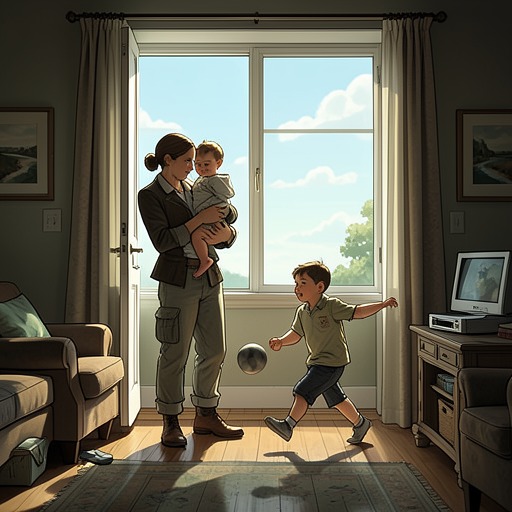
The final image brings their private promise into bodily form. Janae touches her belly, and Jensen places his hand over hers; their joking exchange about whether they might have one baby or two gives the imagined future a more immediate shape. They describe themselves as two people expected to die who are still here, turning survival from a private fact into a shared declaration. The story then advances one year, leaving that affirmation as the hinge between their dangerous past and the life they are trying to make.
The theme does not define love as a cure that makes either person whole by itself. Its harder claim is that recognition can open a path out of isolation, but sustaining that path requires choices: protecting one another without pretending pain has disappeared, and making honesty part of the future they envision. Jensen and Janae’s bond remains vulnerable to the histories they carry; what changes is that they begin to imagine those histories as something they can face together rather than as proof that neither belongs anywhere.