
White Fragility in Public and Private
I'm Still HereThis flow traces how white defensiveness shifts racial conversations away from harm and toward the protection of white feelings.
increasing Bearing strength in each event
 decreasing
Bearing strength in each eventdecreasingA Class Turns Hostile
A Class Turns Hostile
A confrontation begins
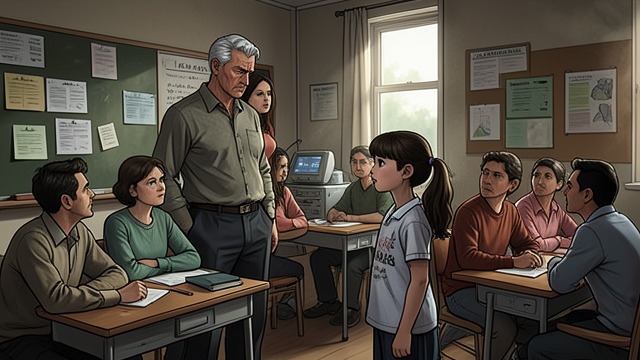
After missing much of the session, a white man erupts at Austin over discussion of stereotypes and Trayvon Martin. He shouts, disputes the framing, and treats Austin as the target of his anger.
Authority challenged
When he asks who is really in charge, the racial argument reveals a deeper refusal to accept a Black woman as an authority figure. A white male colleague eventually intervenes and affirms that Austin is leading the class.
The Aftermath Reframed

The Aftermath Reframed
Responsibility redirected
In a meeting, colleagues begin considering what Austin could have done to calm the man: change her tone, move, or give him time. The focus shifts from his aggression to her handling of it.
A colleague intervenes
One participant points out that the man is responsible for his own feelings and that such conduct would not be tolerated against another speaker. The discussion finally turns toward protecting the women leading the class.
Fear at the Mission Site

Fear at the Mission Site
A suspicious arrival
A visiting youth group remains on its bus instead of eagerly entering the program. Its adults are unsettled by the Black neighborhood and by the fact that Austin, the director, is not the white man they seemed to expect.
Questions about authority
Parents ask who is really in charge and whether Black gang members might kill them. Austin recognizes that their fear is directed both at the neighborhood and at her Black female body.
Protecting the Community

Protecting the Community
A protective decision
Austin enlarges the group's travel parties and redirects its visit to a large shelter rather than exposing her partner organizations to the visitors' assumptions. She is balancing staff safety, community relationships, and organizational obligations in real time.
The trip ends
After a father complains about safety and refers to Austin as the director rather than addressing her directly, she ends the conversation and the group leaves. The decision prevents further harm but cannot undo the damage of the encounter.
Two Responses to Discomfort

Two Responses to Discomfort
Another group learns
A second youth group works alongside young men at a group home and reflects on how they might have stereotyped them without that shared experience. One teenager openly admits that she can be racist.
A contrast in choice
Austin sees that white fragility is not an unavoidable response. One group indulges its fear; another accepts responsibility and learns from discomfort, showing how different choices can shape the consequences of a racial encounter.
Immediately after a Race and Faith class
The day after the class confrontation
During a summer mission program on Chicago's West Side
Within the first day of the visiting group's week
Later that same summer
