
The American Story Reconsidered
I'm Still HereThis flow tracks Austin's challenge to comforting national narratives that detach present racial inequality from deliberate historical choices.
increasing Bearing strength in each event
 decreasing
Bearing strength in each eventdecreasingSlavery Was Designed

Slavery Was Designed
An unsettling discovery
A white participant sobs as she realizes slavery was intentional rather than an accidental condition. Austin responds to the revelation by insisting that Black subjugation was created on purpose.
History as structure
The moment represents the distance between a comforting national story and the deliberate institutions that shaped racial life. Understanding intent matters because present inequality cannot be explained as an unplanned remnant alone.
The Wealth Behind the System

The Wealth Behind the System
Broad complicity
Austin describes wealth produced through enslaved labor in both the South and the North. The system made ownership of human beings a source of status and shaped generations who were born and died without freedom.
The scale of the reckoning
Her account resists treating slavery as an isolated regional wrong. It demands recognition of the economic benefits and human losses that connected a wider society to enslavement.
Jim Crow Beyond Signs

Jim Crow Beyond Signs
More than separation
Austin rejects a version of Jim Crow reduced to unpleasant signs and separate water fountains. She describes economic deprivation, stolen property, mob violence, and the constant need to anticipate humiliation or danger.
An inheritance of power
The system limited Black families' ability to build wealth or seek legal redress. Its legacy cannot be understood as mere social discourtesy because it organized material conditions and bodily risk.
Civil Rights Without Sentimentality
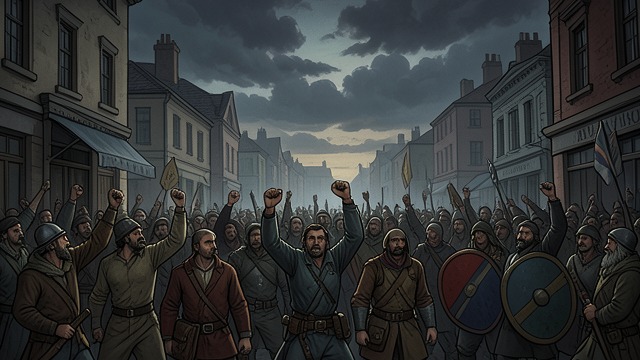
Civil Rights Without Sentimentality
Resistance remembered
Austin points to the attacks, intimidation, and violence that met campaigns for civil rights. Celebrating victories without their costs turns struggle into a reassuring tale of national progress.
Change contested
She stresses that many white people actively opposed Black access to schools, public accommodations, and political power. The movement's history therefore includes conflict that did not vanish when an inspiring speech was delivered.
Truth as Holy Work

Truth as Holy Work
Euphemisms avoided
Austin criticizes language that substitutes vague talk of division or cultural change for an honest account of racist policies and history. Avoiding the past may protect comfort, but it also prevents meaningful repair.
The possibility of transformation
She connects historical truth-telling to the work of the Holy Spirit and to the possibility of imagining another future. The conversation is painful, but Austin understands that confronting it is part of faith rather than a threat to it.
During a diversity workshop in Austin's adulthood
As Austin reflects on the history of slavery
During Austin's account of the post-slavery era
During Austin's reflections on the Civil Rights Movement
Near the conclusion of Austin's historical reflection
