
A Life Sustained by Black Memory
I'm Still HereThis flow traces how family objects, elders, art, and communal practices help Austin recover self-worth in white environments.
increasing Bearing strength in each event
 decreasing
Bearing strength in each eventdecreasingStories Kept at Home

Stories Kept at Home
Family memory
Austin hears accounts of Black achievement and family history from her parents and grandmother. The stories place her within a lineage of people who survived and created despite attempts to erase their lives.
Objects as inheritance
A grandmother's cast-iron pot and a great-grandmother's Bible make the past tangible. Their presence gives Austin a connection to elders whose experiences cannot be reduced to the stories told by school textbooks.
Language Shared Among Black Women
Language Shared Among Black Women
A communal vocabulary
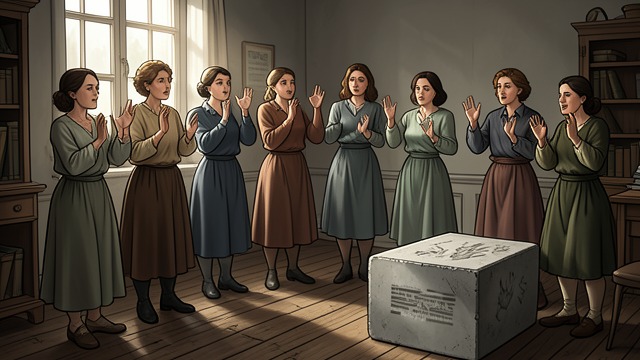
Austin celebrates Black innovation in language and the call-and-response quality of conversations among Black people. What outsiders might perceive as interruption can function as affirmation and shared participation.
Recognition in speech
Words carry relationships and cultural history, not just dictionary meaning. The familiar responses and encouragements of Black community remind Austin that her voice can be understood without translation.
Care for Hair and Skin
Care for Hair and Skin
A father's hands
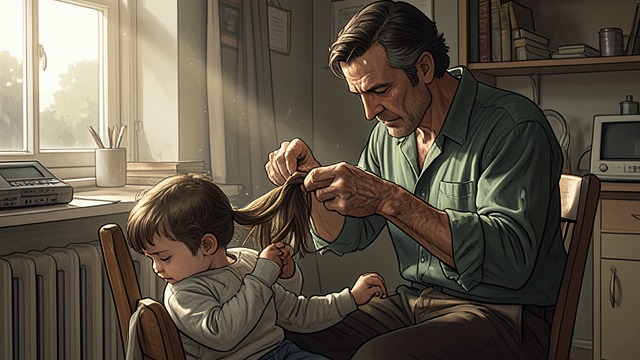
Austin remembers her father braiding her hair and reassuring her while she squirmed. The memory holds affection and the practical knowledge through which Black hair is cared for.
A mother's tenderness
She remembers her mother's hands applying cocoa butter and instructing her to care for every part of her body. Those acts teach Austin that her body deserves attention and love, not scrutiny or casual entitlement.
Black Women Building Home
Black Women Building Home
Care in public spaces
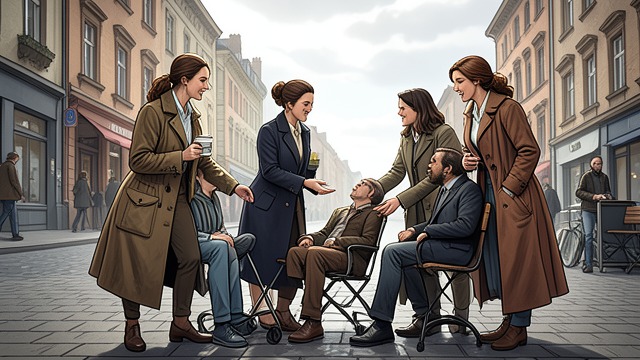
Austin sees Black women offering hospitality in churches, stores, elevators, and unexpected encounters. A greeting or a seat can tell another person that she has been seen.
Community carried outward
Belonging is not confined to formal institutions. Black women create small forms of home wherever they meet, extending care that counters the isolation of white spaces.
Beauty Without Permission
Beauty Without Permission
A different mirror
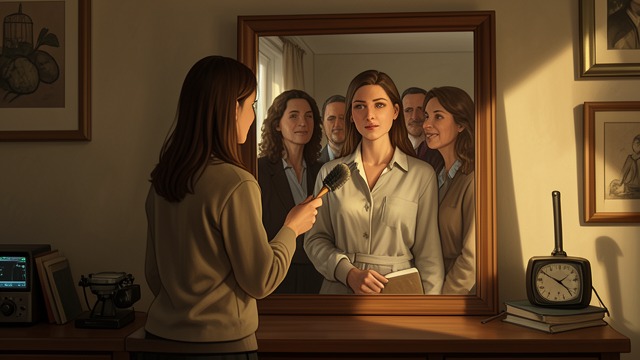
Austin recalls Black artists, writers, dancers, teachers, and ordinary people whose creativity shapes her sense of beauty. Their presence counters public judgments that mark Black women's bodies as deficient or excessive.
Love as a birthright
She affirms that Black women demand access and dignity because their ancestors did and because their humanity is not negotiable. Memory becomes a source of self-worth rather than a plea for outside approval.
During Austin's childhood
During Austin's adult reflections on community
When Austin recalls childhood care
During Austin's reflections on church and public life
As Austin remembers the affirmation that sustains her
