
Black Community as a Source of Belonging
I'm Still HereThis flow traces the communities and relationships through which Austin learns that belonging can be offered without white approval.
increasing Bearing strength in each event
 decreasing
Bearing strength in each eventdecreasingA Home Full of Black Stories

A Home Full of Black Stories
A cultural inheritance
Austin grows up among Black art, books, music, and family conversations about achievement and racial barriers. Her parents work to make pride in Blackness part of everyday home life.
A boundary of protection
Their love offers a strong foundation, but it cannot shield her from the expectations of schools and public spaces beyond the home. The family becomes a source of knowledge against which outside judgments can be measured.
Tiffani's Friendship

Tiffani's Friendship
A generous guide
Tiffani helps Austin learn neighborhood music, dances, slang, and play. She offers an example of Black confidence without turning her own way of being into a rule Austin must follow.
Belonging without imitation
By believing in Austin's Blackness, Tiffani helps her believe in it too. Their friendship makes room for difference within shared identity and eases Austin's fear of being exposed as an outsider.
The Church Family

The Church Family
Kinship in worship
In her father's Black church, Austin encounters people who greet newcomers warmly and call one another brother, sister, auntie, uncle, and mother. Shared worship becomes a network of belonging.
Faith made material
The church attends to spiritual life and practical hardship, from illness to unpaid bills and painful relationships. Austin finds a community where Black lives are not an exception to faith but part of its center.
Lunch With Women of Color
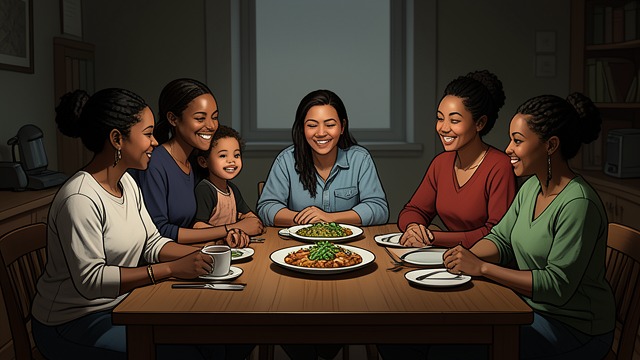
Lunch With Women of Color
A needed pause
When workplace encounters leave Austin unable to breathe easily, she seeks out women of color in another department. Their lunch offers support without requiring her to explain every racial dynamic.
Care as survival
The relationship is not a solution to institutional harm, but it restores energy and perspective. Their shared recognition helps Austin return to work without carrying the whole experience alone.
Love and Safety With Tommie

Love and Safety With Tommie
A quiet ritual
Austin calls Tommie when she arrives somewhere and again when she leaves. Some white friends misread the practice as possessiveness or overattachment.
Care shaped by danger
For Austin and Tommie, the calls are a way to manage the possibility of racialized danger. Their marriage holds both ordinary intimacy and an awareness that Black loved ones may face risks others do not have to imagine.
During Austin's childhood in Toledo
During Austin's first summer in Cleveland
Beginning at age ten
During Austin's professional years
During Austin's marriage and adult life
