The narrator’s childhood
The Man at the Window
As a young child, [The narrator](entity:character-recall-character-the-narrator-4884f56df089) wakes in a dark bedroom and sees a very tall, thin man standing outside the window. His face is hidden, but she watches his hands rub together and remembers his dangling belt.
The same childhood night
A Gesture at the Window
After standing silently for a long time, the man makes a wave-like movement. [The narrator](entity:character-recall-character-the-narrator-4884f56df089) experiences it as menacing, as if he is promising to return, and falls asleep afraid.
The years after the window encounter
The Man in the Dark
[The narrator](entity:character-recall-character-the-narrator-4884f56df089) sometimes thinks she sees the tall man sitting outside her home, motionless and watching. She cannot prove he is there, but the possibility becomes a lasting source of unease.
The narrator’s childhood
The Visit from Ms. Veal
At seven, [The narrator](entity:character-recall-character-the-narrator-4884f56df089) is home sick when [Ms. Veal](entity:character-recall-character-ms-veal-6ade0ec65b7e) visits her mother. Left alone with the child, Ms. Veal asks whether she is good or bad and threatens that a bad answer could mean having to live with her.
That night in the narrator’s childhood
The Cookie and the Fear
[Ms. Veal](entity:character-recall-character-ms-veal-6ade0ec65b7e) offers [The narrator](entity:character-recall-character-the-narrator-4884f56df089) a cookie, but the child refuses. Later, her mother becomes violently ill after eating one; although the mother calls it a stomach problem, The narrator becomes convinced the cookie caused it.
After the Ms. Veal incident
The Mystery of Other Minds
The experience leaves [The narrator](entity:character-recall-character-the-narrator-4884f56df089) with a frightening realization: she cannot know what other people think or why they act as they do. That uncertainty shapes her enduring belief that thoughts are more private and real than outward behavior.
The narrator’s adolescence at sixteen
The Driving Instructor
At sixteen, [The narrator](entity:character-recall-character-the-narrator-4884f56df089) arrives for a driving lesson with [Doug](entity:character-recall-character-doug-b7cf01363529) in heavy rain. He is an exhausted, shy instructor who delays driving, talks about experience and Jung, and gives her a book passage about life posing a question to each person.
During the driving lesson
The Candy Wrapper
While they wait out the rain, [Doug](entity:character-recall-character-doug-b7cf01363529) shares an unfamiliar candy and reads its awkwardly translated wrapper. He treats the lines as a puzzle and tells [The narrator](entity:character-recall-character-the-narrator-4884f56df089) that each person must solve their own.
Later in the driving lesson
The Best Kisser
[Doug](entity:character-recall-character-doug-b7cf01363529) recounts a former student’s claim that she is the world’s best kisser. [The narrator](entity:character-recall-character-the-narrator-4884f56df089) argues that kissing requires another person, unsettling Doug with the possibility that people are never entirely self-sufficient.
At the end of the driving lesson
A Different Ending to the Lesson
In the story [The narrator](entity:character-recall-character-the-narrator-4884f56df089) first tells [Jake](entity:character-recall-character-jake-802d4b040e69), she returns to [Doug](entity:character-recall-character-doug-b7cf01363529)’s car and reads him a second, more lyrical candy-wrapper verse before running home. Jake mistakenly assumes that she kissed Doug, and she later clarifies that she did not.
Jake’s childhood
Jake’s Farm Childhood
[Jake](entity:character-recall-character-jake-802d4b040e69) grows up on a remote farm with his parents, surrounded by sheep, pigs, chickens, and the rhythms of rural life. He becomes attentive to the landscape, the night sky, and the small details that later inform his conversations.
Jake’s childhood on the farm
The Lambs’ Tails
As a boy, [Jake](entity:character-recall-character-jake-802d4b040e69) sees the severed tails of lambs after farmers use tight bands to stop their blood flow. He worries that the same thing could happen to his own limbs and wonders how much of a person can be lost before their identity changes.
Jake’s childhood
Jake’s Early Anxieties
[Jake](entity:character-recall-character-jake-802d4b040e69) suffers from worries and stomachaches, including abstract fears about family members dying and his own body changing. His mother comforts him with sweet milk and conversations about what is troubling him.
Jake’s childhood and adolescence
The Young Artist
[Jake](entity:character-recall-character-jake-802d4b040e69) and his mother spend time drawing and painting together, and he develops an interest in art alongside his reading. Family photographs and later artwork become tangled with uncertainty about who he was and what his family remembers.
Jake’s adulthood before the pub encounter
The Academic Path
[Jake](entity:character-recall-character-jake-802d4b040e69) pursues advanced academic work and becomes a gifted scientist, eventually working in a laboratory on proteins and crystallography. His intelligence and ability do not resolve his deeper difficulty with social contact and ordinary workplace interaction.
Before the events narrated on the road
Leaving the Laboratory
The later account suggests that [Jake](entity:character-recall-character-jake-802d4b040e69) leaves the laboratory after struggling with the social demands of academic work. He loses the career he had trained for and takes a job that allows him to work alone, though the precise history is obscured by the manuscript’s shifting identities.
About seven weeks before the farm trip
The Night at the Campus Pub
At the [Campus Pub](entity:location-recall-location-a94a241e188f), [Jake](entity:character-recall-character-jake-802d4b040e69) sits with a trivia team but is too hesitant to approach [The narrator](entity:character-recall-character-the-narrator-4884f56df089). She starts talking to him, and they connect over his obscure team name, his dry humor, and their conversation about what makes people funny.
The night Jake and The narrator meet
A Number Not Given
[Jake](entity:character-recall-character-jake-802d4b040e69) wants to give [The narrator](entity:character-recall-character-the-narrator-4884f56df089) his number but cannot bring himself to do so. In the manuscript’s first version of events, he slips a note with his number into her purse; the ending later reveals that, in reality, he never managed to make contact.
The night Jake and The narrator meet
The First Wrong Number
That night, [The narrator](entity:character-recall-character-the-narrator-4884f56df089) receives a call from an unknown man with a strained, feminine-sounding voice. She explains that he has the wrong number, and he apologizes before hanging up.
The first week after the pub encounter
A Relationship Takes Shape
[The narrator](entity:character-recall-character-the-narrator-4884f56df089) and [Jake](entity:character-recall-character-jake-802d4b040e69) meet repeatedly, share meals and walks, watch a movie, and become intimate. Their conversations create a strong sense of connection, even as The narrator privately doubts whether the relationship should continue.
The first weeks of the relationship
The Calls from Her Own Number
[The Caller](entity:character-recall-character-the-caller-fb2e10ba02f0) begins calling repeatedly, often in the middle of the night. The missed calls appear to come from [The narrator](entity:character-recall-character-the-narrator-4884f56df089)’s own number, and he leaves cryptic messages that she saves rather than telling [Jake](entity:character-recall-character-jake-802d4b040e69) about.
Several days after the first call
The Repeated Message
[The Caller](entity:character-recall-character-the-caller-fb2e10ba02f0)’s voicemail repeats the same troubling statement about fear, confusion, and there being only one question to resolve. Its sadness and insistence unsettle [The narrator](entity:character-recall-character-the-narrator-4884f56df089), who keeps listening and cannot make sense of it.
After the repeated voicemails begin
The Caller Knows Her
A later message says the Caller knows what [The narrator](entity:character-recall-character-the-narrator-4884f56df089) looks like and lists details about her body, ending with a warning about biting her nails. She decides she must confront him the next time he calls.
Soon after the threatening voicemail
The Confrontation by Phone
When [The Caller](entity:character-recall-character-the-caller-fb2e10ba02f0) rings again, [The narrator](entity:character-recall-character-the-narrator-4884f56df089) demands that he stop calling and asks how he got her number. He replies that the call is about her and that he cannot help her; when she protests that he called her, she hangs up in alarm.
Early in the relationship
An Intimate Encounter
At [The narrator](entity:character-recall-character-the-narrator-4884f56df089)’s apartment, she and [Jake](entity:character-recall-character-jake-802d4b040e69) become physically intimate, but Jake asks to use only their hands. Afterwards, The narrator nearly tells him about [The Caller](entity:character-recall-character-the-caller-fb2e10ba02f0), then remembers the childhood man at her window and keeps the secret.
That night at The narrator’s apartment
The Unanswered Calls
[The narrator](entity:character-recall-character-the-narrator-4884f56df089)’s phone rings repeatedly while [Jake](entity:character-recall-character-jake-802d4b040e69) sleeps beside her. In the morning he has left, and she cannot remember getting dressed; the episode deepens her sense that her private life is becoming unstable.
During the early weeks together
The Question of Secrets
[The narrator](entity:character-recall-character-the-narrator-4884f56df089) asks [Jake](entity:character-recall-character-jake-802d4b040e69) whether secrets are inherently unfair in a relationship. He says their meaning depends on what is concealed, while she recognizes that she is hiding her doubts and the Caller from the one person they concern most.
During the first weeks together
The Breakfast Observation
[The narrator](entity:character-recall-character-the-narrator-4884f56df089) studies [Jake](entity:character-recall-character-jake-802d4b040e69) eating breakfast: his reading, his slow chewing, and the white residue at his lip. She wonders whether she can accept these ordinary details for decades, while recognizing that small irritations may become part of intimate life.
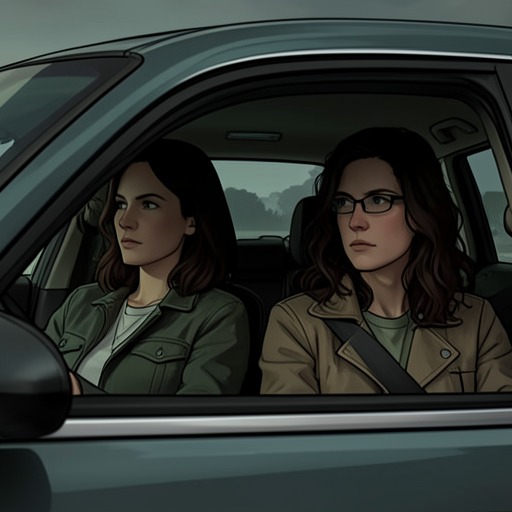
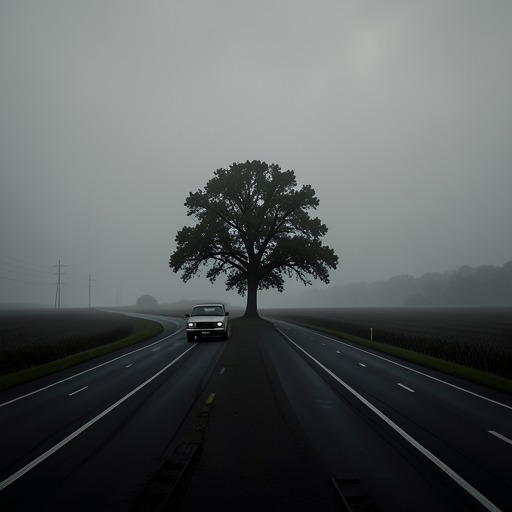
On the drive to Jake’s parents’ farm
Venus and Uncertainty
[Jake](entity:character-recall-character-jake-802d4b040e69) talks about Venus, dark matter, and the limits of human knowledge. [The narrator](entity:character-recall-character-the-narrator-4884f56df089) says that questions and uncertainty can make people feel connected; Jake receives the thought warmly, reinforcing the intellectual intimacy that first drew her to him.
On the drive to the farm
The Story of Doug
To pass the time, [The narrator](entity:character-recall-character-the-narrator-4884f56df089) tells [Jake](entity:character-recall-character-jake-802d4b040e69) about her teenage driving lesson with [Doug](entity:character-recall-character-doug-b7cf01363529), including the candy, the philosophical conversation, and the former student’s claim to be the best kisser. Jake listens closely, then assumes the story ends with a kiss.
During the drive to the farm
The Kissing Paradox
[Jake](entity:character-recall-character-jake-802d4b040e69) argues that memory changes whenever it is recalled and that every story is made up, even the real ones. He returns to the question of whether someone can be the best kisser alone, and [The narrator](entity:character-recall-character-the-narrator-4884f56df089) privately corrects his mistaken ending: kissing requires both people to participate.
During the same drive
The Smartest Human
[Jake](entity:character-recall-character-jake-802d4b040e69) asks how [The narrator](entity:character-recall-character-the-narrator-4884f56df089) would react if he claimed to be the smartest human alive. Their exchange exposes competing ideas of intelligence, including empathy and practical ability, and Jake calls the burden of being the smartest person a serious one.
Before the farm trip
The Pills Wrapped in Tissue
When [The narrator](entity:character-recall-character-the-narrator-4884f56df089) has a headache, [Jake](entity:character-recall-character-jake-802d4b040e69) brings her three pills carefully wrapped in tissue. The small, protective gesture makes her reconsider ending the relationship, showing how affection can hinge on modest acts rather than grand declarations.
On the drive to the farm
The Debate over Being Alone
[The narrator](entity:character-recall-character-the-narrator-4884f56df089) and [Jake](entity:character-recall-character-jake-802d4b040e69) discuss sadness, happiness, and whether people need others to feel purpose. Jake argues that connection matters, while The narrator continues to weigh the security of intimacy against the freedom of solitude.
On the drive to the farm
The Meaning of a Real Relationship
[The narrator](entity:character-recall-character-the-narrator-4884f56df089) asks what makes a relationship real. [Jake](entity:character-recall-character-jake-802d4b040e69) answers that realness involves stakes and the possibility of loss; she privately thinks that being deeply known by someone previously unconnected to her may be the truest sign of intimacy.
Winter evening, roughly seven weeks after the pub encounter
Arrival at the Farm
[Jake](entity:character-recall-character-jake-802d4b040e69) brings [The narrator](entity:character-recall-character-the-narrator-4884f56df089) to his parents’ farm after a long, dark drive. Instead of going straight inside, he gives her a tour of the grounds, showing her the orchard, barns, and livestock in the cold.
During the farm tour
The Dead Lambs
Outside the barn, [The narrator](entity:character-recall-character-the-narrator-4884f56df089) sees two dead lambs stacked against the wall. [Jake](entity:character-recall-character-jake-802d4b040e69) explains that they may be burned in a spring bonfire, and the sight prompts her to think about degrees of life, death, and the fear that suffering might not end.
During the farm tour
The Pigs in the Pen
[Jake](entity:character-recall-character-jake-802d4b040e69) tells [The narrator](entity:character-recall-character-the-narrator-4884f56df089) that his parents found their old pigs badly infested with maggots after failing to check on them for several days. They had to put the animals down, and the story leaves The narrator wondering whether death truly releases anyone from suffering.
Later during the farm tour
The Figure at the Window
As [Jake](entity:character-recall-character-jake-802d4b040e69) and [The narrator](entity:character-recall-character-the-narrator-4884f56df089) walk behind the house, she sees a gaunt woman watching them from an upstairs window. Jake says it is too dark for his mother to see them, but the silent figure adds to The narrator’s sense that something is wrong.
Winter evening, after the farm tour
The Farmhouse Dinner
[The narrator](entity:character-recall-character-the-narrator-4884f56df089) meets [Jake](entity:character-recall-character-jake-802d4b040e69)’s mother and father at a carefully set dinner table in their old country house. His mother smiles almost constantly and describes tinnitus and whispers; his father explains that her hearing and sleep have worsened.
During dinner at the old country house
The Imitation Game
[Jake](entity:character-recall-character-jake-802d4b040e69)’s mother proposes a game in which [The narrator](entity:character-recall-character-the-narrator-4884f56df089) imitates Jake. The narrator tries a brief impression, then Jake imitates her with startling precision, drawing his parents’ laughter while leaving her unsettled by how closely he seems to know her.
After dinner
The Changed Dress
When [Jake](entity:character-recall-character-jake-802d4b040e69)’s mother returns from the kitchen, she is wearing a different dress and has bandaged a damaged toe. The shifts add to [The narrator](entity:character-recall-character-the-narrator-4884f56df089)’s impression that the visit is taking place in a subtly unstable world.
After dinner at the old country house
The Bathroom and the Fly
[The narrator](entity:character-recall-character-the-narrator-4884f56df089) retreats to a stark bathroom, where she notices she has bitten her nails until they bleed. She crushes a trapped fly, then senses someone outside the door and discovers that the slippers she left in the hall appear to have changed direction.
During the visit to Jake’s parents’ house
The Basement Drawings
While looking around alone, [The narrator](entity:character-recall-character-the-narrator-4884f56df089) enters the basement and finds an oscillating fan, a painting of the room, and many drawings of a long-nailed figure with a child. The images connect the family home to childhood fear and to [Jake](entity:character-recall-character-jake-802d4b040e69)’s discussion of symbols and allegory.
In the basement during the visit
A Conversation through the Vent
[The narrator](entity:character-recall-character-the-narrator-4884f56df089) overhears [Jake](entity:character-recall-character-jake-802d4b040e69)’s parents arguing about someone who left the laboratory and could not manage the demands of ordinary work. Their words seem to describe Jake, though he later offers a different account involving his brother.
Later that evening, in Jake’s childhood bedroom
The Photographs Marked Us
In [Jake](entity:character-recall-character-jake-802d4b040e69)’s room, [The narrator](entity:character-recall-character-the-narrator-4884f56df089) opens an envelope marked “Us” and finds close-up photographs of body parts. She also sees a photograph of a blond woman named Steph with an unfamiliar man in the background, raising questions Jake does not readily answer.
During the visit to the farm
The Father’s Reassurance
[Jake](entity:character-recall-character-jake-802d4b040e69)’s father finds [The narrator](entity:character-recall-character-the-narrator-4884f56df089) in Jake’s room and tells her that Jake’s mother is not going mad, despite her hearing problems and apparent whispers. He says The narrator has been good for Jake and urges her to understand how much the visit matters to the family.
As The narrator leaves the farm
The Portrait Gift
[Jake](entity:character-recall-character-jake-802d4b040e69)’s mother gives [The narrator](entity:character-recall-character-the-narrator-4884f56df089) a folded painting, insisting that she open it only when she arrives and that it is a portrait of Jake. The narrator leaves with the unexplained gift and the feeling that the family knows more about her than she understands.
On the drive away from the farm
The Brother’s Story
After [The narrator](entity:character-recall-character-the-narrator-4884f56df089) asks about the man in Steph’s photograph, [Jake](entity:character-recall-character-jake-802d4b040e69) says he has a brother who became isolated, followed him, and eventually had to be cut out of his life. Jake describes the brother as a gifted but deeply unhappy person whose crisis changed the family.
During the drive away from the farm
Leaving the Lab
[Jake](entity:character-recall-character-jake-802d4b040e69) adds that his brother could not cope with colleagues or workplace interaction and began wearing Jake’s clothes and disrupting his life. His account echoes the argument [The narrator](entity:character-recall-character-the-narrator-4884f56df089) overheard, though the story’s shifting identities make the truth uncertain.
On the drive home from the farm
The Decision to End Things
[The narrator](entity:character-recall-character-the-narrator-4884f56df089) again considers ending her relationship with [Jake](entity:character-recall-character-jake-802d4b040e69), despite moments of warmth and renewed closeness. She believes that an essential ingredient is missing, but struggles to say what she feels directly to him.
Late on the drive home
The Rural Dairy Queen
[Jake](entity:character-recall-character-jake-802d4b040e69) and [The narrator](entity:character-recall-character-the-narrator-4884f56df089) stop at a nearly empty Dairy Queen during worsening winter weather. A thin employee with a rash makes The narrator’s lemonade and quietly warns that she is afraid for her.
Later that night
The Detour to the School
[Jake](entity:character-recall-character-jake-802d4b040e69) turns onto a narrow rural road, saying he knows a nearby school where they can dispose of their drink cups. The isolated building and worsening storm make [The narrator](entity:character-recall-character-the-narrator-4884f56df089) uneasy, but Jake continues toward it.
At the school parking lot
The Old Pickup Truck
[Jake](entity:character-recall-character-jake-802d4b040e69) gets out with the cups and walks around the school rather than using the bin by the entrance. He returns claiming the bin held road salt and that he found a recently driven black pickup behind the building.
After Jake returns to the car
The Figure at the Window
While [Jake](entity:character-recall-character-jake-802d4b040e69) and [The narrator](entity:character-recall-character-the-narrator-4884f56df089) sit in the parked car, he says a man is watching them through a school window. He becomes furious, calls the unseen observer a pervert, and insists on confronting him despite The narrator’s pleas to leave.
Minutes after the parking lot confrontation
Jake Enters the School
[Jake](entity:character-recall-character-jake-802d4b040e69) takes the car keys and goes toward the school, ordering [The narrator](entity:character-recall-character-the-narrator-4884f56df089) to wait. Alone in the storm, she hears metallic bangs, grows frightened, and finally leaves the car to look for him.
During The narrator’s search
The Custodian in the Hall
Outside a school window, [The narrator](entity:character-recall-character-the-narrator-4884f56df089) sees a tall figure in work clothes and a mask, holding a mop. The figure seems to crawl along the hall, and she enters the building looking for [Jake](entity:character-recall-character-jake-802d4b040e69) and a way out.
After The narrator enters the school
The Custodian’s Room
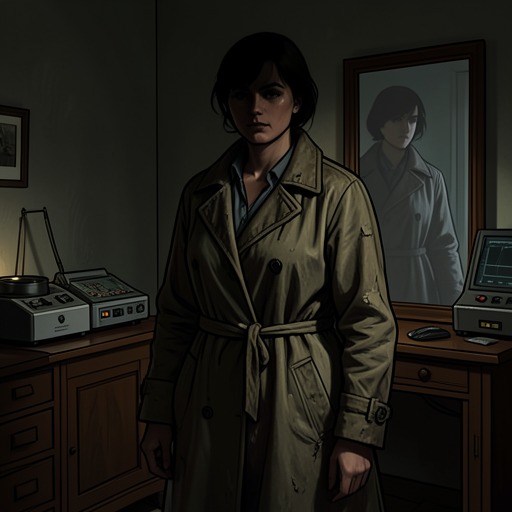
[The narrator](entity:character-recall-character-the-narrator-4884f56df089) finds a room containing a desk, photographs, a microwave, and a child’s blue shirt with white polka dots that she recognizes as her own. She also discovers an old video camera connected to a television.
Inside the custodian’s room
The Recording of the Pickup
[The narrator](entity:character-recall-character-the-narrator-4884f56df089) plays the camera recording and watches it move through the school to a window overlooking the [Old Pickup Truck](entity:object-recall-object-e509dc1e3ab3). The image zooms in on someone sitting in the driver’s seat who appears to be [Jake](entity:character-recall-character-jake-802d4b040e69).
Soon after watching the recording
The Chained Door
[The narrator](entity:character-recall-character-the-narrator-4884f56df089) returns to the entrance and finds it chained and locked from inside. A handwritten note asks what happens in the school, and footsteps approaching through the halls force her to flee and hide.
During the night inside the school
The Repeating Song
[The narrator](entity:character-recall-character-the-narrator-4884f56df089) hides behind a bench as “[Hey, Good Lookin’](entity:expression-recall-expression-hey-good-lookin-4f84003e24d7)” plays repeatedly over the school’s speakers. The song links the school to the earlier car ride and makes the long, uncertain passage of time feel unbearable.
While hiding in the school
The Memory of Ms. Veal
As she hides, [The narrator](entity:character-recall-character-the-narrator-4884f56df089) recalls the frightening childhood visit from [Ms. Veal](entity:character-recall-character-ms-veal-6ade0ec65b7e) and her lesson that nobody can fully know another person’s motives. The memory intensifies the manuscript’s recurring doubt about what is real and what others are thinking.
Later in the school night
The Fresh Paint Message
In an art room, [The narrator](entity:character-recall-character-the-narrator-4884f56df089) finds fresh paint and a message suggesting the pursuer knows what she was going to do. A second message says it is now just the two of them, intensifying her belief that the stranger is anticipating her thoughts.
Near the end of The narrator’s search
Jake’s Shoes in the Locker Room
[The narrator](entity:character-recall-character-the-narrator-4884f56df089) reaches the gym and boys’ locker room, where she finds [Jake](entity:character-recall-character-jake-802d4b040e69)’s shoes, clothes, and a running shower. She sees no sign of him, but the objects convince her that he has been there and may be in danger.
Near the ending, inside the school
The Pursuer’s Identity
The account finally reveals that the custodian is not a separate attacker: [Jake](entity:character-recall-character-jake-802d4b040e69) has been wearing the rubber boots, gloves, and mask. The imagined chase has been staged by Jake to bring the woman from his pub memory into the school and make her part of his story.
At the school, near the ending
The Merging Voices
The manuscript shifts from “I” to “we” and fuses [Jake](entity:character-recall-character-jake-802d4b040e69) with [The narrator](entity:character-recall-character-the-narrator-4884f56df089). It reveals that the elaborate relationship, journey, and pursuit were constructed from Jake’s isolation, memories, and longing for the woman he once met but could not approach.
At the Campus Pub, years before the school ending
The Story of the Missed Chance
In the final reconstruction, [Jake](entity:character-recall-character-jake-802d4b040e69) remembers meeting the woman at the [Campus Pub](entity:location-recall-location-a94a241e188f) and wanting to give her his number. He wrote it down but could not hand it over; the imagined romance becomes a way to explore the life that might have followed if he had acted.
In Jake’s last hours
The Manuscript’s Final Question
[Jake](entity:character-recall-character-jake-802d4b040e69)’s story returns to the question of whether life can continue in total isolation and whether suffering can be endured without connection. He recognizes that the imagined woman cannot answer for him; the choice belongs to him alone.
The night of the school events
The Suicide in the Closet
In the manuscript’s final scene, [Jake](entity:character-recall-character-jake-802d4b040e69) and the merged narrator retreat to a small closet in the [Custodian's Room](entity:location-recall-location-9c398a572804). Jake asks for help, and the narrator uses a bent wire hanger to stab him and then themself, leaving both identities collapsed into one.
After the school night
The Institutional Employee’s Death
The interspersed conversations and closing account establish that an isolated school employee is found dead in a closet, killed by puncture wounds. The authorities discuss his long service, social isolation, physical symptoms, notebooks, and the unanswered question of why he died.
After the death is discovered
The Manuscript Is Handed Over
A final conversation turns to the detailed story found beside the body. One speaker cannot distinguish what is true from what is invented and suggests that the pages should be read from the end before circling back, returning the reader to the novel’s opening thought.