
Stories, Memory, and Reality
I'm Thinking of Ending ThingsThe novel repeatedly questions whether remembered events can be separated from the stories people make to understand them.
increasing Bearing strength in each event
 decreasing
Bearing strength in each eventdecreasingA Memory Recalled
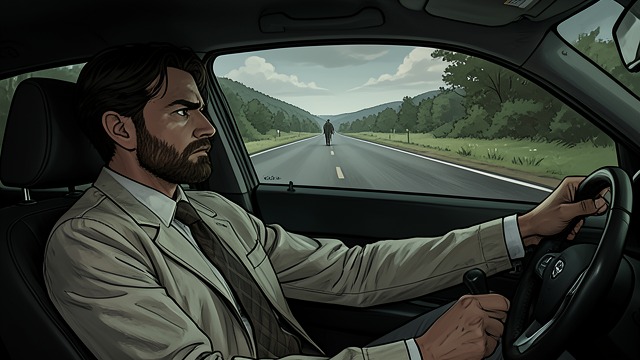
A Memory Recalled
The narrator’s account
The narrator tells Jake a detailed memory of her teenage driving lesson. Her precision suggests that details can make a story feel trustworthy.
Memory under question
Jake argues that recalled memories change each time they are retold. His theory challenges the narrator’s confidence without proving that her memory is false.
Jake’s Counterclaim

Jake’s Counterclaim
Stories as forms
Jake says that memories and fictions are both stories shaped through retelling. Reality occurs once, while the account of it is repeatedly rebuilt.
Truth becomes unstable
The idea offers a way to interpret contradictions, but it also threatens to make every claim uncertain. The narrator is drawn to Jake’s intelligence and wary of its implications.
An Unforgettable Moment
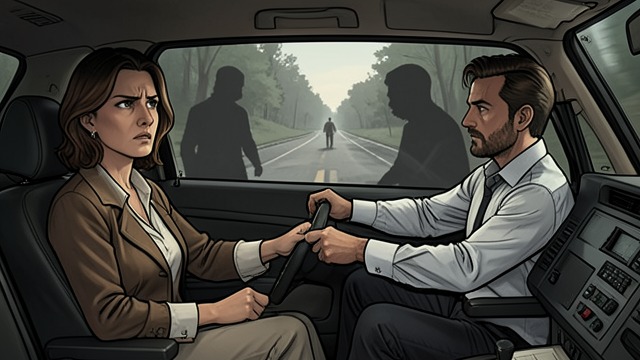
An Unforgettable Moment
A claim about forgetting
Jake argues that nothing is wholly unforgettable because some part of every experience must be left out. Remembering itself depends on omission.
The cost of absence
The thought anticipates the novel’s missing histories and incomplete images. What is forgotten can shape a life as strongly as what is retained.
Contradictory Biographies
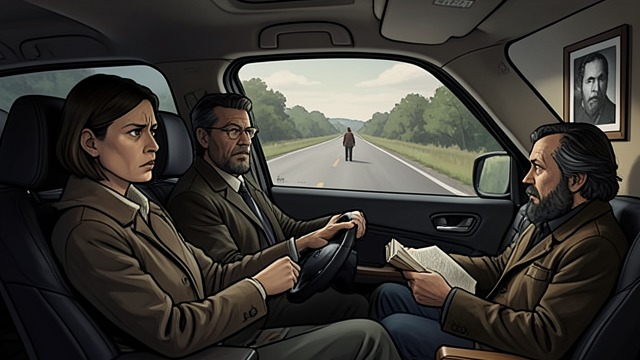
Contradictory Biographies
Unmatched accounts
The narrator encounters photographs and family explanations that do not fit her understanding of Jake. The brother’s story and the childhood images remain uncertain.
Story replaces certainty
Rather than resolving every contradiction, the book makes the accounts themselves part of the evidence. Biography emerges as something composed and revised.
The Manuscript’s Frame
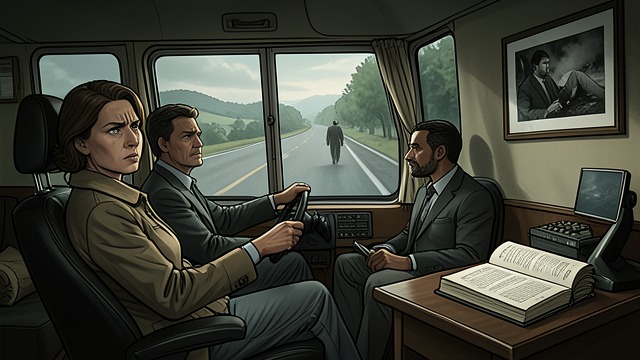
The Manuscript’s Frame
A story discovered
After the death, readers are told that Jake left a written account that mixes characters, memories, and himself. The manuscript’s status as diary or fiction is unclear.
Reality folds back
The ending asks the reader to reconsider the entire narrative as a constructed story. The frame does not deliver certainty; it makes interpretation part of the experience.
During the drive to the farm
After the driving story
During the same drive
During and after the farmhouse visit
In the closing pages
