
The Old Photographs and Personal Continuity
I'm Thinking of Ending ThingsPhotographs challenge the characters’ stable biographies and make physical likeness a question about whether a person remains the same over time.
increasing Bearing strength in each event
 decreasing
Bearing strength in each eventdecreasingThe Childhood Portrait
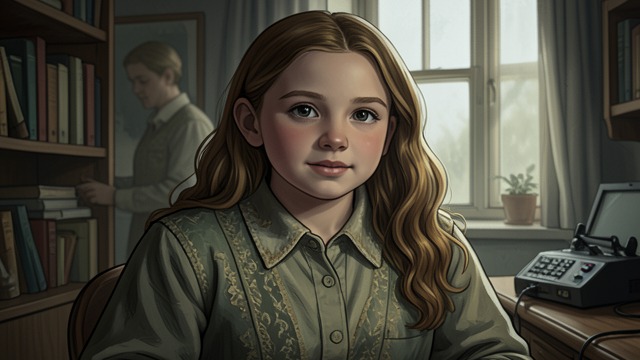
The Childhood Portrait
A disputed likeness
Jake identifies an old photograph of a child as himself, but the narrator sees a figure who looks more like her. The image resists his explanation.
Identity through evidence
A photograph should fix a past moment, yet this one unsettles both appearance and memory. The narrator has no independent way to settle what it depicts.
Jake’s Childhood Photograph
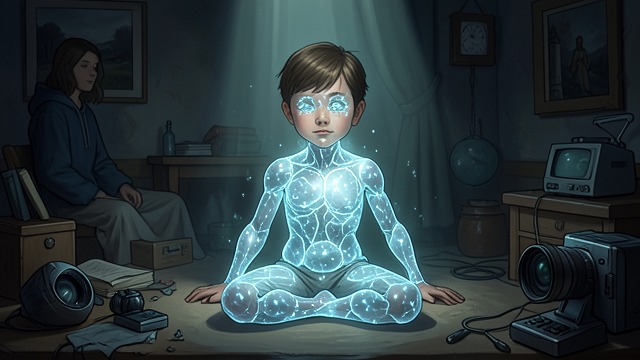
Jake’s Childhood Photograph
Cells and continuity
Jake has told the narrator that a photograph of himself as a child shows a body made of cells that have since been replaced. He wonders what makes the child and adult the same person.
Identity beyond appearance
The question unsettles any simple account of a stable self. It anticipates the novel’s eventual division and merging of identities.
Steph and the Stranger
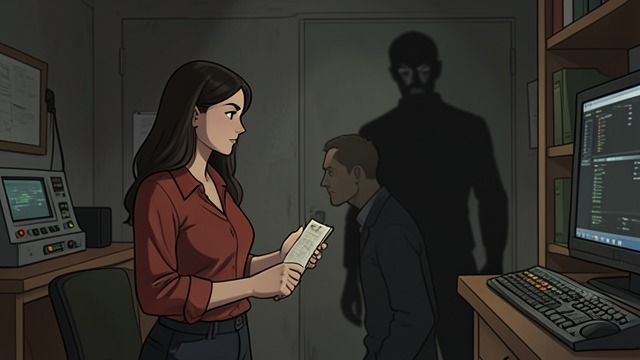
Steph and the Stranger
A photograph examined
The narrator studies a photograph of Steph and notices a man in the background. Jake cannot immediately identify him and suggests it may be his brother.
Biography breaks open
The image introduces a family fact absent from earlier conversation. A frozen moment in a photograph becomes an unstable clue about Jake’s past.
The Worker’s Photographs

The Worker’s Photographs
An unseen person recorded
The narrator finds blurred photographs of a man who seems reluctant to be photographed. His eyes feel familiar, though she cannot explain why.
The image invites fusion
The photographs connect the school worker to the story’s central identity confusion. They offer likeness without reliable context or identification.
A Face Made from Selves
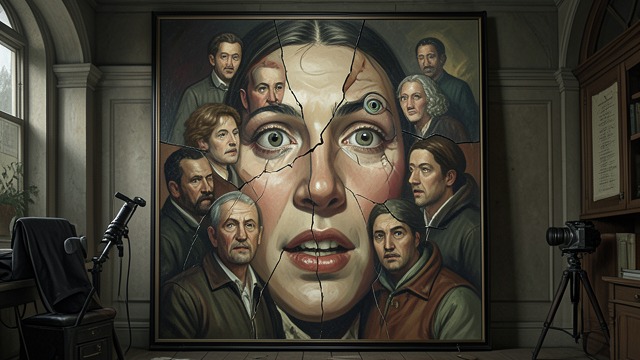
A Face Made from Selves
The portrait unfolds
The painting given by Jake’s mother is imagined as a blurred, fragmented face that includes everyone in the story. The image refuses a single stable subject.
Continuity becomes relational
The portrait suggests that identity is assembled from memories, roles, and other people. The novel leaves that assembly unresolved rather than restoring a simple self.
During the farmhouse visit
During the drive to the farm
In Jake’s bedroom
Inside the school custodian’s room
At the ending
