
The Narrator’s Childhood Fears
I'm Thinking of Ending ThingsMemories of a stranger at the window and an unsettling adult encounter shape the narrator’s belief that inner thoughts remain unknowable.
increasing Bearing strength in each event
 decreasing
Bearing strength in each eventdecreasingThe Man at the Window
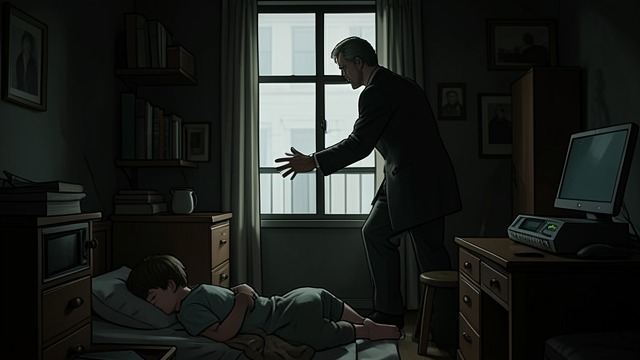
The Man at the Window
A sudden awakening
The child narrator wakes in a dark room and sees a very tall man standing just outside the window. She remembers his moving hands and the sense that he can see her.
Fear outlasts the image
A wave-like movement convinces her the man is watching. Though he disappears by morning, the memory remains frightening and unresolved.
Watching in Later Years
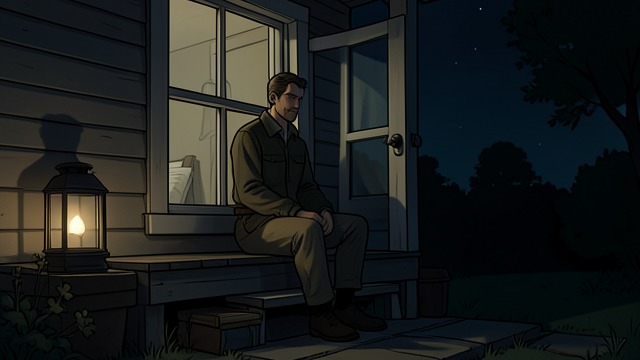
Watching in Later Years
A recurring impression
The narrator sometimes glimpses a tall figure sitting outside at night. She cannot confirm what she sees, yet the sight leaves her unsettled.
Uncertainty as threat
The possibility that the man exists only in her mind does not make the experience harmless. Her fear grows precisely because she cannot establish what is real.
The Meeting with Ms. Veal
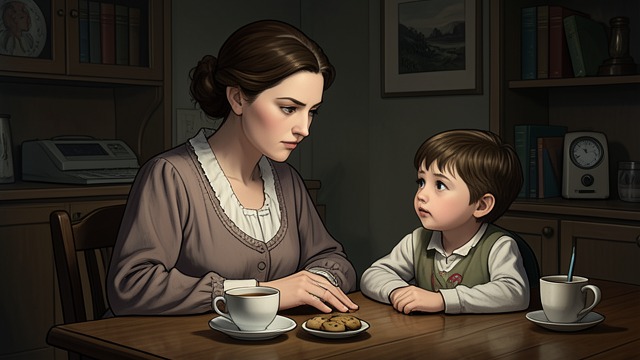
The Meeting with Ms. Veal
A threatening question
While the narrator is home sick, Ms. Veal asks whether she is good or bad and threatens that a bad child might have to live with her. The child cannot understand the adult’s purpose.
Fear enters ordinary life
The encounter occurs over tea and cookies, not in a dramatic setting. Its calm surroundings make the threat feel like a betrayal of everyday safety.
The Cookie’s Aftermath
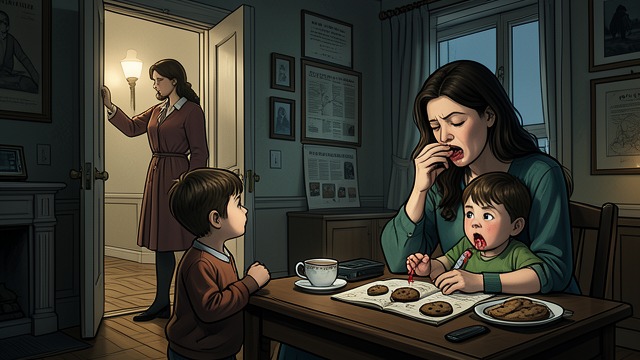
The Cookie’s Aftermath
A child’s conclusion
After Ms. Veal leaves, the narrator’s mother becomes violently ill. The child believes a cookie caused it, though her mother later calls it a stomach problem.
Certainty without proof
The narrator’s conviction becomes an early lesson in how private interpretations persist without confirmation. It deepens her distrust of what people say about their motives.
A Lasting Epiphany

A Lasting Epiphany
The fear returns
The narrator recalls Ms. Veal while hiding in the school. The childhood question about goodness now feels impossible to answer.
A worldview takes shape
She concludes that no person can fully know another’s thoughts. The memory links early fear to the novel’s deeper concern with secrecy and connection.
When the narrator is about six or seven
In the years after the childhood sighting
When the narrator is seven
The night of the Ms. Veal visit
Years later, during the school ordeal
