Around 3:00 a.m.
I'm Thinking of Ending ThingsAround 3:00 a.m. is the recurring hour associated with The Caller’s unexplained calls to The narrator. It is not a precise appointment: the calls come often in the middle of the night, sometimes while she is asleep, and the time marks a pattern of intrusion rather than a confirmed schedule. Its importance lies in how that pattern turns the quietest part of the night into a source of dread.
The Calls and Their Timing
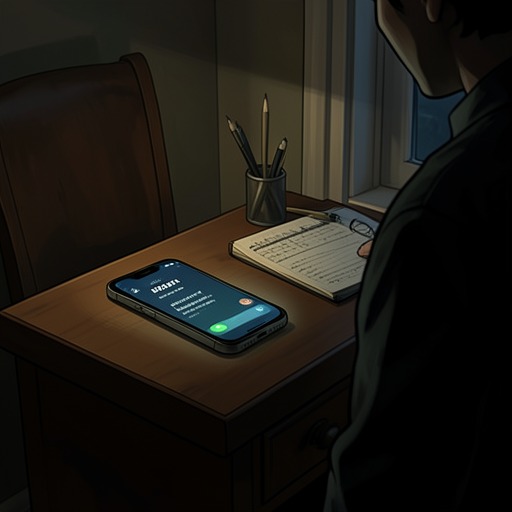
The narrator notices that The Caller usually rings in the middle of the night, often around 3:00 a.m., and that every call appears to come from her own number. She sometimes wakes to find a missed call, so the hour becomes associated with an interruption she may discover only after it has happened. The unfamiliar voice leaves messages that sound sad and cryptic, always repeating the same words, rather than making an explicit threat.
One night, the pattern intensifies into a count: while The narrator sleeps, The Caller rings twelve times and leaves no message. The twelve missed calls sharpen the sense of persistence without clarifying what The Caller wants. Because he has not threatened her, she cannot easily explain the calls as a straightforward danger; because attempts to answer make him hang up, she cannot turn them into a conversation either.
Sleep, Fear, and the Apartment
Since the calls began, The narrator has had frightening dreams and has twice woken in the night panicked, feeling that someone is in her apartment. For a few seconds she senses a person standing very close, watching from a corner, and cannot move. The episodes blur the boundary between sleep and waking, but she describes the fear and presence as intensely real while they last.
After she fully wakes, she goes to the bathroom and runs water in the otherwise quiet apartment. Her heart pounds; she is sweating heavily, once enough to change her pajamas. These details make the nocturnal fear bodily as well as imagined. The calls do not provide an explanation for the presence she senses, but their recurrence gives the night a new expectation of intrusion.
A Motif of Nighttime Sounds
The hour belongs to a wider pattern in which sounds arrive without a secure explanation. In one message, The narrator hears running water; in another, water continues alongside footsteps and what sounds like hinges and a door closing. She concludes that the sounds must be The Caller, while still having no way to establish where they were recorded or what they show. Their ordinary sources become unsettling because they reach her as fragments, detached from a visible scene.
Elsewhere, a remembered childhood encounter with a man at a window is accompanied by faint music that The narrator only notices after seeing him. She recalls that many minutes, perhaps an hour, passed before he made a wavelike gesture, which she experienced as menacing. That episode is not assigned to 3:00 a.m.; rather, it echoes the later calls through its uncertain duration, isolated sound, and feeling of being watched. Together, the scenes make nighttime less a stable time of rest than a condition in which ordinary sounds and unexplained contact can unsettle what feels real.