Narrator's Driving Lesson and Candy Wrapper
I'm Thinking of Ending ThingsThe narrator’s driving lesson with Doug turns an ordinary first attempt at learning to drive into a lasting encounter with questions, puzzles, and the difficulty of being alone. Told to Jake as a story during a drive, it unfolds through a rain-soaked meeting, a strange lesson in Jung and experience, and two candy wrappers whose verses frame both its beginning and its carefully delayed ending.
The Rainy Meeting
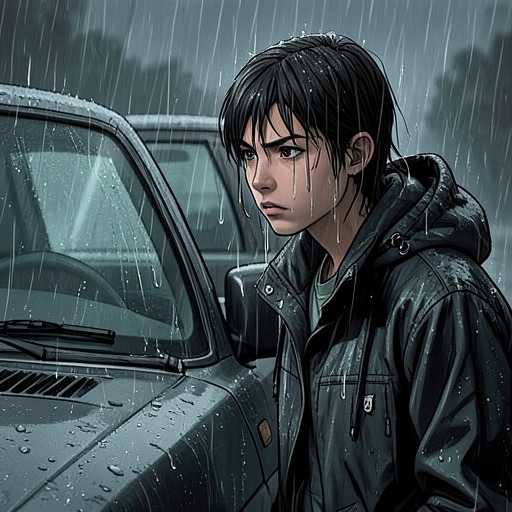
The narrator begins the story by admitting how carefully she remembers its details. At sixteen, she was told to arrive at a house at ten thirty and wait in the driveway; she did not need to ring the bell. It was pouring, so she sheltered her head with a newspaper taken from an empty bus seat. She waited minutes before the door opened, and the man who appeared was someone she had never met in person, though they had spoken on the phone.
The man looked as if he had been awake for days: dark bags under his eyes, stubble, and bedhead. He identified himself as Doug, handed her the keys, and shut the door. The keys had a metal key chain bearing a large J. The abruptness of the exchange left the narrator standing still, unsure who this instructor was or what to make of him. Recounting the moment to Jake, she insists that the detail matters because she remembers it and wants to tell a proper story; Jake listens while looking out at the road.
Experience, Driving, and the First Wrapper
While they waited, Doug spoke about age and maturity, then took a small book from the glove box and read a passage associated with Jung. He asked whether the narrator knew anything about Jung; she said not really, though she later admits that answer was not entirely true. Doug gave her the book, which she kept, and described experience as a way of learning that mattered beyond driving. He had not chosen driving instruction as his first job, but practical circumstances had brought him to it. He had come to appreciate sitting in a car and talking with people, and liked puzzles and the idea of navigating with another person as a metaphor.
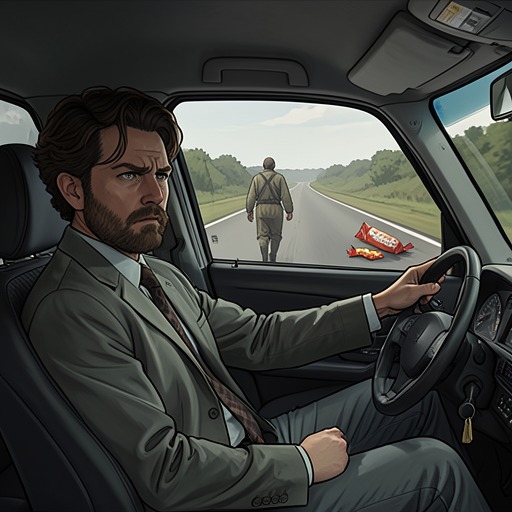
Doug then produced two unusual candies. He told the narrator to keep one for another rainy day, unwrapped the other, broke it between his fingers, and gave her the larger half. She found the offer strange and was grossed out that he had touched the candy, but ate it anyway. At first it seemed to have little taste; then its unexpected tartness emerged, and she began to like it. Doug explained that the candies had come from a student who had traveled in Asia, and that their wrappers carried English lines that had been translated directly and awkwardly.
The narrator read the lines inside the wrapper: “You are the new man. How delicious cannot forget, special taste. Return the turn flavor.” Doug kept wrappers partly because he enjoyed reading and thinking about the verses. He called puzzles one of the few reliable cures for rainy days and loneliness, adding that each person had to solve their own. The words are odd, but the encounter gives them weight: the candy changes in taste as she attends to it, while the wrapper offers language that resists immediate understanding. The Candy Wrapper from Doug becomes both a small keepsake and the first clue in the story’s pattern of things saved, reread, and interpreted later.
The Lesson’s Argument About Solitude
The conversation shifts from puzzles to a woman Doug had known who claimed to be the world’s best kisser. The narrator answered that kissing requires two people, so no one could be the best alone: the act depends on another person’s participation. She contrasted it with a skill one can practice and assess alone. Her reasoning upset Doug. He resisted the implication that excellence in intimacy depends on someone else, and the possibility that there might be no one else seemed, to him, too much to overcome.
Doug abruptly called it stupid to wait out the rain and directed the narrator out of the parking lot with tilts of his head. For the rest of the lesson he was twitchy and disengaged from driving, offering only basic advice while mostly looking through the windshield. The talk had changed the atmosphere between them; the lesson continued, but the exchange about dependence and loneliness remained unresolved. This was the narrator’s first and last driving lesson.
Because the rain continued, Doug offered to drive her home so she would not have to wait for the bus. They said very little on the way. At her house, the narrator told him she would keep practicing with her father, and Doug agreed that it was a good idea. She left the car and ran inside, apparently ending the encounter without ceremony.
The Interrupted Ending and Its Correction
About a minute later, the narrator returned to the car. Doug had moved into the driver’s seat, with both hands on the wheel, but the seat and mirror were still positioned for her. He was cramped in the space. She signaled for him to lower the window; he moved the seat back before rolling it down. The narrator leaned in, placed a hand gently on his left shoulder, and asked him to close his eyes. Doug did so and leaned toward her.
At this point, Jake reacts as if the narrator is about to describe a kiss. The story’s suspense depends on his assumption: he interrupts before she can finish, and she lets him believe she kissed Doug. The later correction is explicit. A kiss, she says, requires two people who want to kiss; otherwise it is something else. She never kissed Doug after the lesson.
What actually happened is quieter and more exact. The narrator returned to the car holding the tiny, wrinkled candy wrapper Doug had given her. She unfolded it and read its poem aloud: “My heart, my heart alone with its lapping waves of song, longs to touch this green world of the sunny day. Hello!” She saved the Candy Wrapper from Doug, though she says she does not know why. After reading the lines to him, she turned and ran back into her house. She never saw Doug again.
The Story’s Shape and Significance
The episode is presented not as a straightforward recollection but as a story the narrator tells Jake in the present. Its pauses, details, and delayed clarification make the telling itself part of the action. The narrator worries that the remembered particulars may bore Jake, yet those particulars establish the difference between what he assumes and what happened: the car’s seat and mirror remain arranged for her, the second wrapper is in her hand, and no kiss takes place. A dramatic-looking gesture becomes an act of reading.
The two wrappers give the story a quiet structure. The first offers broken, puzzling language that Doug uses to talk about loneliness and the need to solve one’s own puzzles. The second carries a more lyrical message of longing to touch the world. The narrator keeps both the lesson’s memory and its physical trace, without claiming to have resolved what either means. Her account also answers Doug’s earlier concern about being alone without pretending that a conversation can settle it: she asserts that intimacy is mutual, then leaves the car after delivering a poem rather than making the kiss Jake expects.
Jake’s interruption exposes how readily a listener can complete a story according to expectation. By letting him assume a kiss and then revealing the wrapper, the narrator turns the incident into a small test of attention: the important ending was present in the telling, but Jake had stopped listening before she could give it. Doug’s words about puzzles, the narrator’s saved paper, and her insistence on the exact event converge in an encounter whose meaning remains open, while its final action is unmistakable: she reads, leaves, and does not see him again.