Photographs in the Custodian's Room
I'm Thinking of Ending ThingsThe Photographs in the Custodian's Room turn a drab, nearly empty school room into a place of recognition. At first, they offer only uncertain faces: an expressionless couple and a man caught in pictures that seem to have been taken without his willing participation. Later, when The narrator and Jake understand that the man in the images is not a separate custodian but Jake, the photographs become evidence of the story's concealed identity. Their significance lies in that delayed recognition: the pictures are present before their meaning can be faced, and the room's apparent occupant is already gone.
Appearance and Arrangement
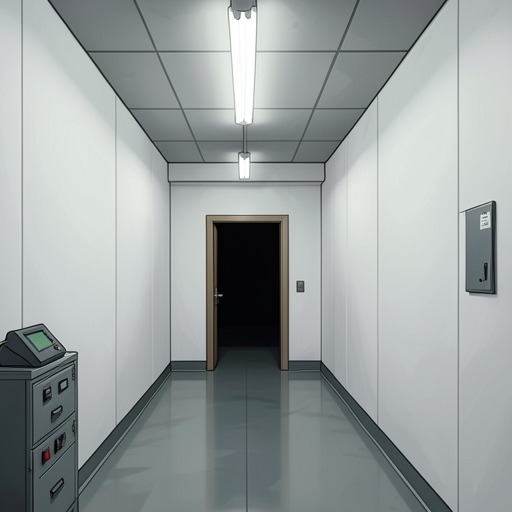
The narrator finds the photographs at the back of a room that feels more like a large closet than a workplace. The space is dingy and mostly empty, with a calendar taped to the far wall and a drain in the middle of the concrete floor. At the rear, a wooden table stands against the wall beside a tall, plain closet; there is no chair. The narrator steps carefully over the drain before noticing the pictures. Their position makes them part of a sparse, functional-looking environment rather than a deliberately arranged display.
One photograph shows a man and a woman together. They might be a couple, or perhaps brother and sister, since their faces look alike. The man is old and much taller than the woman, who has straight gray hair. Both have long faces and stiff, expressionless poses; neither looks distinctly happy or sad. The narrator wonders whether they could be someone's parents, but the image supplies no answer. Its emotional blankness makes the photograph odd to have on the wall, while its unknown relationship to the room's occupant leaves it unresolved.
The other photographs focus on a man. In one, he sits at a desk that might be the desk in the room, leaning away and covering his face with his left hand. The top of his head has been cut out of the frame. He appears unaware of the camera, or at least reluctant to be photographed. The images are blotchy and faded, and their poor quality makes the face difficult to read. A white microwave, papers, and a rumpled cloth are also in the room, but the photographs are the details that draw The narrator into examining who has been there.
The Man in the Images
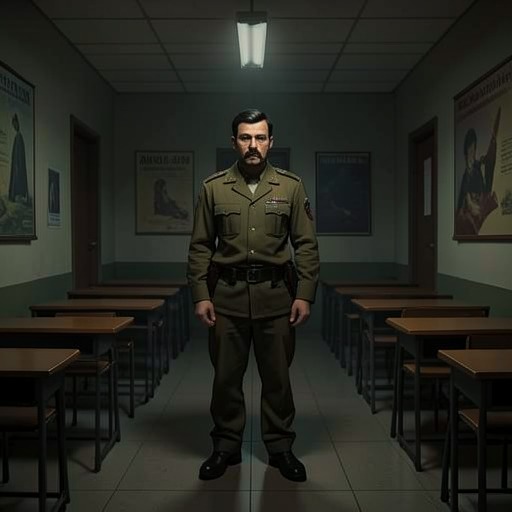
The photographs connect the room to the earlier sightings of a man at the school. The narrator recognizes the pictured subject as the man Jake saw and the one The narrator saw in the hall. This identification initially raises more questions than it settles: the man seems to have had no reason to know that anyone would arrive, and The narrator feels that she does not know him. The pictures therefore carry a double uncertainty. They seem to document someone associated with the room, yet the people looking at them cannot place that person within an ordinary account of events.
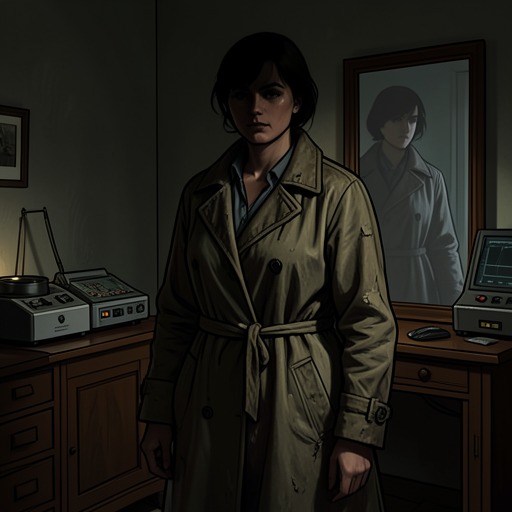
The close inspection becomes personal rather than merely evidentiary. The narrator studies the man's face and finds his eyes sad and familiar, though she cannot immediately explain the familiarity. Her heartbeat speeds up as she wonders what he had been doing before they arrived. The photographs do not provide a written label or a clear explanation; recognition builds through a face, a feeling of familiarity, and the accumulating evidence around the school. Their cropped, reluctant-looking portraits preserve an image while withholding the context that would make it easy to understand.
Recognition and Reversal
The photographs' meaning changes when The narrator and Jake look at the man's face again. They understand that the custodian who appears to have worked in the room is no longer there. The realization is not that he is hiding elsewhere in the school: he has already gone. The room's pictures are thus traces of an absence, and the face in them becomes the key to the identity concealed by that absence.
The later account overturns the assumption that Jake and The narrator encountered a separate man in the school. In the car, they had not seen the custodian themselves; Jake alone had seen him, and he wanted The narrator to follow him into the school. The discovery of Jake's shoes in the locker room, left behind when he changed into rubber boots, supplies a physical clue alongside the photographs. The narrator concludes that Jake was the man all along. The pictures do not explain how this identity has been divided or staged, but they anchor the recognition in a face already seen and examined.
That reversal also changes the room's apparent function. It had seemed to belong to an unseen school employee, someone whose photographs might simply record a private life. Once The narrator recognizes Jake in them, it becomes part of the route through which Jake has drawn her into the school and into a confrontation with the truth of who is present. The images do not act alone: the boots, the missing shoes, Jake's earlier account, and the fact that the custodian is gone all contribute. But the photographs make the recognition visible, fixing the story's previously elusive man in a material image.
Narrative Significance
The photographs are a delayed clue whose force depends on the limits of looking. They are noticed before they are understood, and the narrator's first close examination produces familiarity without identification. Only later does that feeling resolve into recognition. This sequence lets an ordinary object—faded pictures taped to a wall—carry the turn from suspicion about an unknown school employee to the understanding that the supposed stranger is Jake.
The images also echo the broader instability of the story's accounts of identity and family. The pictured couple prompts speculation about parents, while the later realization recasts Jake's story about a troubled brother as invented and acknowledges that his parents died long ago. The text does not establish that the couple in the photograph are Jake's parents, so the connection remains suggestive rather than confirmed. What the photographs do establish is narrower and more decisive: the man in the room's portraits is the man The narrator and Jake had been trying to locate, and that man is Jake. In the final movement, their material presence gives shape to a truth the characters wish were not true; the face remains in the room even as its supposed subject is already gone.