The narrator and Jake’s romantic relationship
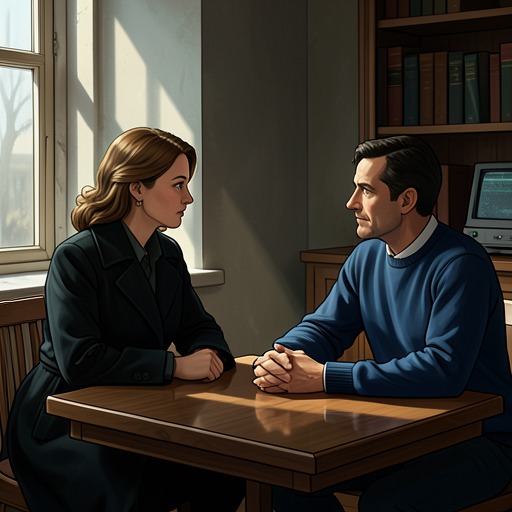
I'm Thinking of Ending ThingsThe narrator and Jake’s romantic relationship is marked by a decisive contradiction: the narrator experiences it as unusually intimate and compelling while privately preparing to end it. Their growing closeness is real to the narrator, but it does not make the narrator feel able to share the doubts that concern both of them. The relationship therefore becomes a setting for thinking through intimacy, solitude, and what it means to be known, as well as a bond whose future the narrator tries to decide alone.
Identity and Early Development
The relationship begins with an intensity that seems out of proportion to its short duration. The narrator estimates that they have been together for about a month, perhaps six or seven weeks, and settles on seven weeks while acknowledging uncertainty. That imprecision contrasts with the certainty of the attachment: the narrator describes a rare connection unlike anything previously experienced and feels as if Jake has been part of life longer than he has. The relationship is still new, but already carries the emotional weight of something established.
Its pace helps explain why the narrator’s doubts feel difficult to reconcile with the relationship’s promise. Within six days of meeting, the pair had shared three proper meals, taken two walks, met for coffee, watched a movie, talked frequently, and become intimate. Jake’s compliments also give their early closeness a distinctive vocabulary: he compares the narrator to a compressed young Uma Thurman, while describing the narrator as pretty or beautiful and, on one occasion, therapeutic. The narrator remembers the unusual word. These exchanges register attraction and familiarity, though they do not settle whether the pair are suited to one another.
The narrator is strongly attracted to Jake and enjoys small signs of connection, including a quick look from him. Yet affection is accompanied from early on by the suspicion that the relationship may not last. The narrator’s account does not present the bond as false; rather, it shows that genuine attraction and attachment can coexist with an expectation of separation.
The Couple in Public and Private
The pair seem different together than either does alone. The narrator describes them individually as unremarkable and easy to overlook: the narrator is conspicuously short, while Jake is lean and tall, but neither stands out in a crowd by themself. Together, however, they notice people looking at them as a couple. Their shared presence produces a visibility that neither has individually. This contrast gives the relationship an outward form: whatever uncertainties exist in private, the pair appear to others as a distinct unit.
Private routines bring a less uniformly effortless kind of closeness. Jake sleeps over repeatedly, including three nights in a row, and the narrator discovers a liking for sharing a bed with someone. The narrator notices Jake’s nearby breathing and the quiet fact of his sleeping presence. When awake, he has an underlying intensity, expressed through small movements, twitches, and ticks. The narrator’s attention to such details makes intimacy partly observational: knowing Jake involves registering the particular rhythms of being beside him, not only what he says.
The narrator also notices that a relationship’s atmosphere can shift. Jake has described their relationship as having its own valence, a term the narrator recalls as his. The narrator considers how the bond feels different across circumstances and even across a day: lying in bed is not the same as eating breakfast together, when the two may speak little. The narrator likes some morning conversation, especially sincere laughter, which feels more enlivening than caffeine. The relationship is therefore not experienced as one continuous emotional state; its meaning changes with shared situations, silences, and moments of ease.
Intimacy, Solitude, and Being Known
For the narrator, commitment is not primarily a matter of sex. The deeper hope is that another person might come to know the narrator exceptionally well, perhaps more fully than the narrator knows themself. The narrator imagines long-term partnership as a chosen form of access and mutual reliance: two people who were not previously connected learning what life is like inside one another’s minds. In this account, being truly known by someone outside one’s family could be evidence that a relationship is real.
That hope is in tension with the narrator’s defense of solitude. The narrator wonders whether a person is closest to their truest self when alone, not diluted by another person’s presence or judgments. Relationships with friends and family, and even short-term lovers, seem to the narrator less binding than love. Solitude appears necessary for self-knowledge, while committed intimacy promises a different kind of knowledge through another person. The narrator does not resolve this opposition; it becomes one of the questions the relationship exposes.
The narrator’s thoughts about Jake’s childhood photograph sharpen the uncertainty about continuity. Jake has said that he keeps a photograph of himself at five on his laboratory desk, the only photograph there. Although he recognizes the child as himself, he also observes that his body has changed and that the cells represented in the image have since been replaced. The narrator turns this into a question about how a person remains the same self through physical change. The comparison extends to relationships, which can also change, repeat, age, and diminish. This reflection makes permanence seem less self-evident even as the narrator considers a lasting commitment.
Concealment and the Approaching Decision
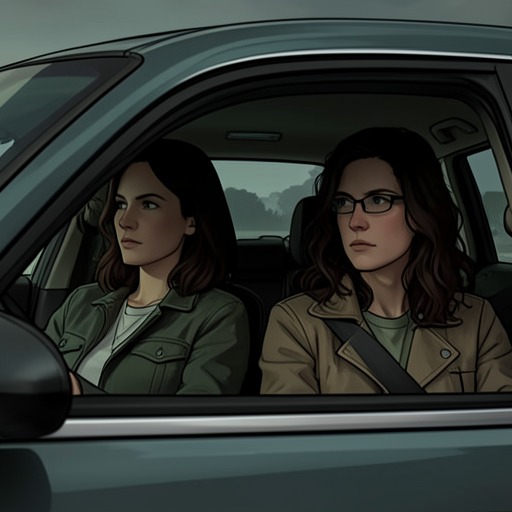
The narrator’s private doubts become more consequential as the pair drive to Jake’s parents’ farm. This is the narrator’s first visit to his family, and the narrator recognizes that the trip may look like a sign that the relationship is expanding. For the narrator, however, the visit does not simply confirm commitment: the narrator is curious about Jake’s family while already fairly sure that the relationship will end. The difference between what the journey appears to mean and what the narrator privately intends creates guilt, especially because Jake is beside the narrator without knowing what is being considered.
The narrator finds it hard to tell Jake about the doubts because they concern him and the relationship itself. The narrator decides not to speak until certain the relationship is over, even while recognizing the contradiction: a decision affecting both people is being made by one person in isolation. During another private moment in the car, the narrator identifies several possible ways to raise the subject, from discussing the relationship as seen through one person’s perspective to directly saying that the narrator is thinking of ending it. None is spoken. The narrator hopes that meeting Jake’s parents and seeing where he grew up might help clarify what to do, but the hoped-for conversation remains deferred.
This silence complicates the narrator’s stated wish to be deeply known. The narrator wants the kind of relationship in which another person understands the inner self, yet withholds the very uncertainty that would let Jake understand the present state of the bond. The narrator also reflects that people’s spoken courtesies do not always match their private judgments or feelings. Applied to the relationship, that observation makes surface reassurance unreliable: neither affection nor ordinary conversation necessarily discloses the whole truth.
Reconsideration and Ending in View
On the drive, Jake’s joking and near-happy manner briefly unsettles the narrator’s resolve. The narrator wonders whether to stop thinking so far ahead, enjoy Jake and the relationship, and allow time and effort to change what feels uncertain. The possibility of eventually falling in love is considered, not promised. At the same time, the narrator recognizes that being unable to tell Jake what is happening internally may itself be a bad sign, and imagines how hurtful it would be if Jake were concealing the same doubts.
The narrator returns to the decision to end the relationship, while taking care not to cast Jake as the cause. Jake is described as a good, intelligent, handsome person, not as someone whose cruelty or failings make separation straightforward. The narrator instead believes that something necessary has been missing from the match all along and accepts responsibility for the problem as the narrator understands it. The relationship’s final movement in this evidence is thus an intention, not a completed breakup: the narrator prepares to say that Jake should move on, but the account establishes the decision and its reasoning rather than confirming what happens afterward.