The narrator’s attempts to hide and escape the school
I'm Thinking of Ending ThingsThe narrator’s attempts to hide and escape the school are shaped by a relentless choice between staying concealed and risking another move through its corridors. As rubber-booted footsteps approach, the narrator searches for shelter and an exit, but the building offers only locked doors, maze-like halls, and temporary hiding places. Each attempted route forward brings a new obstruction, while the narrator’s fear and physical distress steadily worsen.
Flight Through the School
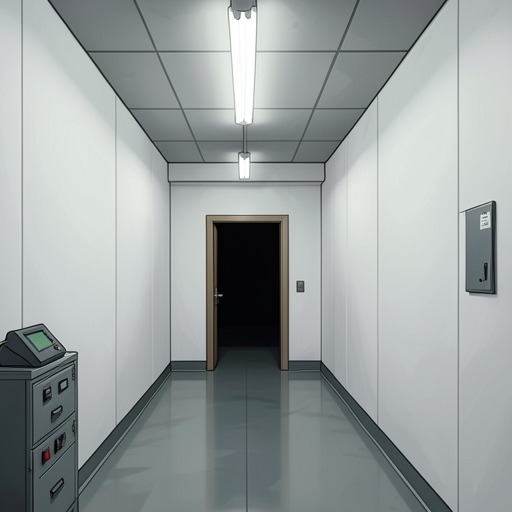
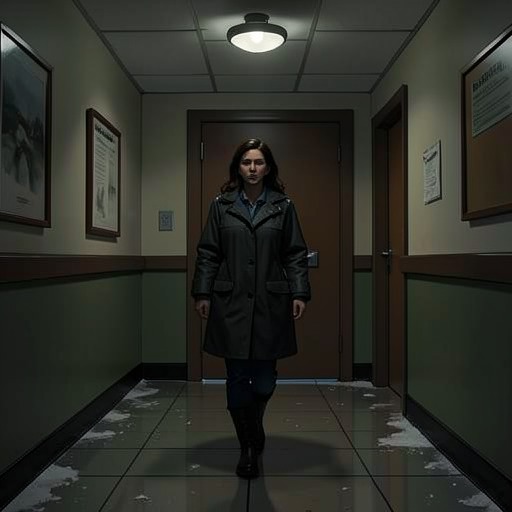
The narrator first runs from the sound of slow footsteps, passing through double doors into a cafeteria with vending machines, long tables, and a stage. A door on the far side opens into a stairwell, and the narrator climbs because going upward is the only apparent option. The stairwell has no windows; the chemical smell grows stronger there, and the narrator’s head hurts. At the landing, sweating heavily, the narrator chooses an unlocked door rather than continuing to the third floor. It leads to another corridor lined with lockers and classrooms, so similar to the one below that the school begins to feel like a trap built from repetitions.
The attempt to move quietly offers little reassurance. The stairwell echoes, and the narrator cannot tell whether the pursuer is following. Later, after hearing rubber boots again, the narrator freezes, imagining that the approaching figure might be Jake. That possibility briefly promises company and safety, but the narrator hears the boots once more and concludes that the pursuer is searching for them. The narrator darts back into the stairwell without knowing whether the figure is upstairs, downstairs, or somewhere else. Movement creates distance, but never certainty.
Corridors, Dead Ends, and Concealment
After leaving a bench where hiding feels too exposed, the narrator creeps down another hall and tries several doors. They are locked, and there is no exit. The corridors are bare, with no signs of student life; they seem to repeat and fold in on themselves like an Escher drawing. The narrator checks garbage cans for anything that might help with escape, but each contains only a clean, empty black bag. Even the ordinary materials of a school yield nothing useful.
The science wing offers a brief visual change: lab stations, heavier sky-blue doors, and a hand-painted banner advertising the winter formal. Its reference to students gathering for a dance is the first sign of student life the narrator has seen in the otherwise empty building. But this glimpse of an ordinary school occasion does not lead to safety. The sound of boots returns, fear incapacitates the narrator, and the corridor becomes another place to flee.
An unlocked door eventually opens into an art room, where the narrator closes the door slowly without latching it and listens for pursuit. A wall phone cannot make calls: it beeps once more than three digits are dialed, including when the narrator tries 911. Searching the tidy teacher’s desk produces a plastic retractable X-ACTO knife with its blade removed. The room can provide concealment, but neither communication nor a usable tool. When the narrator considers how long a person could last without food or water, hiding begins to seem as dangerous as moving.
Searching for a Way Out
The narrator tests the art-room window, but it opens only a couple of inches. There is no usable escape route through it; at most, the narrow opening admits cold air, which the narrator breathes in and feels on a hand. The attempt reveals how little control the room offers. Its window is neither an exit nor a path to the outside, only a small contact with air beyond the building.
The narrator decides to look for the gym, reasoning that it might have an emergency door or another way out. Reaching the road, even in the cold, seems preferable to remaining in the school, where survival also feels uncertain. The narrator proceeds slowly, using a remembered layout that is itself questioned, and keeps a hand against the painted brick wall. The double doors are recognized by their tall, narrow windows and the loud, cold-metal sound they make when opened. The narrator pushes them only far enough to slip inside.
In the gym, climbing ropes and a rack of orange basketballs identify the space, but a strong chemical odor makes the narrator’s eyes water. The search continues into the changing area. At the showers, the floor is slippery and the tiles are wet and steamy. The narrator notices a tempting jet of hot water but does not stop beneath it. By the last stall lie a wet, balled-up shirt and pants. The narrator recognizes them as Jake’s clothes, drops them, and is left with the question of where Jake is. The discovery makes the search more urgent, but does not explain what happened to him or provide the narrator with an exit.
Fear, Repetition, and the Unresolved Escape
The narrator’s progress is repeatedly interrupted by the same music playing through the school’s PA system. It is heard in classrooms, halls, and locker rooms, its source unseen; after hearing it recur, the narrator can no longer tell whether it has stopped and started or has been playing throughout. Like the corridors, the music makes the school feel enclosed in a pattern that cannot be reliably measured.
The narrator’s physical condition further narrows the choices available. A sore knee, an aching and spinning head, thirst, heavy sweating, a tightening chest, and the threat of vomiting accompany the effort to keep moving. The narrator also reports biting and eating fingernails and pulling strands of hair loose, interpreting these changes as possible physical effects of stress. These details make the escape attempt more than a sequence of routes through the building: the body itself becomes a record of the strain of being watched, trapped, and alone.
At the end of this sequence, the narrator hears the music again while leaving the changing room and insists on the need for an emergency exit. The search has reached the gym and exposed Jake’s clothes, but the supplied events do not show the narrator getting out. Its unresolved ending preserves the central tension of the effort: each decision to move is necessary because hiding is unsafe, yet every new corridor can return the narrator to the same uncertainty.