The one-question constraint
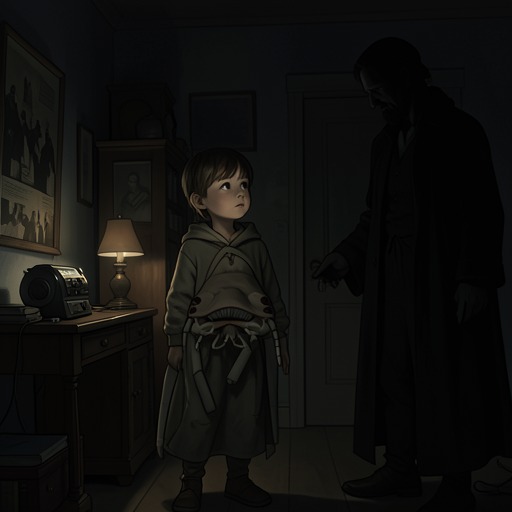
I'm Thinking of Ending ThingsThe one-question constraint is a recurring formula that makes an unnamed problem feel urgent without explaining what it is. In The Caller’s repeated messages and in graffiti described by The narrator, the language insists that there is only one question to resolve; its force comes from repetition and mounting unease, not from an answer. The phrase links separate episodes, but the question remains undisclosed, leaving the constraint suspended between an apparent demand for resolution and an unresolved mystery.
The Repeated Formula
In the first saved message from The Caller, The narrator hears a compressed sequence of fear and insistence: “There’s only one question to resolve. I’m scared. I feel a little crazy. I’m not lucid. The assumptions are right. I can feel my fear growing. Now is the time for the answer. Just one question. One question to answer.” The movement is from a claim about a single question to a declaration of fear, then back to the demand for an answer. No question is actually stated. The message supplies pressure and urgency while withholding the information that would make resolution possible.
The refrain also recurs when The narrator listens again while Jake is driving. Its words are unchanged, and The narrator has heard them over and over. That verbal sameness matters: repetition does not clarify the message, but instead makes its unresolved demand harder to set aside. The narrator recognizes the formula as familiar even as fear grows and confidence in their own lucidity weakens. The constraint therefore operates less like a useful instruction than a loop: it names an answer as necessary and imminent, without identifying what must be answered.
The Message Turns Personal
At first, The Caller’s messages are difficult to classify as threats. They are not obviously aggressive or harmful, and the voice sounds sad, perhaps frustrated; the words seem nonsensical but are not babble. The Caller does not converse when The narrator attempts to answer a call, hanging up instead and leaving cryptic messages. That one-way pattern keeps the repeated formula from becoming a genuine exchange. The narrator can listen, but cannot use a reply to discover what the question means.
The pattern changes when a later message adds something new to the familiar wording. The change is not a replacement of the refrain but an extension of it: the sender says, “I know what you look like,” describes knowing the recipient’s feet, hands, skin, head, hair, and heart, and ends with “You shouldn’t bite your nails.” The final detail makes the preceding claim of knowledge intimate and specific. The messages had already made The narrator uneasy; now their speaker appears to know a personal habit. The narrator cannot sleep that night and regrets not stopping the calls sooner or telling Jake. The question’s content is still absent, but the message has made its unexplained urgency feel more directly directed at its recipient.
The Graffiti’s Variation
A separate recollection connects the formula to writing on a wall. In the reported conversation, The narrator says the strange part was that “he wrote the same thing every time. The graffiti. Just one sentence.” The sentence is “There’s only one question we need to resolve.” The phrasing resembles the call’s “There’s only one question to resolve,” but the graffiti adds “we need,” making the demand sound shared rather than addressed to a single recipient. That small variation does not supply an answer or establish who the “we” includes.
When asked what the one question is, The narrator says there is no idea. The exchange makes the absence of an answer explicit: the repeated sentence is memorable precisely because its central reference remains blank. The graffiti and the voice messages echo one another in form, but the available account does not explain their connection or identify the question. The recurring wording thus creates a link without resolving whether it points to one shared puzzle or merely repeats the same structure of insistence.
Function and Uncertainty
Across these appearances, the constraint narrows language to the promise of a single answer while keeping the subject of that answer out of reach. The contrast between “resolve” and “answer” gives the phrase the sound of a task with a clear endpoint; the surrounding uncertainty undermines that appearance. The Caller’s repetitions do not explain the assumptions mentioned in the message, identify the question, or offer a response to The narrator’s attempts to engage. The graffiti likewise repeats a sentence without disclosing what the people involved are meant to resolve.
The formula’s significance lies in how it organizes suspense and fear without settling their cause. Its repeated wording links the messages and the graffiti, while the altered pronoun and the later personal detail shift the tone without closing the mystery. The narrator’s explicit inability to name the question prevents the refrain from functioning as a solution. Instead, the one-question constraint remains an unresolved demand: its certainty of number and urgency stands against the missing information that would make an answer possible.