early on Sebastian's sixteenth birthday
Birthday Awakening
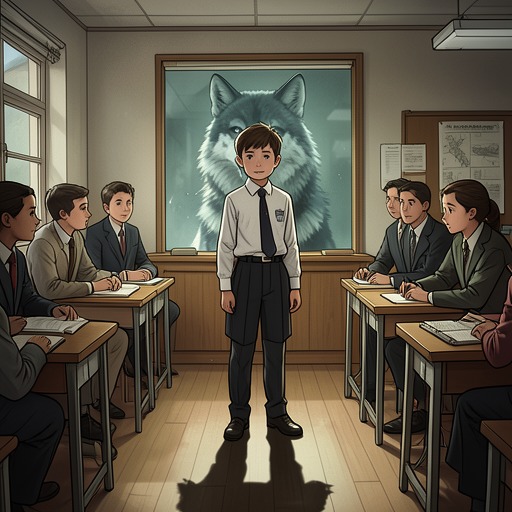
On his sixteenth birthday in October, [Sebastian Wolfe](entity:character-recall-character-sebastian-wolfe-d7e201805664) notices amber flashes in his eyes, unusually rapid facial-hair growth, heightened strength, and other unsettling bodily changes. His parents' grave manner and promise of a family-history conversation deepen his suspicion that the symptoms are inherited rather than accidental.
The birthday becomes the threshold between his ordinary adolescence and a hidden identity. Although Sebastian tries to dismiss the warning signs, the unexplained changes establish the Wolfe family curse as the novel's central secret.
the morning of his sixteenth birthday
First Transformation
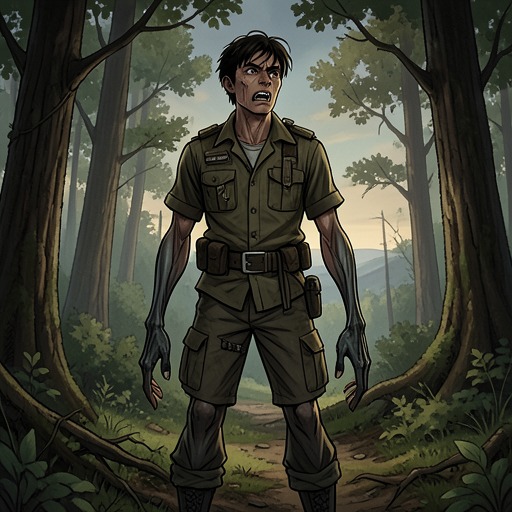
At [Crescent Hill High](entity:location-recall-location-crescent-hill-high-f5768a4f71bb), Sebastian's senses become painfully acute, and nausea drives him toward the woods behind the school. His bones begin shifting, coarse dark hair spreads over his hands, and the full moon appears as he loses control.
He throws back his head and howls in a distinctly nonhuman voice before collapsing. The episode marks [Sebastian Wolfe's First Transformation](entity:event-recall-event-sebastian-wolfe-s-first-3b18c66a126d) and makes the supernatural reality impossible for him to keep treating as hallucination.
about an hour after the first transformation
Nurse's Office Recovery
Sebastian awakens in the school nurse's office after friends find him unconscious at the edge of the woods. He conceals the seriousness of the episode from Nurse Chen and returns to class, frightened that his parents' planned discussion will explain what happened.
His senses remain unnaturally sharp, allowing him to hear distant sounds and smell food across the classroom. The recovery offers no relief: during Algebra, hair begins sprouting from his knuckles again, forcing him to flee before classmates can discover him.
later that school day
Bathroom Resistance
Locked in a bathroom stall, Sebastian feels his bones shift and his teeth lengthen. He fights the transformation through concentration and eventually regains ordinary human hands, convincing himself that willpower may still preserve his old life.
[Alex](entity:character-recall-character-alex-ad819204cb8d) waits outside and urges him to trust her, but Sebastian gives her a false explanation about stomach trouble and birthday stress. His reflection briefly flashes amber afterward, confirming that the wolf remains close beneath his human appearance.
after school on Sebastian's sixteenth birthday
Lily's Revelation
On the walk home, [Lily Chen](entity:character-recall-character-lily-chen-1cfbb3a52862) confronts Sebastian and says she saw him in the woods. She identifies herself through amber eyes and tells him that others like them exist, then summons him to [Crescent Hill Park](entity:location-recall-location-crescent-hill-park-11acdb3fcb26) at midnight with strict instructions to come alone.
The encounter turns Sebastian's private terror into evidence of a wider hidden community. Lily's warning also introduces the [Werewolf Secrecy Rule](entity:rule-recall-rule-werewolf-secrecy-rule-6dcc362b1525), since his new allies insist that the supernatural world must remain concealed from ordinary people.
the evening of Sebastian's sixteenth birthday
Wolfe Family Revelation
Sebastian's parents finally explain the Wolfe family curse: the family carries a werewolf inheritance, the first transformation traditionally occurs at sixteen, and early changes are difficult to control. They admit that they delayed telling him because they hoped the curse might skip him.
Sebastian realizes that his recent symptoms and transformations belong to a family history rather than a personal failure. His parents promise to help him learn control, but their warning that werewolf families keep apart leaves him uncertain about Lily's invitation.
midnight after the family revelation
Midnight Pack Recruitment
Drawn by the full moon, Sebastian climbs from his bedroom window and reaches [Crescent Hill Park](entity:location-recall-location-crescent-hill-park-11acdb3fcb26). Lily introduces him to a group of teenage werewolves, including [Ethan](entity:character-recall-character-ethan-e5b91d8192a9), who identifies himself as the pack's alpha.
The group offers instruction in shifting and ability control, rejecting the older generation's isolation in favor of strength in numbers. Sebastian experiences an unfamiliar sense of belonging and accepts recruitment into the [Crescent Hill](entity:location-recall-location-crescent-hill-af988f6e329b) teen wolf pack.
during Sebastian's first pack meeting
Rogue Howl
An angry howl from beyond the pack's territory interrupts the introductions. [Ethan](entity:character-recall-character-ethan-e5b91d8192a9) identifies the sound as trouble and orders the newly recruited Sebastian to learn quickly.
Ethan and the other teenagers shift into wolves, and Sebastian follows by surrendering to the pull of the moon. His wolf senses reveal fear, excitement, heartbeats, and scents with startling clarity as the pack races into the woods to meet the unknown threat.
the night after Sebastian's first school transformation
Rogue Territory Clash
The pack faces rogue werewolves encroaching on its territory. Sebastian runs with the group and begins learning how to harness his new abilities while confronting the danger posed by werewolves outside the local pack.
The clash establishes that Sebastian's transformation has occurred during an approaching conflict, not in isolation. His new membership therefore carries immediate obligations and turns the balance between ordinary school life and pack duty into a continuing problem.
the next school morning
Morning Control Lesson
Exhausted from the night's events, Sebastian struggles to act normally at school. Lily reminds him that control requires practice and recommends anchors—human memories or activities that can steady him when the wolf rises.
She explains that music anchors her and family anchors [Ethan](entity:character-recall-character-ethan-e5b91d8192a9). Sebastian identifies his family, [Alex](entity:character-recall-character-alex-ad819204cb8d)'s laughter, and [Mia](entity:character-recall-character-mia-f4a5d7eefe52)'s smile as possible ties to his human side, while Lily teaches him not to suppress the wolf entirely but to work with it.
later that same school day
Mia Study Invitation
Sebastian manages to remain composed beside [Mia](entity:character-recall-character-mia-f4a5d7eefe52) in History by focusing on his heartbeat. Mia invites him to study with her after school, and he accepts despite fearing that her closeness and scent may weaken his control.
Their coffee-shop session gives Sebastian a brief taste of ordinary teenage intimacy. Yet Mia's proximity triggers sensory overload and the wolf's desire to close the distance, while [Ethan](entity:character-recall-character-ethan-e5b91d8192a9)'s urgent pack message forces Sebastian to leave and exposes the incompatibility he fears between romance and supernatural responsibility.
the evening after the first pack mission
Artifact Threat
At an urgent pack meeting, [Ethan](entity:character-recall-character-ethan-e5b91d8192a9) reveals that the rogues are seeking a powerful artifact hidden somewhere in [Crescent Hill](entity:location-recall-location-crescent-hill-af988f6e329b). Legends say the first werewolves in the area concealed it centuries earlier, and the pack believes it could alter the balance of power.
Because Sebastian's family has lived in Crescent Hill for generations, Ethan assigns him to search old records and family journals. The mission expands the conflict from territorial intrusion into a race for a supernatural relic.
during the artifact briefing
Prophecy of Dual Nature
Lily presents a copied prophecy saying that when moon and sun align in the shadow of [Crescent Hill](entity:location-recall-location-crescent-hill-af988f6e329b), a key to power will be revealed to those of dual nature's will. Sebastian and the pack interpret dual nature as a reference to werewolves, but the wording remains uncertain.
The prophecy gives the search a supernatural framework and foreshadows Sebastian's eventual ability to unite human and wolf aspects. Its emphasis on dual nature later becomes crucial to activating the artifact and understanding his unprecedented transformation.
the following school day
Lunch Interrogation
Sebastian's distraction worsens as he balances research, homework, and pack obligations. [Alex](entity:character-recall-character-alex-ad819204cb8d) confronts him at lunch, insisting that their long friendship makes his evasions impossible to accept, while [Mia](entity:character-recall-character-mia-f4a5d7eefe52) joins them and expresses genuine concern.
Sebastian admits only that family matters are overwhelming him. The partial truth preserves the supernatural secret but increases the emotional distance from the friends he most wants to protect, leaving him increasingly trapped between confession and concealment.
the same lunch period
School Rogue Attack
A fire alarm erupts in the cafeteria as Lily warns Sebastian that the rogues have reached [Crescent Hill High](entity:location-recall-location-crescent-hill-high-f5768a4f71bb). She pulls him through a side exit, explaining that they may have discovered his connection to the artifact.
Sebastian sees [Alex](entity:character-recall-character-alex-ad819204cb8d) and [Mia](entity:character-recall-character-mia-f4a5d7eefe52) searching for him and resists leaving them behind, fearing the rogues will use them as leverage. Lily assures him the pack is watching them, but the incident confirms that the conflict has entered his human world and threatens everyone close to him.
the weeks before Halloween
Family Archive Search
Sebastian and the pack investigate dusty family records and journals while he continues trying to maintain schoolwork and friendships. The effort leaves him sleep-deprived, academically weaker, and visibly strained.
An old map discovered in one of his great-grandfather's journals begins to connect the prophecy with a specific location. The research steadily narrows the artifact's hiding place and prepares the pack for a confrontation with the rogues.
Halloween morning
Halloween Costume Cover
Sebastian realizes he has forgotten the school's [Halloween](entity:time-recall-time-halloween-c9b359236295) costume contest. [Ethan](entity:character-recall-character-ethan-e5b91d8192a9) and Lily arrive at school in realistic werewolf costumes and give Sebastian an intentionally ridiculous werewolf outfit so that he can conceal his supernatural identity in plain sight.
The disguise lets Sebastian combine ordinary student life with the pack's secret symbolism. For several hours he enjoys the normality of classes, jokes, and costume exchanges, showing how concealment can briefly become a form of belonging rather than merely a burden.
Halloween evening
Blue Moon Dance
At the [Halloween](entity:time-recall-time-halloween-c9b359236295) dance, Sebastian feels the pull of a rare blue moon intensifying beneath his costume. [Mia](entity:character-recall-character-mia-f4a5d7eefe52) notices his distress and asks why he has seemed so distracted, nearly prompting him to confess everything.
A hostile howl cuts through the music before he can speak. Sebastian leaves the dance to investigate, choosing pack duty over the normal evening he had hoped to share with Mia, while Mia becomes convinced that the hidden danger is connected to his disappearances.
later on Halloween night
Clock Tower Discovery
Outside the school, [Ethan](entity:character-recall-character-ethan-e5b91d8192a9) and the pack reveal that the rogues are making their move. Sebastian suddenly recognizes the location from the map and prophecy: the old clock tower standing in the shadow of [Crescent Hill](entity:location-recall-location-crescent-hill-af988f6e329b).
He identifies the likely hiding place of the artifact, allowing the pack to act before the rogues secure it. As the wolves race away, [Mia](entity:character-recall-character-mia-f4a5d7eefe52) secretly leaves the school after witnessing enough to decide that Sebastian should not face the crisis alone.
near the base of the clock tower on Halloween night
Mia Identifies Sebastian
Sebastian and Lily find [Mia](entity:character-recall-character-mia-f4a5d7eefe52) at the clock tower. She recognizes Sebastian in wolf form, forcing him to shift back into human form and accept that his secret has been exposed to her.
Mia demands an explanation for his weeks of secrecy, but the sounds of fighting inside the tower leave no time for a full confession. Sebastian tells her about the artifact and urges her to flee, while Mia insists that her care for him makes her part of the danger.
immediately before entering the clock tower
Founder Gift Inscription
[Mia](entity:character-recall-character-mia-f4a5d7eefe52) reveals a photograph of an archival document describing [The Founder's Gift](entity:object-recall-object-the-founder-s-gift-fd91cd6e29eb), a relic hidden in the heart of Crescent's tower. Its inscription says that wolf blood and the touch of the moon will awaken its magic, for blessing or doom.
Her discovery supplies the missing activation clue and confirms that the pack's research has been aimed at the correct object. Mia's knowledge transforms her from a protected outsider into an active contributor to the supernatural investigation.
the top floor of the clock tower on Halloween night
Clock Tower Battle
Sebastian, Lily, and [Mia](entity:character-recall-character-mia-f4a5d7eefe52) reach the top floor, where [Ethan](entity:character-recall-character-ethan-e5b91d8192a9)'s pack is fighting the rogues. A small wooden box embedded in the giant clock face is identified as [The Founder's Gift](entity:object-recall-object-the-founder-s-gift-fd91cd6e29eb), and a rogue breaks from the battle to seize it.
Sebastian shifts midair and tackles the rogue, while Lily guides Mia toward the clock face to retrieve the box. The confrontation brings the artifact, the prophecy, and the competing werewolf factions into one decisive struggle.
during the clock-tower battle
Artifact Awakening
As [Mia](entity:character-recall-character-mia-f4a5d7eefe52) takes the wooden box, the rogue claws Sebastian's side and lunges toward her. Sebastian sees the full moon shining through the clock face, his blood on the floor, and the artifact in Mia's grasp, realizing that the prophecy's conditions are unfolding.
Moonlight and wolf blood awaken a power beyond ordinary werewolf shifting. The moment activates [The Founder's Gift](entity:object-recall-object-the-founder-s-gift-fd91cd6e29eb) and begins its bond with Sebastian, turning the artifact from an object of pursuit into the source of a new supernatural state.
the climax of the clock-tower battle
Hybrid Transformation
Sebastian undergoes a transformation that is neither simply human nor simply wolf. His body becomes a complete synthesis of both natures, and the new form gives him enough force to intercept the rogue before [Mia](entity:character-recall-character-mia-f4a5d7eefe52) is attacked.
The change fulfills the prophecy's promise of dual nature and establishes Sebastian as something unprecedented among the werewolves. It also embodies the integration principle Lily taught him: power comes not from denying the wolf but from joining both sides of himself.
seconds after Sebastian's hybrid transformation
Clock Tower Plunge
Sebastian crashes through the clock face with the rogue and falls from the tower. Even while transformed, he twists in midair so that his own body will absorb the worst of the impact and spare the rogue.
The decision shows that the newly empowered Sebastian retains human judgment and compassion. He survives the fall only to lose consciousness, leaving the battle's immediate outcome to [Ethan](entity:character-recall-character-ethan-e5b91d8192a9) and the pack.
three days after the clock-tower battle
Hospital Recovery
Sebastian awakens in a hospital room with [Mia](entity:character-recall-character-mia-f4a5d7eefe52) holding his hand. She confirms that [Ethan](entity:character-recall-character-ethan-e5b91d8192a9) and the others defeated the rogues and secured the artifact, while Sebastian alone suffered the consequences of the plunge.
His survival turns the battle from a possible tragedy into a new beginning. It also makes secrecy impossible: Mia, [Alex](entity:character-recall-character-alex-ad819204cb8d), Ethan, and Lily now gather around him with full knowledge of his identity.
during Sebastian's hospital recovery
Artifact Bond Confirmed
[Ethan](entity:character-recall-character-ethan-e5b91d8192a9) and Lily explain that [The Founder's Gift](entity:object-recall-object-the-founder-s-gift-fd91cd6e29eb) reacted to Sebastian in a way no one has seen before. The artifact appears to have bonded with him, and the power displayed in the tower has opened abilities beyond ordinary werewolf limits.
Sebastian is now not merely a newly transformed pack member but a figure who may alter the supernatural balance. The revelation creates future responsibilities and threats, since other rogues may continue seeking the artifact's power.
after Sebastian regains consciousness
Friends Accept the Wolf
[Alex](entity:character-recall-character-alex-ad819204cb8d) reproaches Sebastian for keeping secrets, then embraces him in relief. Both she and [Mia](entity:character-recall-character-mia-f4a5d7eefe52) treat the existence of werewolves with curiosity, humor, and concern rather than rejection, giving Sebastian the emotional support he feared he would lose.
Their acceptance reunites his human friendships with his supernatural pack life. The secret that once divided his worlds now becomes shared knowledge within a broader circle of loyalty.
the night of Sebastian's hospital recovery
Mia and Sebastian's Kiss
After the others leave, [Mia](entity:character-recall-character-mia-f4a5d7eefe52) kisses Sebastian and admits that she has wanted to do so for a long time, regardless of whether he is a werewolf. Sebastian confesses that he has wanted the same thing.
Their kiss converts years of unspoken attraction into an acknowledged relationship. Mia's choice to remain beside him confirms that Sebastian's supernatural identity does not end his human life or his hopes for intimacy.
dawn after the hospital conversation
Homecoming Future
Sebastian and [Mia](entity:character-recall-character-mia-f4a5d7eefe52) spend the remaining hours discussing his transformations, the secrets he kept, and their feelings. As dawn arrives, he recognizes that significant challenges remain: mastering the bonded artifact, sharing new responsibilities with [Ethan](entity:character-recall-character-ethan-e5b91d8192a9), and facing rogues who may pursue its power.
Nevertheless, Sebastian feels whole rather than divided. With his family, friends, pack, and Mia beside him, he accepts the future as an extraordinary continuation of his life instead of the end of normality.