The Wolfe family curse revelation
I'm the Werewolf in my ClassThe Wolfe family curse revelation is the domestic disclosure through which Sebastian Wolfe learns that the frightening changes overtaking his body are inherited rather than inexplicable. After his first transformations at sixteen, his parents explain the curse, its recurring pattern, and the difficulty of living between human life and werewolf nature. The revelation converts isolated bodily terror into a family history and gives Sebastian both an explanation for his condition and a responsibility to learn control.
Circumstances Before the Disclosure
The revelation follows a sequence of symptoms Sebastian cannot interpret. At school, nausea, burning at the back of his neck, blurred vision, and severe pain drive him toward the woods. There, his bones seem to shift and coarse, dark hair begins to grow from his skin; when the full moon appears from behind a cloud, he throws back his head and howls in a voice that is no longer human. The scene makes the body itself the first evidence of the family secret, while Sebastian experiences that evidence as disbelief and horror rather than as an inherited identity.
The transformation does not end the need for concealment. After the tingling subsides and his hands return to normal, Sebastian tells Alex that he has a stomach ache and claims that something he ate caused it. Earlier, when Mia notices that he is unwell, he similarly explains his condition as low blood sugar and birthday jitters. These excuses show how the unrevealed curse governs his ordinary social behavior: before he possesses language for the truth, he manages the visible signs of it through denial, retreat, and improvised explanations.
The Family History Revelation
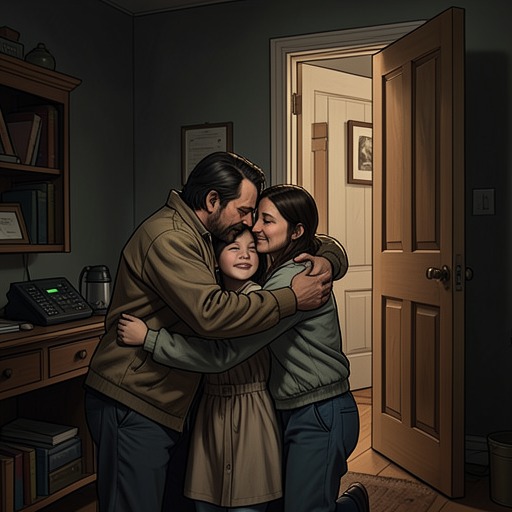
When Sebastian returns home, his parents are waiting in the living room with serious expressions. His father announces that they must tell him something about the family history, and the ensuing conversation lasts an hour. They identify the truth as the Wolfe family curse and explain that the first transformation occurs at sixteen, making Sebastian's recent experiences part of a pattern rather than an isolated accident. They also describe the continuing struggle to balance human life with werewolf nature.
Sebastian's mother explains that his parents had hoped the curse might have skipped him and that this hope is why they delayed telling him. Her tears make the disclosure more than a transfer of information: it is also an admission of fear, avoidance, and parental uncertainty. The family has tried to protect him by withholding the truth, but the concealment leaves him to confront his first changes without preparation. The revelation therefore exposes both the supernatural inheritance and the emotional cost of the family's secrecy.
Sebastian immediately connects the explanation to specific experiences, recalling the transformation in his room and the later change in the woods. His father confirms that these were his first transformations and warns that they will initially be unpredictable. At the same time, he promises that the family will help Sebastian learn to control them. The parents' role shifts in this moment from silent guardians of a secret to guides who can offer practical support, even though their earlier silence has already made the transition more frightening.
What the Curse Changes
The disclosure gives Sebastian a framework for understanding physical events that had seemed impossible: the shifting bones, growing hair, heightened senses, and altered voice now belong to a known hereditary condition. It does not make the condition safe or simple. His father emphasizes that control must be learned, and the family explanation places that future work between two competing demands: preserving a human life and managing a werewolf nature that can emerge unpredictably.
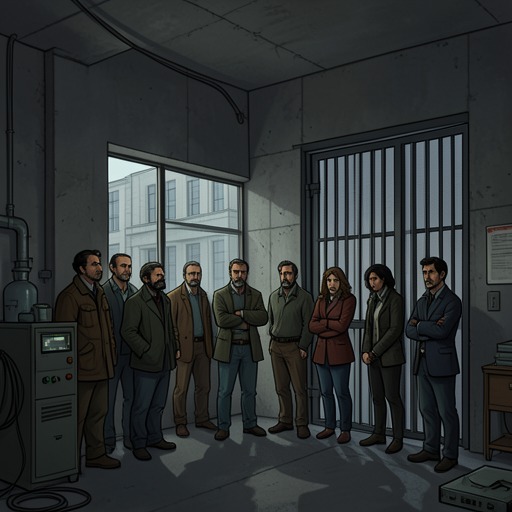
The revelation also creates a new boundary around Sebastian's identity. He asks whether there are others like him, and his parents acknowledge that other werewolf families exist. They add that such families tend to keep to themselves because secrecy is safer. This answer places the Wolfe family within a larger hidden population while reinforcing the isolation that has shaped its conduct. Sebastian now knows that he is not unique, but he is also told that connection carries danger and that withdrawal is the established family method of survival.
Secrecy, Choice, and the Pack
Sebastian has already received a competing invitation from Lily Chen, who reveals amber eyes like his own and asks him to meet at Crescent Hill Park at midnight without bringing or telling anyone. After learning the family history, Sebastian considers whether to tell his parents about the invitation but decides not to. The choice marks an important consequence of the revelation: his parents have given him the truth about his ancestry, but they have not regained complete authority over what he does with it.
That choice leads Sebastian toward the youth pack rather than toward the older generation's solitary model. Ethan introduces himself as the alpha of the group and welcomes Sebastian to the pack, while Lily Chen explains that the older generation may keep to themselves but that the teenagers believe in strength in numbers. Sebastian's parents' account of cautious separation is therefore contrasted with a younger communal response to inherited difference. The family revelation makes pack membership intelligible, but Sebastian's decision to join it becomes an act of self-definition rather than simple obedience.
The pack's acceptance also confirms that Sebastian's condition has public consequences within the hidden werewolf community. When a wild, angry howl comes from outside the group, Ethan identifies trouble and begins the first lesson immediately. Ethan and the other teenagers transform into wolves, and Sebastian chooses to let the wolf inside take over. The transformation he once experienced as solitary horror becomes, in the pack's presence, a shared practice through which he discovers sharper perception and the possibility of belonging.
Later Consequences and Significance
The family revelation remains active as the plot escalates. The pack later learns that rogue werewolves are not merely passing through Crescent Hill but seeking territory and something hidden there. When the rogues appear at Crescent Hill High, Lily Chen says they may have discovered Sebastian's connection to the artifact, turning his inherited identity into a security risk for both himself and the pack. The secret disclosed in the living room thus expands from a family burden into a political and territorial conflict.
At the Crescent Hill Clock Tower, Sebastian's wolf nature develops beyond the simple opposition between boy and wolf. During the battle over the wooden artifact, moonlight, the artifact, and his spilled blood converge, and he becomes a synthesis of human and wolf rather than only one or the other. This later transformation gives dramatic form to the problem first named by his father: Sebastian must not merely suppress one nature to preserve the other, but learn what it means to inhabit both.
After Sebastian survives the plunge from the clock tower, Mia tells him that everyone is safe and that the artifact has been secured. He then realizes that she knows everything about his werewolf identity. Her knowledge extends the pattern of disclosure beyond the family: what began as a withheld hereditary truth gradually becomes something shared with trusted companions. The Wolfe family curse revelation is therefore the story's foundational explanation and its first major reorientation. It replaces bewilderment with history, but it also opens the harder questions of control, allegiance, secrecy, and whether inherited monstrosity must mean isolation.