Werewolf
I'm the Werewolf in my ClassWerewolf is both a supernatural creature and a condition of unstable identity in Sebastian Wolfe’s story. It enters the narrative through a sixteenth-birthday transformation that makes the body frighteningly unfamiliar, but it does not remain a simple emblem of danger. Through family explanation, pack initiation, conflict with the rogues, and Sebastian’s later synthesis of human and wolf, werewolf nature becomes the means by which he discovers a hidden inheritance, enters a community, protects the people he loves, and reaches a form of existence that the pack has never encountered before.
Definition and Inherited Condition
The werewolf condition is presented as a hereditary reality rather than a random infection or isolated curse. Sebastian’s parents explain that the Wolfe family carries a curse, that the first transformation occurs at sixteen, and that the resulting struggle involves balancing ordinary human life with werewolf nature. They had delayed telling him because they hoped the condition might have skipped him. His first transformations therefore function as both a physical awakening and the belated disclosure of a family secret.
The condition is initially unpredictable. Sebastian’s father tells him that the first transformations will be difficult to control, while also promising that the family will help him learn. The parents further reveal that other werewolf families exist, although they generally keep to themselves for safety. Werewolf identity is consequently organized by secrecy as much as by biology: it is inherited within families, concealed from the ordinary human world, and managed through cautious boundaries between communities.
Bodily Transformation and Sensory Change
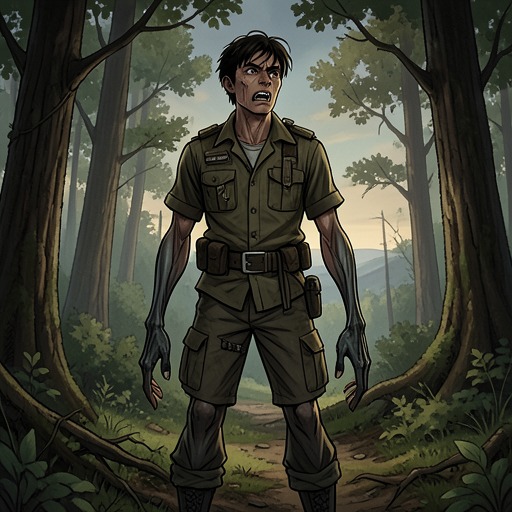
Sebastian’s first visible transformation is marked by pain, horror, and the collapse of his familiar bodily boundaries. He feels his bones shifting and his skin crawling; coarse, dark hair begins to grow from his hands. The change culminates when the full moon emerges from behind a cloud and he throws back his head to produce a howl that is unmistakably nonhuman. The timing is significant: his sixteenth birthday, the first bell at school, and the full moon converge, placing a supernatural rite of passage inside an otherwise ordinary adolescent morning.
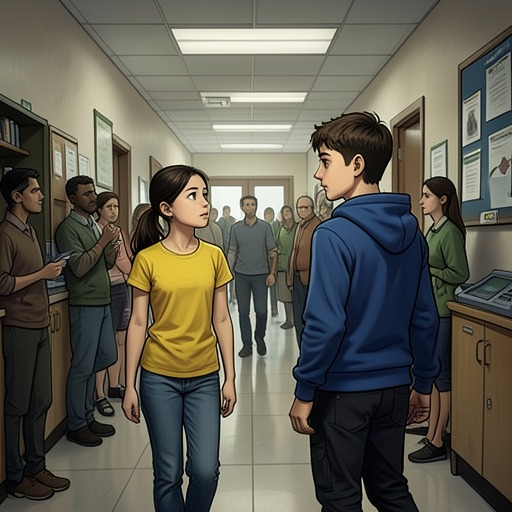
The werewolf body also alters Sebastian’s relation to the environment. In Algebra class, he cannot concentrate because sounds have become unnaturally loud and smells unnaturally strong. He hears pencils scratching from across the room and detects a tuna sandwich several rows behind him. The classroom remains a familiar human institution, but his heightened senses make it newly strange, showing that werewolf nature changes not only appearance but the scale at which the world is perceived.
Transformation is not limited to the initial eruption. When Sebastian later shifts back in front of Mia, the process remains painful and disorienting, although it is faster than it was during the early days of his transformation. This change supplies a concrete measure of developing control. The werewolf condition is therefore neither fully passive nor immediately mastered; it is a recurring bodily process through which Sebastian gradually learns that identity can be navigated rather than simply endured.
Pack Life and Social Recognition
Werewolves are also defined through collective life. After learning the truth about his family, Sebastian follows the pull of the rising full moon to Crescent Hill Park, where Lily welcomes him to the pack. Five teenagers stand together in the moonlight, some familiar from school and others strangers, and Sebastian experiences a sense of belonging he has never known before. The scene reverses the isolation emphasized by his parents: although werewolf families keep apart for protection, this young pack is actively waiting for him.
Ethan identifies himself as the alpha of the group and explains that Sebastian is needed because something large and dangerous is coming. The pack’s invitation is therefore both social and strategic. Sebastian is not merely accepted as a younger member; he is recruited into a crisis whose stakes exceed his private transformation. When an angry howl comes from outside the group, the pack immediately becomes an organized protective unit. Ethan’s instruction to stay close, watch, and learn establishes the practical discipline behind the belonging Sebastian feels.
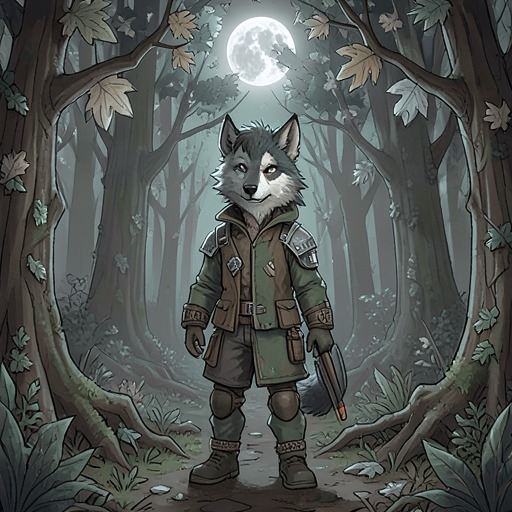
The pack’s transformations make their shared nature visible. Ethan changes into a massive silver-gray wolf, and the other teenagers follow, their bodies twisting from human form into wolves. Sebastian then chooses to surrender to the wolf within him. In wolf form, he perceives the others through smell and sound, sensing their fear and excitement and understanding Ethan’s low growl. Werewolf communication thus extends beyond ordinary speech, while the pack’s collective transformation turns private difference into a shared language and embodied social order.
Secrecy, Threat, and Conflict
The werewolf identity remains dangerous because it exists under pressure from both exposure and hostile outsiders. The rogues arrive at Crescent Hill High, and Lily warns Sebastian that they may have discovered his connection to the artifact. The school, normally a place of lessons and teenage routine, becomes an emergency site from which Sebastian must be removed. His supernatural identity is not simply a personal secret; it has consequences for the safety of the pack and for anyone connected to him.
The werewolf community is divided by this conflict. Sebastian’s pack treats his transformation as something to teach and protect, while the rogues are associated with an attack that forces Ethan and the others into combat. Their distant howl is described as wild and angry, and its proximity immediately changes the atmosphere from initiation to danger. The contrast distinguishes werewolf nature itself from the choices made by different werewolf groups: the creature is not automatically the enemy, and the pack is not merely a collection of monsters hidden from human society.
The Halloween costume episode exposes the tension between supernatural reality and human performance. Ethan and Lily give Sebastian an intentionally exaggerated werewolf costume, sending him into a bathroom to change before first period. The outfit is deliberately cheesy rather than realistic, unlike the sleek costumes worn by Ethan and the others. Alex and Mia laugh when Sebastian emerges. A genuine werewolf identity is temporarily disguised as a school costume, allowing the characters to move through a human setting while the disguise also creates comic distance from the danger surrounding them.
Beyond Human and Wolf
The werewolf condition reaches its most significant alteration during the clock-tower confrontation. When a rogue lunges toward Mia while she clutches the wooden box containing the artifact, Sebastian is caught between the immediate threat to her and the forces gathered around him: the full moon, the artifact, and his own blood on the floor. The convergence activates a power that exceeds his earlier transformations.
Sebastian’s new change is described not as a normal shift into wolf form but as a synthesis of human and wolf. His body becomes something neither merely boy nor merely animal, and he attacks the rogue with enough force to send both of them through the clock face. The transformation gives him the power to act decisively in defense of Mia and the pack, but it also produces uncertainty: he does not know whether he will survive the fall or what the power will demand of him afterward.
The pack later confirms that this event has altered the meaning of werewolf identity. Ethan calls Sebastian’s transformation unprecedented and says that the power he displayed has changed everything. Lily explains that the artifact reacted to him in a way never seen before, seemingly bonding with him. Ethan concludes that Sebastian is no longer simply shifting between human and wolf and has unlocked abilities beyond what the pack believed possible. Werewolf nature consequently becomes an open category rather than a fixed hereditary script; Sebastian’s body exposes a new possibility within it.
Narrative Significance and Ending
The story uses werewolf transformation to turn adolescent difference into a literal, visible crisis. Facial hair that seems unusually fast-growing, heightened senses that disrupt Algebra class, bodily pain, and the arrival of the full moon all make puberty and supernatural metamorphosis overlap. Yet the narrative does not leave the werewolf as a symbol of alienation. Family disclosure supplies history, the pack supplies recognition, and Sebastian’s decision to transform supplies agency.
The creature also organizes the story’s movement between ordinary and extraordinary genres. Pancakes and a sixteenth birthday, quadratic functions, a study invitation from Mia, a comic Halloween costume, and a hospital room coexist with moonlit wolves, rogues, an artifact, and a clock-tower battle. Werewolf identity is what allows these worlds to touch without one canceling the other. Sebastian can remain connected to school and affection while also responding to supernatural obligations, even though maintaining that balance becomes increasingly difficult.
By the hospital aftermath, Mia knows that Sebastian is a werewolf, and her response is not rejection. She kisses him before they discuss the truth, then tells him that her affection is for the brave, foolish, remarkable person he is, regardless of his werewolf nature. The moment converts exposure into intimacy: the secret that once threatened to isolate him becomes part of an honestly shared relationship. As Sebastian falls asleep, the future remains uncertain, but it no longer appears only frightening. His final sense is that he is coming home, completing the werewolf’s movement from involuntary change and secrecy toward chosen belonging and an identity broad enough to contain both human and wolf.