
The Case Built Against Fonny
If Beale Street Could TalkThis thread traces how a rape accusation, a coerced identification, and the state’s control of witnesses turn Fonny’s innocence into a prolonged legal and personal crisis.
increasing Bearing strength in each event
 decreasing
Bearing strength in each eventdecreasingThe Arrest on Bank Street
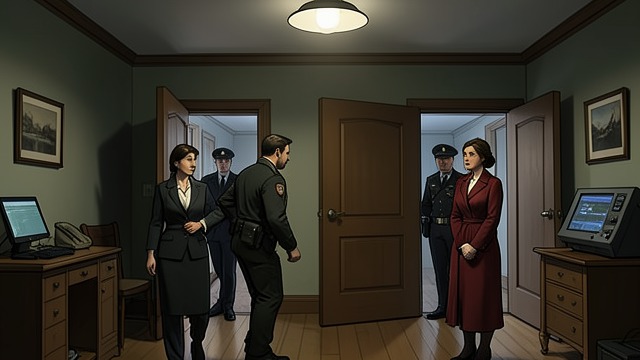
The Charge Enters the Home
An interrupted evening
Daniel is visiting Fonny and Tish, recounting the terror of his own imprisonment, when officers knock at the door. Fonny is taken away, and the accusation begins to reorganize the couple’s life around a case they did not expect and cannot control.
The allegation
The prosecution links Fonny to the rape of Victoria Rogers, alleging that he assaulted her on March 5 and fled the scene. Tish knows that Fonny was with her in their Bank Street room, but their account is not enough to secure his freedom. His arrest makes an intimate relationship vulnerable to a public narrative constructed by police and prosecutors.
The case begins with a striking imbalance: the state can confine Fonny before proving its account, while those who know him must find money and witnesses simply to challenge it.
A Witness Disappears
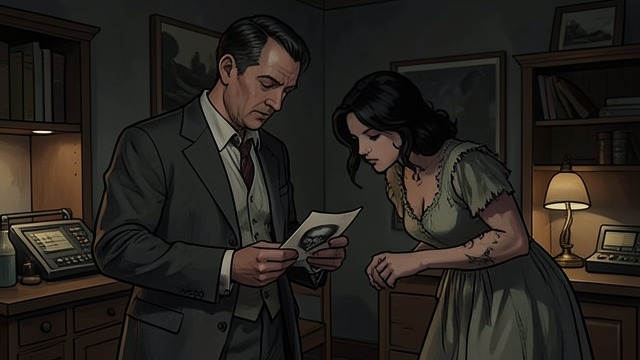
A Case Dependent on Testimony
The missing accuser
Arnold Hayward explains that Victoria has disappeared with her husband and may have returned to Puerto Rico. Finding her will require investigators, which means more money from a family already struggling to pay for legal help. Tish is shocked that a key witness can vanish while Fonny remains locked up.
The officer’s account
Hayward identifies Officer Bell as the state’s authoritative witness, claiming that he saw Fonny flee the crime scene. Tish challenges the account by pointing out the distance between Orchard Street and Bank Street and the implausibility of Bell’s route and timing. Hayward agrees that Bell is a racist and a liar, but warns that the legal contest will be about who wins, not truth alone.
The conversation exposes the case’s structure: the accusation and police identification reinforce each other, while the burden of testing their credibility falls on the accused and his family.
Daniel’s Vulnerable Testimony
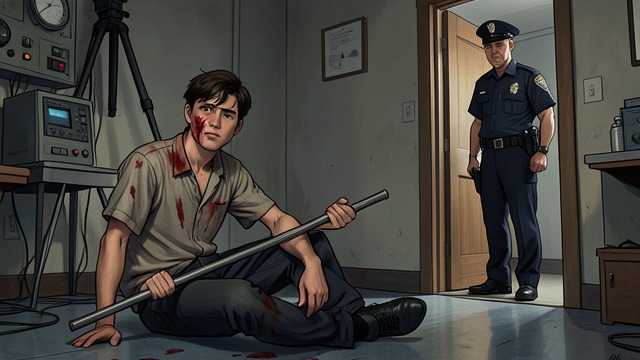
The Defense Loses Its Witness
A possible corroboration
Daniel was with Fonny and Tish in the room on Bank Street at the time relevant to the accusation. His account could support their alibi, giving the defense a witness beyond the couple themselves. Hayward tries to reach him after the District Attorney’s Office detains him, but Daniel has already learned that the legal system can make resistance costly.
Trauma and coercion
Daniel tells Fonny that he was imprisoned for a car theft he did not commit and accepted a guilty plea under pressure. He also describes the violence and sexual assault he experienced in prison. When Hayward finally gets access, he suspects Daniel has been beaten or drugged and cannot be sure the young man will be able to testify reliably.
Daniel’s experience turns the defense’s procedural problem into a human one. The state does not need to disprove his account if fear, detention, and trauma can make it impossible for him to give it in court.
A Challenge to Bell’s Credibility

A Narrow Opening for the Defense
The family’s counterstrategy
Ernestine tells Tish that she has evidence linking Officer Bell to the killing of a twelve-year-old Black boy in Brooklyn. She also knows the boy’s mother and Bell’s wife. If Daniel’s testimony fails and Victoria remains unavailable, those women may help undermine Bell’s standing as the prosecution’s decisive witness.
A risky courtroom plan
Ernestine recognizes that the strategy is a gamble. The defense cannot assume that jurors will interpret Bell’s record as proof of wrongdoing; they may instead regard him as a defender of public order. Still, challenging the officer’s credibility is one of the few available paths, especially because a comparable accusation against a white defendant might not have become a case at all.
The plan shows the family adapting to a legal system that gives authority to the very people they must challenge. It offers a possible opening, not an assurance of justice.
The Trial Put on Hold
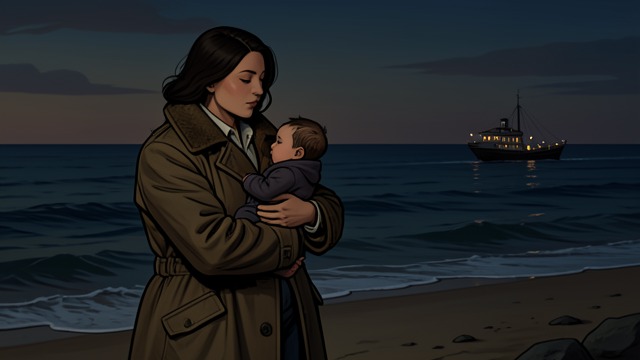
A Witness Becomes Unreachable
Sharon’s encounter
In Puerto Rico, Sharon finds Victoria and urges her to look again at the photograph of Fonny. Victoria acknowledges that the man resembles the person she identified, but insists that the attacker was not laughing; she also maintains that she saw enough to identify him. The meeting ends in terror rather than a recantation, leaving Sharon without the evidence she had hoped to bring back.
The case stalls
Victoria later miscarries and is carried to Barranguitas, where she cannot be reached or brought to New York. The prosecution asks to postpone the trial until she can appear. Fonny remains in custody, and the family must now seek bail while Daniel is also beyond their reach.
The postponement is not a verdict, but it extends the punishment of waiting. With the principal witness unavailable, the case becomes less certain and Fonny’s confinement more difficult to justify, yet the system keeps its hold on him.
On the night Fonny is arrested, after Daniel speaks about prison
At Tish and Sharon’s meeting with Hayward, early in the legal campaign
During the months after Daniel is detained by the prosecution
After Victoria’s location is identified and before Sharon travels
After Victoria miscarries in Puerto Rico and loses contact with the family
