
Time as a Form of Imprisonment
If Beale Street Could TalkThis thread traces how legal delay turns time into a force that confines Fonny beyond the walls of his cell, while the approaching birth gives the family a competing measure of time.
increasing Bearing strength in each event
 decreasing
Bearing strength in each eventdecreasingLove Through Glass
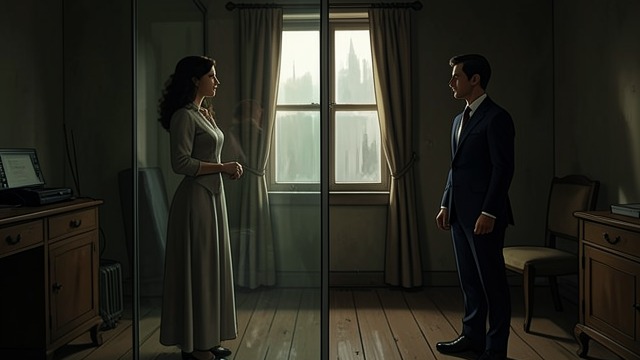
Separation Measured in Minutes
The Visiting Room
Clementine Rivers tells Alonzo Hunt that she is pregnant through a pane of glass and a telephone. Their brief meeting has the fixed rhythm of prison procedure: she must watch the guard, hold the receiver, and leave when the visit ends.
The glass makes time feel both intimate and unreachable. Clementine Rivers can see Alonzo Hunt’s face change, but cannot reach him when his joy and fear arrive together.
A Future Under Sentence
The visit ends without resolving what either of them faces. Alonzo Hunt returns to his cell, while Clementine Rivers crosses the corridors alone, carrying the news of a child into a city that offers no pause for their crisis.
The Price of Delay

A Case Measured in Waiting
The Missing Witness
Arnold Hayward explains that Victoria Rogers has disappeared and that finding her will require money for investigators. The legal process makes the family pay simply to pursue a witness whose testimony may determine Alonzo Hunt’s freedom.
Clementine Rivers hears that the prosecution can hold Daniel Carty incommunicado while the defense struggles to reach him. The imbalance is not abstract: each lost day keeps Alonzo Hunt in custody and pushes the family closer to the baby’s arrival.
Time as Currency
The conversation turns time into something the family cannot purchase. Clementine Rivers understands that the case is not moving according to a neutral clock; its delays have consequences measured in exhaustion, separation, and fear.
A Trial Without a Date
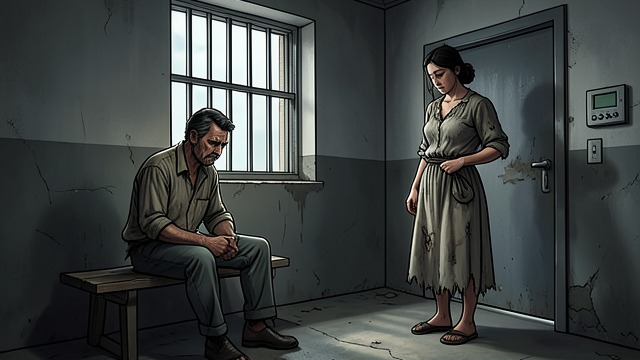
The Calendar That Will Not Open
Postponement
Victoria Rogers’s miscarriage and disappearance give the prosecution a reason to seek a postponement. The central witness is no longer available, but that absence does not automatically free Alonzo Hunt; the state asks for more time instead.
For the family, the announcement transforms an uncertain legal calendar into another sentence. The possibility of bail remains, but it depends on a decision and an amount neither family controls.
The Cost of Waiting
Joseph Rivers and Frank Hunt face the practical problem of raising money while the trial date recedes. The family’s days fill with work, visits, and calculations, while Alonzo Hunt remains confined without a clear endpoint.
Learning the Cell’s Time
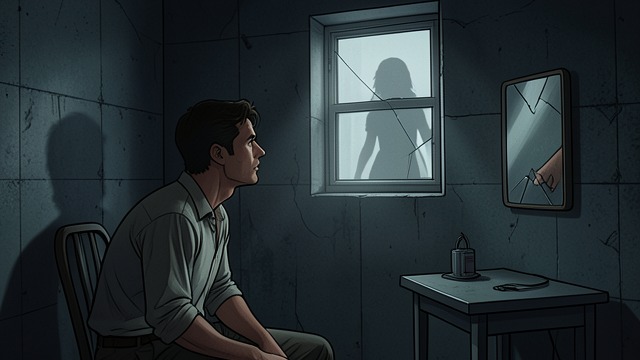
The Prison Day Repeats
Suspended Routine
Alonzo Hunt wakes in a cell where the hours and days seem indistinguishable. He tries to remember what day it is and to give himself a reason to move, but the prison’s routines reduce time to waiting, bodily discomfort, and the next visit.
The cell makes the future difficult to imagine. Alonzo Hunt worries that he may grow old there, while the world he belongs to continues without him.
A Different Measure
His repeated visits with Clementine Rivers provide a human marker within this deadened schedule. When she arrives, he can briefly see himself as a lover and future father rather than only as a prisoner; when she leaves, the cell reclaims the hours.
The Birth Before Freedom
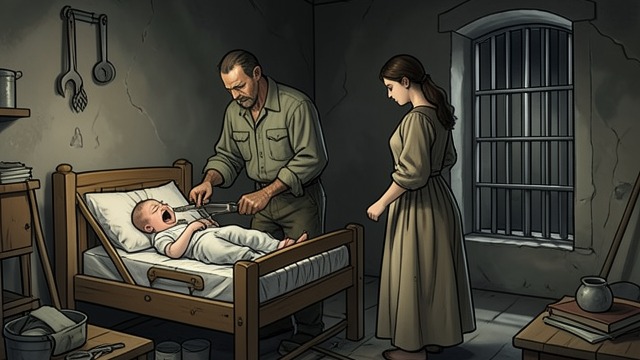
Two Clocks at the Ending
A Child Arrives
Clementine Rivers goes into labor after Frank Hunt’s death is reported to the family. The child’s birth arrives as a decisive change in the household, but it does not end Alonzo Hunt’s confinement or settle the case.
The novel closes by placing a new cry beside an unresolved imprisonment. Alonzo Hunt is imagined working with wood and stone as the baby cries from far away, joining two lives that remain physically separated.
Unfinished Time
The ending refuses the comfort of a completed legal outcome. The child is born, but freedom remains uncertain; the family must continue within the time the state has imposed on them.
At the opening, during a visit at The Tombs
Early in the case, during Clementine Rivers’s meeting with Arnold Hayward
After Sharon Rivers returns from Puerto Rico
During Alonzo Hunt’s later months in pretrial detention
Near the ending, on Columbus Day, October 12, 1973
