
Seeing, Blindness, and Indifference
If Beale Street Could TalkThis thread follows the novel’s repeated contrast between looking and truly seeing, as racial power, trauma, and solidarity determine whose suffering becomes visible.
increasing Bearing strength in each event
 decreasing
Bearing strength in each eventdecreasingThe Unconsulted Zebra
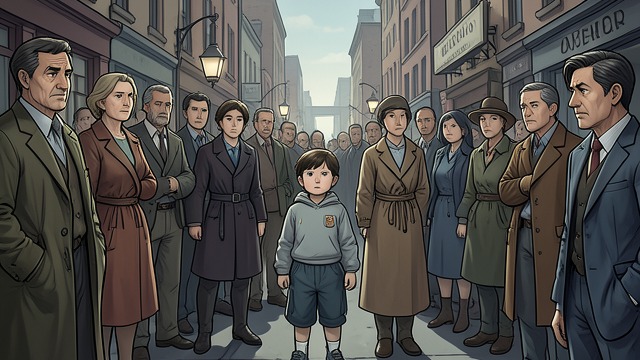
A City That Looks Away
Being Observed
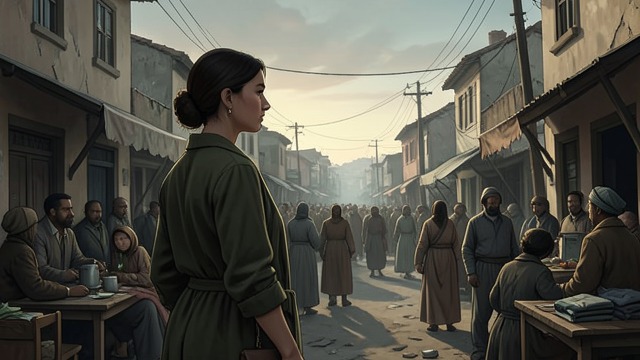
Clementine Rivers remembers how adults once brought her through New York City as a child, where strangers looked at her and her sister as if they were exhibits. The memory gives shape to her sense that the city sees Black people without asking what they experience.
She compares the city’s gaze to spectatorship: some people may admire what they see, others may reject it, but neither response grants the observed person a voice.
Indifference as Harm
The image anticipates Clementine Rivers’s present isolation on the bus, where she cannot tell strangers that Alonzo Hunt is innocent or ask them to help. Their presence does not become solidarity simply because they share public space.
A Witness Speaks Up
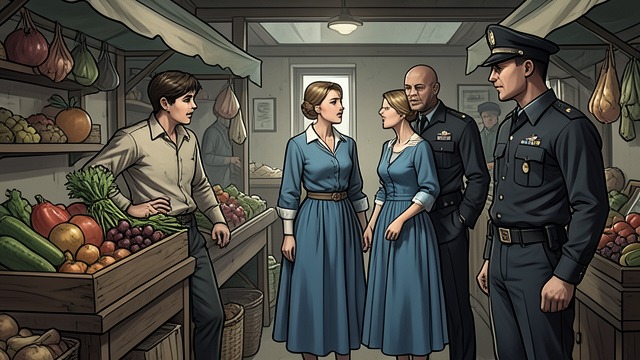
An Exception to Silence
The Crowd Watches
A young man harasses Clementine Rivers at a vegetable stand, and Alonzo Hunt intervenes when he returns. Officer Bell arrives and treats Alonzo Hunt as the likely offender, while the surrounding customers initially remain silent.
The Italian storekeeper breaks that silence. She states what she saw, challenges Officer Bell directly, and refuses to let the officer turn the incident into a reason to arrest Alonzo Hunt.
Seeing as Responsibility
Her testimony demonstrates that observation alone is not enough; a witness must choose to speak. Her intervention protects Alonzo Hunt in that moment, though it cannot prevent Officer Bell from carrying the encounter forward as a private grievance.
The Blank Blue Eye
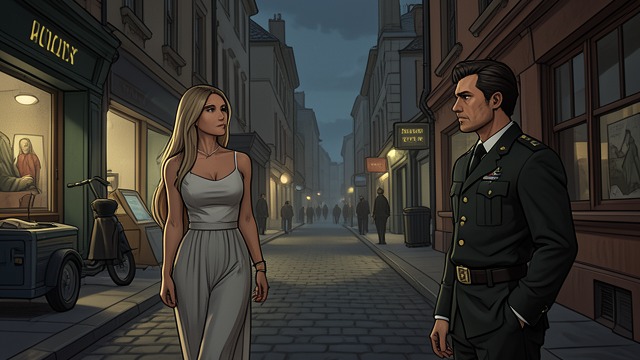
A Gaze That Threatens
Bell’s Attention
Clementine Rivers begins noticing Officer Bell wherever she and Alonzo Hunt go. When she is alone, his gaze feels invasive; when she is with Alonzo Hunt, the officer’s refusal to look directly at him carries its own threat.
The look suggests a world in which a Black person can be made visible only as a target. Clementine Rivers describes the officer’s eyes as cold and vacant, yet she recognizes a deliberate hostility behind that apparent blankness.
Fear Made Personal
Officer Bell’s attention turns ordinary streets into places of danger. His later approach to Clementine Rivers, offering to carry her package while blocking her path, makes the threat intimate and difficult to dismiss as mere suspicion.
Trauma and Recognition
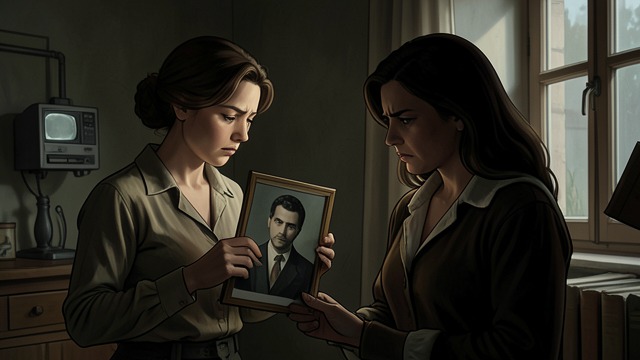
The Limits of Looking
A Painful Identification
Sharon Rivers shows Victoria Rogers a photograph of Alonzo Hunt and asks whether he is the man who attacked her. Victoria Rogers first resists the question, then says that the photograph resembles the attacker but that he was not laughing.
Her distinction exposes the limits of a visual identification: she has seen Alonzo Hunt in the bright police lineup, while the assault occurred in darkness and under terror. Yet her trauma is real, and the contradiction cannot be resolved by looking at the photograph alone.
Two Women Facing Harm
Sharon Rivers tries to reach Victoria Rogers as a mother and as a woman, but Victoria Rogers experiences the encounter as pressure and breaks away in distress. Their inability to establish a shared account shows how violence and fear can make recognition itself painful.
The Shared Garbage Heap
Recognizing a Common Landscape
A Changed Perspective
Sharon Rivers returns with a sharper understanding of the favela and of the lives surrounding Victoria Rogers. She reflects that the people and conditions dismissed as part of a landscape are being ignored for the same reasons that shape oppression in the United States.
Her recognition does not flatten the differences between Puerto Rico and New York. Instead, it makes visible a shared system that leaves poor people and people of color exposed to neglect, while encouraging others not to look closely.
Seeing Without Escape
Sharon Rivers brings this knowledge home, changed by what she has witnessed but unable to make the journey undo the damage. Her altered sight becomes part of the family’s understanding of the forces that threaten Alonzo Hunt and the child still to be born.
Early in the story, during Clementine Rivers’s journey through New York City
On Bleecker Street, during the confrontation at the vegetable stand
In the months after the vegetable-stand confrontation
During Sharon Rivers’s meeting with Victoria Rogers in Puerto Rico
After Sharon Rivers returns from Puerto Rico
