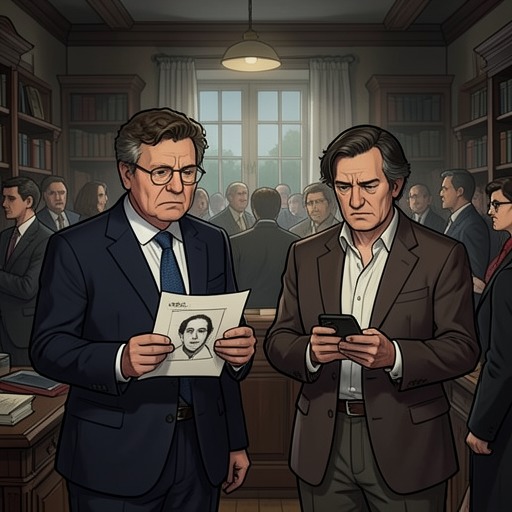
Sharon Confronts Victoria in the Slum
If Beale Street Could TalkSharon’s confrontation with Victoria Rogers turns the effort to free Fonny into a direct encounter between the two families bound together by his accusation. Sharon arrives with photographs and a clear purpose: to reach the woman whose identification placed Fonny in prison and make her face the consequences. Her appeal rests not only on the case but on kinship and shared vulnerability. She speaks as a mother asking another mother to recognize that a young man’s freedom and a daughter’s future are at stake; Victoria does not agree to help, and the meeting ends in flight rather than resolution.
Purpose and Setting
Sharon enters a building where the third-floor doors have no names. Four doors leave her without an obvious way to identify the person she has come to find; one stands slightly open, and she knocks while pushing it farther. The sparse signs make her search feel uncertain, but she proceeds as though she knows where she is going. The encounter begins at a threshold, with Sharon crossing into a private room whose occupant initially denies knowing the woman Sharon seeks.
Victoria is a young woman living in a crowded setting, and she presents herself as occupied with work rather than willing to receive a visitor. She says she does not know whom Sharon means and directs her toward the other places nearby. Her words attempt to keep the meeting at the level of a mistaken search. Sharon’s arrival, however, is not casual: a photograph gives her a means to identify Victoria, while the open doorway allows her to move into the room as Victoria approaches it.
Photographs and the Accusation
Sharon first tells Victoria that she has a photograph of her. When Victoria says she has work to do and asks Sharon to leave, Sharon does not answer with a threat or a claim of authority. Instead, she identifies the stakes plainly: she is trying to get a man out of prison, and that man is to marry her daughter. She insists that he did not rape Victoria. The photographs make the dispute concrete. Sharon holds up an image of herself with Fonny and asks Victoria to look at it, presenting their relationship as something the accusation has placed under immediate strain.
The exchange sharpens when Victoria says that she did see Fonny. Sharon answers by distinguishing the police lineup from any prior acquaintance: Fonny was the person Victoria saw there, and, Sharon argues, that was the only time. This is the central factual disagreement in the room. Victoria maintains that she saw him; Sharon challenges what that sighting can establish. The scene does not provide a retraction or resolve the evidence against Fonny. Instead, it brings the limits of their knowledge into view: Sharon speaks from her certainty about the man she knows, while Victoria’s recognition is tied to the lineup.
A Maternal Appeal
When Victoria says that Sharon is a mother, Sharon changes the terms of her appeal. She acknowledges that terrible things happen to women and that people can do terrible things, then speaks from the experience of having been a woman before Victoria. Her argument does not excuse Victoria’s alleged lie. It combines recognition of hardship with insistence on responsibility: Sharon tells her that a person pays for lies, and reminds her that the man she has put in prison is twenty-two, intends to marry Sharon’s daughter, and is Black, like them both.
The appeal makes the accusation more than a dispute over identification. Sharon names the consequences for Fonny and Tish, and she invokes the shared fact of their race as a reason Victoria should not treat his imprisonment as someone else’s concern. When she touches Victoria’s crucifix and appeals to God, she brings religious language into the confrontation as well. The gesture is an attempt to reach Victoria through a bond beyond the photographs or the legal case; it does not produce agreement. The scene places maternal solidarity, moral accountability, and faith beside one another without suggesting that any of them can simply compel a confession.
Flight and Aftermath
Victoria screams, breaks away, and runs through the door that has remained open. She calls for Sharon to leave, and residents begin appearing in the hallway. An older woman takes Victoria into her arms; Victoria collapses against her and weeps. That woman leads her away without addressing Sharon, while the other residents stare. The meeting has moved from a private confrontation to a public scene, but the gathering crowd does not become a source of help or clarification for Sharon.
Outside, the taxi horn reminds Sharon that Jaime is waiting. She carries her handbag and the photograph of Fonny and Tish as she makes her way past the people on the landings and down the stairs. Jaime opens the taxi door, and they leave without speaking. Sharon has stated her purpose, challenged Victoria’s account of when she saw Fonny, and made a personal appeal, but she departs without a promise, a retraction, or a visible change in the case. The photographs remain in her hand: evidence of the couple whose future she is trying to protect, and a concrete link between the intimate cost of the accusation and the public effort to undo it.