Sheila
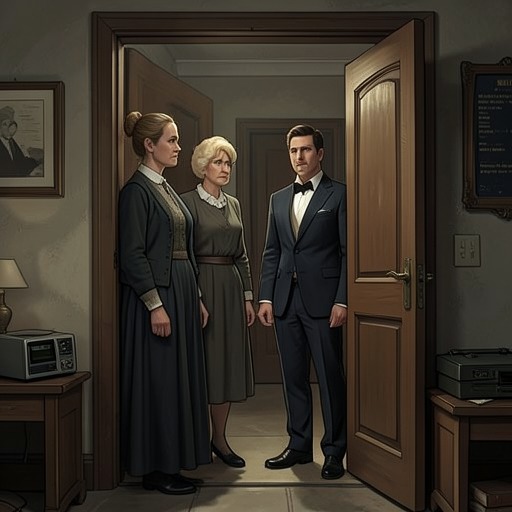
If Beale Street Could TalkSheila, aged twenty-four, is Fonny’s younger sister and the younger daughter of Alice Hunt. In Tish’s account, she and her older sister, Adrienne, arrive with their parents at the Rivers family home after Tish’s pregnancy has become a subject of family confrontation. Sheila’s brief but pointed interventions place her on her mother’s side of the argument, while the gathering reveals how little trust or affection connects the two families.
Identity and Introduction
Tish initially regards Fonny’s sisters through their relationship to him: she says she had not thought of them as his sisters in any meaningful way, and admits that she noticed them because they were connected to Fonny. Her knowledge that they did not really like him feeds her own dislike of them. The account also distinguishes the sisters from one another by age: Adrienne is twenty-seven, while Sheila is twenty-four.
The sisters make an effort to be sweet to Tish when they enter the Rivers home. Tish describes that politeness as resembling the manner of missionaries, a comparison that makes their welcome seem less like intimacy than a rehearsed performance. The gap between courtesy and genuine closeness frames Sheila’s later defense of her family.
The Family Gathering
The argument sharpens when Alice Hunt’s religious response to the pregnancy draws a rebuke from Sharon. Sheila objects that Sharon has no right to sneer at her mother’s faith. Her intervention is brief, but it shifts the exchange from Alice’s conduct to the way the Rivers family speaks about her beliefs. Ernestine answers by accusing Sheila of distancing herself from her mother’s religious identity while presenting that faith as a mark of character. The disagreement thus exposes a conflict not only between the families, but within the Hunt sisters’ presentation of their mother.
Adrienne then reframes the dispute around the baby’s future. She asks who will raise the child and disparages Tish’s prospects and Fonny’s worth as a provider. Sheila does not supply a separate answer to that question in the scene; instead, she says that she knew the sisters should not have come. Her reaction registers the gathering as a failed visit, even as the family argument continues around her.
Conflict with Ernestine
Ernestine’s response makes the encounter openly hostile. After Adrienne’s challenge, Ernestine addresses her with deliberately sweet endearments, then turns that sweetness into an unnerving threat. Sheila is not the target of that threat, but she becomes the focus of Ernestine’s next taunt: Ernestine remarks on Sheila’s reluctance to use a particular crude word. Sheila’s complaint that the family should not have come is therefore met not with reconciliation but with mockery.
Tish’s narration presents the room’s hatred as something that suddenly overwhelms the exchange. She briefly feels sorry for the sisters as the atmosphere changes, though Ernestine shows no such sympathy. The contrast leaves Sheila caught between the composure expected of a polite visitor and a family confrontation in which politeness has ceased to protect anyone.
Narrative Role and Limits
Sheila’s role in the novel, as represented by these scenes, is defined by a small number of public interventions rather than by an independently narrated inner life. She defends Alice Hunt’s faith, witnesses Adrienne’s attack on Tish and Fonny’s capacity to raise a child, and expresses regret at having joined the visit. These moments make her a visible participant in the rupture between the Hunts and the Rivers, but they do not establish how her views develop afterward. Tish’s perspective also shapes the portrait: the reader sees Sheila chiefly through the hostility and strained civility of this family encounter.