The Tombs
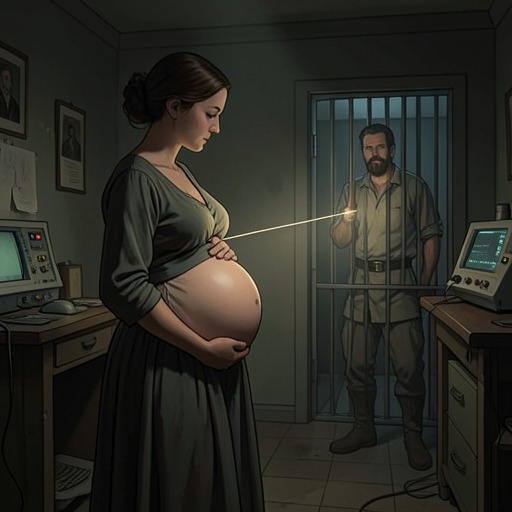
If Beale Street Could TalkThe Tombs is the jail where Fonny is held before trial and the central setting of his separation from Tish. Its glass partition, telephone visits, long corridors, and changing cell conditions give imprisonment a material geography: access is scheduled, conversation is mediated, and movement is controlled. The jail also extends beyond its walls, shaping Tish’s journeys, her work, her pregnancy, and the family’s efforts to sustain Fonny while he waits.
The Visiting Room and Separation
Tish and Fonny sit on separate benches facing one another across a wall of glass. They cannot hear each other directly, so each uses a telephone; the arrangement requires them to look up at one another rather than down at the receiver. Tish makes a habit of lifting the phone as soon as she arrives and keeping her eyes on Fonny. His face and eyes remain close enough to see but inaccessible to touch, making the barrier an everyday measure of what imprisonment has taken from them. Tish’s fear that she may not see him again gives each visit a particular urgency.
The separation is also emotional. Tish tries to tell Fonny difficult news in a casual way, because she knows he is proud and worries about her. She does not want to add to his distress, but believes he needs to know. The visiting room therefore becomes a place where affection and obligation must pass through the same narrow channel: a telephone, a pane of glass, and the limited time allowed for contact. Sharon also sees Fonny and the inside of the Tombs. The experience leaves her so exhausted that Tish says she has gone to lie down.
Corridors and the City Outside
The approach to and departure from the jail are part of its force. Tish crosses wide, crowded corridors that she compares to the Sahara, a landscape where the vulnerable may be left exposed while others circle around them. In her reflection, poor people trying to get through the legal system are surrounded by lawyers, bondsmen, and other intermediaries who can profit from their predicament. She is not ashamed of Fonny, but feels the burden carried by families whose loved ones are imprisoned. The corridors turn that social pressure into a physical passage she must repeatedly cross.
The Tombs also alters the meaning of ordinary city travel. After a visit, Tish sometimes takes the subway and sometimes the bus; on one day she chooses the slower bus because she has too much on her mind. Her difficulty speaking to strangers about Fonny and her pregnancy makes the ride an image of isolation rather than connection. At another point, the prospect of continuing to work as her pregnancy advances makes the packed subway feel dangerous and indifferent to her needs. The jail does not contain these pressures, but they follow from Fonny’s confinement and the responsibility Tish carries outside it.
Visits as a Family Routine
Visiting Fonny becomes part of Tish’s regular schedule. The Spanish restaurant’s staff help sustain that routine: when Tish is heavily pregnant and her family members are occupied, they arrange errands near the Tombs, drive her to the restaurant, and take her back for the six o’clock visit. Their care makes the journey possible on days when it is difficult for her to manage alone. Food and transportation become practical forms of solidarity, linking the neighborhood and the jail through repeated acts of assistance.
The contrast between these visits and Tish and Fonny’s earlier life gives the Tombs a second meaning. Looking back on their first date, Tish remembers the church they attended and the sense of being surrounded by people who did not understand or share their love. She and Fonny never return to that church, and they never discuss the date. Yet when she first climbs the steps and enters the Tombs to see him, the experience recalls walking into the church. The parallel does not make the jail welcoming; it connects two places where the couple are together yet separated from the surrounding community.
Cells, Time, and Consequences
Fonny’s confinement is not limited to the visiting room. He is first alone in a cell at the top of the prison, a temporary arrangement before a planned move to a larger cell with other men. The cell has a narrow cot, a toilet, and shoes without laces. Unable to tell the time, he experiences the hours and days as indistinguishable. He tries to find a reason to act, but is caught between withdrawing into himself and facing the place around him; fear marks his solitude as well as his anticipation of being moved.
Later, after refusing a sexual assault, Fonny is placed in solitary confinement. The change deepens the jail’s control over his contact with other people, even as his resolve shifts: he thinks of the child he expects with Tish and holds on to the need to live until the baby arrives. Tish and her family continue to bring him books and secure paper for him to sketch. As he begins to speak with other prisoners, the cellblock becomes a setting in which he faces the conditions of his imprisonment rather than turning away from them. The possibility of bail emerges, but the amount is high, and the family’s struggle to get him out continues.
Narrative Significance
The Tombs is both a specific prison and the organizing point of a wider carceral landscape. Glass, telephones, corridors, cells, visits, and transport determine who can see whom, speak, move, and wait. For Tish, the jail structures the day beyond visiting hours; for Fonny, it makes time difficult to distinguish and relationships dependent on restricted encounters. The repeated journeys also show that confinement is borne collectively: Sharon and the restaurant staff help Tish reach Fonny, while books and paper preserve a connection to life outside. The Tombs therefore signifies not only Fonny’s detention but the pressure that detention places on love, family, work, and the ordinary routes through the city.