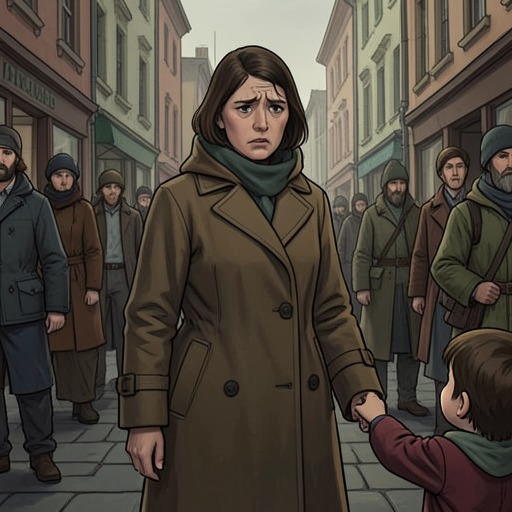
The poor are always crossing the Sahara
If Beale Street Could TalkThe poor are always crossing the Sahara is Tish’s metaphor for the dangerous, recurring passage through poverty and incarceration. It turns the corridors she must cross into a desert where the vulnerable are watched by circling scavengers, and returns after a prison visit as an image of the effort required simply to continue.
The Desert and the Corridors
Tish first measures the corridors against the Sahara: they seem wider than the desert, yet neither place is empty. In her account, a traveler who falls in the Sahara is gradually surrounded by vultures, which wait until the body and spirit can no longer resist. The comparison makes the courthouse corridors more than an unpleasant setting. They become part of a landscape in which exhaustion leaves people exposed to those prepared to profit from their weakness.
The image’s central sentence, “The poor are always crossing the Sahara,” expands that peril beyond one person or one journey. Crossing is ongoing, not a single ordeal with a clearly promised end. The desert names the repeated labor of moving through conditions that can overwhelm anyone who falls behind.
The Human Scavengers
Tish identifies the vultures with lawyers, bondsmen, and others gathered around poor people caught in the legal system. She observes that these intermediaries are not necessarily richer than the people they exploit; in her account, poverty has not prevented them from becoming scavengers themselves. Her condemnation includes Black men who participate in the same predation, complicating any simple division between the poor and those who prey upon them.
The metaphor also gathers several forms of shame. Tish has encountered the shame of hardworking Black women who call her Daughter, and of proud Puerto Ricans whose imprisoned loved ones are addressed by people who do not speak Spanish. She insists that these families are wrong to feel ashamed: the people responsible for the jails should bear that shame instead. She is not ashamed of Fonny; she is proud of his manhood and endurance, even as she admits fear that no one can withstand such treatment forever.
Repetition and Endurance
The Sahara returns after Tish’s prison visit. Fonny follows a guard into what she calls an unimaginable inferno; Tish rises with her knees and elbows shaking and has to cross the Sahara again. The recurrence gives the metaphor a bodily consequence: the visit ends, but leaving the prison does not end the strain imposed by it. The crossing resumes on the other side of the encounter.
Tish’s account offers no easy promise that the passage will soon be over. Instead, she describes fixing her mind on getting from one day to the next, since looking too far ahead could make endurance impossible. The repeated desert image holds together the system’s recurring violence and the persistence needed to face it, while directing shame away from imprisoned families and toward those who maintain the jails.