Tish Announces Her Pregnancy to Both Families and Breaks with the Hunts
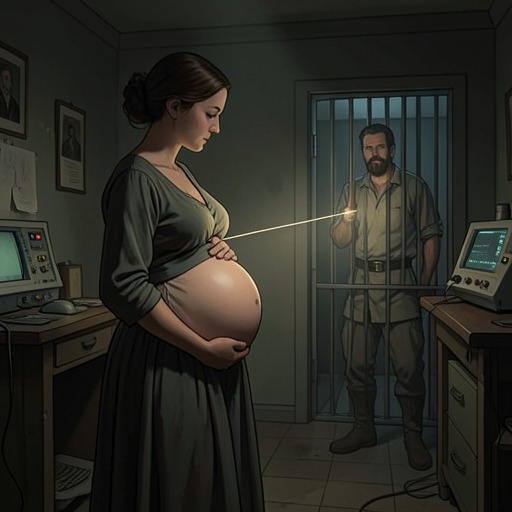
If Beale Street Could TalkTish’s announcement turns a private pregnancy into a test of kinship: Joseph and Sharon welcome the child, Frank joins them in support, and Alice Hunt’s condemnation makes the division between the families unmistakable. With Fonny in jail and the case against him still pressing on their lives, the Rivers family comes to understand that the child and Fonny’s future will depend on their shared care.
The Announcement at Home
The news first enters the Rivers household through a small family ritual. After supper, Sharon brings out the last bottle of French brandy she has kept from her years as a singer. She sets it before Joseph, asks him to open it, and gives him the role of pouring for the family. The bottle and the four glasses make the kitchen a place of deliberate ceremony: Sharon calls the drink a sacrament to a new life and announces that Tish is going to have Fonny’s baby. Tish recognizes what her mother is preparing before Ernestine and Joseph do, and the anticipation makes the disclosure feel at once joyful and weighty.
Joseph cannot answer immediately. He puts down his glass, picks it up again, and searches Tish’s face before managing a wry response and inviting her to drink to the child. His first practical question is how long the pregnancy has been going on. When he asks whether she is sure she wants the baby, Tish answers that both she and Fonny want it. She reminds him that she and Fonny have been best friends since childhood and says they would already be married if circumstances had allowed it. Her insistence also answers the fear she knows her father has not voiced: Fonny is in jail, and the child may have to grow up without him.
The family’s happiness does not erase that fear. Tish thinks of what Fonny’s imprisonment means to him and of Joseph’s worry for his daughter and the baby. After she agrees that Frank should be told, Joseph moves to the living room to place the call himself. His grim smile signals that he is taking responsibility for the next difficult step, while his invitation for Tish to sit on his knee brings the news back into the intimacy of their household. He tells her he is proud of her. When Sharon reminds everyone that Tish is pregnant and the family breaks into laughter, the laughter carries both relief and apprehension: Joseph understands the child as part of his own family, and places a protective hand on Tish’s belly. Her nausea returns, and he holds her as it passes.
The Family Summit
Tish’s news is for Frank, so Joseph arranges a meeting with the Hunts. The gathering takes place in Fonny’s small workroom, a low space with a fireplace, a tiny kitchenette and bathroom, a mattress on the floor, and tools spread across the large wooden table. Fonny’s sketches are pinned to the wall beside a photograph of Frank. The room, filled with unfinished work and reminders of Fonny, makes his absence tangible as the two families assemble to discuss the life he is about to become a father to.
Alice Hunt arrives with Adrienne and Sheila. Ernestine manages the entrance, while Sharon guides Alice toward Joseph and Tish. When the group settles, attention turns to Tish. She explains that she called the meeting so she could tell them what she had told Fonny: he is going to be a father, and they are going to have a baby. Frank first looks to Joseph. The two fathers sit in silence, as if separately taking in the scale of the news, before Frank tells Joseph that they should go out and drink together. He then tells Tish that he is glad. His response gives the child a welcome from Fonny’s family, even as Fonny himself remains incarcerated.
Alice asks who will be responsible for the baby, and Tish answers that the parents will be. Frank backs her up, rejecting Alice’s attempt to place responsibility elsewhere. Alice then attacks Tish’s relationship with Fonny as sinful and says the pregnancy will be harmed by divine judgment. She portrays Tish as a threat to her son and presents her condemnation as religious certainty. The contrast with Frank is sharp: he recognizes the child as his grandchild, while Alice refuses the same bond and turns the announcement into an accusation.
The Break with the Hunts
Frank strikes Alice once, knocking her down, then asks Joseph to leave with him and let the women handle the situation. Sharon tells Joseph that he is not needed there. As Alice returns to her chair, Tish tells her that what she said was the most terrible thing Tish has ever heard. Adrienne objects to Frank’s action and raises concern for her mother’s heart; Sharon answers that Alice has forgotten that the baby is also Frank’s grandchild and Sharon’s grandchild. Even after the confrontation, Sharon offers Alice tea or brandy, a gesture that makes the difference between the two households’ responses to the coming child plain.
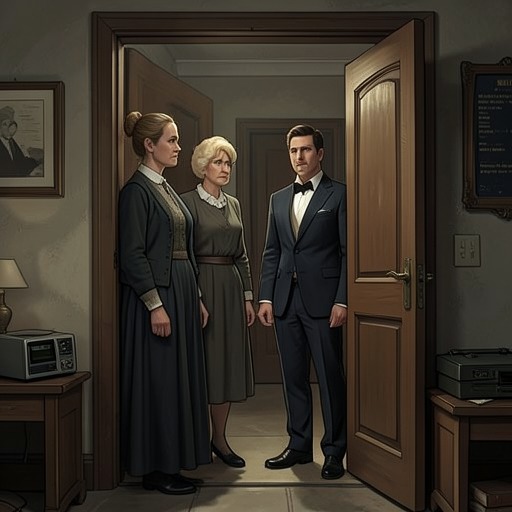
Alice turns to leave with her daughters. Tish stands at the door and confronts her over the threat to the pregnancy, refusing to let Alice’s words pass as harmless religious disapproval. Tish also invokes Alice’s treatment of her other children and challenges the family’s claim on Fonny while they reject his child. Ernestine then moves Tish away from the doorway and takes charge of the departure. She ushers the Hunts into the elevator, forbids them from coming near the baby, and makes clear that the family will not welcome them back. Her anger is not merely a retort to Alice: it sets a boundary around Tish and the child. Sharon has spoken little during the exchange, but her restraint has helped keep Tish steady; Ernestine gives the rupture its explicit, public form.
Consequences and Continuing Stakes
The Rivers family recognizes the cost of that break after the Hunts have gone. Tish understands that they are sending her to bed so they can face, without her or the men, what the meeting has shown them: Fonny’s family will not help him, and the Riverses are now the family he can rely on. Ernestine takes the conflict on herself in part so Tish can rest and carry the pregnancy safely. Tish turns in bed toward the place where Fonny would be and imagines his presence with her. The baby is not a resolution to Fonny’s imprisonment, but it gives the family a shared responsibility and a future to protect.
That responsibility unfolds alongside the legal case. Tish continues working while pregnant and worries about how she will manage the commute as she grows heavier and sicker. On a crowded subway, she fears that if she passes out, the other passengers may trample her and the baby; the daily journey that once belonged to routine becomes a concrete measure of how much depends on her. The pressure is financial as well as physical, while Fonny remains unable to share the work of protecting their child.
The case offers little reassurance. Arnold Hayward explains that Victoria Rogers and her husband have disappeared from their Orchard Street apartment, and that Officer Bell’s identification remains authoritative in the prosecution’s account. He says Daniel Carty has been arrested and held incommunicado, and warns that Tish and Fonny’s account of being with Daniel on Bank Street carries little weight. When Tish asks whether there is any way to reach the truth, Hayward distinguishes truth from the contest over who wins. The announcement therefore lands inside a struggle whose outcome the family cannot control, even as it gives them a reason to keep resisting.
The wider pattern of risk is visible in Tish’s encounter with the officer at the vegetable stand. When a young man harasses and grabs her, Fonny intervenes, and Bell threatens to take Fonny in for assault. Tish puts herself between Fonny and the officer and gives her account; the shopkeeper confirms it and offers to testify. The scene shows Tish acting to protect Fonny in public, but also how quickly his actions can be reframed by police authority. Later, Sharon travels to Puerto Rico to confront Victoria. She appeals to her as a mother and tells her that her identification put a young Black man who wants to marry Tish in jail, but Victoria screams for Sharon to leave and is led away by another woman. Sharon returns without restoring contact. In that continuing uncertainty, the Rivers family’s decision to claim the baby and stand by Fonny is both an act of love and a practical answer to the Hunts’ withdrawal.