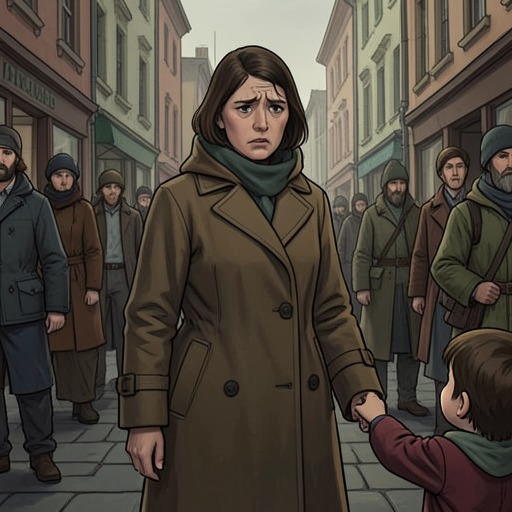
Trouble means you're alone
If Beale Street Could TalkTrouble means you're alone is the phrase Tish uses to crystallize the isolation of loving Fonny while he is in jail and she is expecting their child. It describes not simply being physically alone, but finding that ordinary contact with other people offers no clear way to share the danger or obtain help.
Meaning and Narrative Context
Tish presents trouble as a disturbance in perception as well as circumstance. Some days, she goes through the motions of hearing people, speaking to them, and doing her work, yet afterward struggles to say what she has done. On those same days, people can appear newly vivid, shining as brightly as razors. The contrast makes crisis both numbing and exposing: familiar encounters continue, but they no longer feel familiar or reliable.
Her account does not settle on one explanation for this altered vision. She wonders whether trouble makes people seem strange because she sees them differently, thinks about them differently, or has become numb to the question of whether anyone can be depended on. The phrase gives that uncertainty a stark conclusion: isolation is not only a lack of company, but a collapse of confidence in connection.
Public Life and Failed Speech
The bus makes that collapse concrete. Tish is surrounded by passengers, yet cannot imagine telling them that Fonny is in jail, that she loves him, and that she knows he has committed no crime. She also cannot voice her fear that the father of her unborn child might die in prison. The imagined audience does not have to reject her; the impossibility of knowing what it would say is enough to silence her.
That silence separates physical proximity from mutual aid. Tish imagines asking for help to get Fonny out, but recognizes that the plea cannot readily be made to strangers on the bus. Her questions about what the passengers might say circle around an answer she cannot obtain. The crowded setting therefore intensifies the phrase's meaning: people are present, but the crisis remains hers to carry.
Consequences and Narrative Significance
The thought widens from the bus to the city. Looking out the window, Tish wonders whether the rest of her life will consist of traveling back and forth on the same route, and what such a future would mean for her baby and for Fonny. The everyday journey becomes an image of confinement, with no assurance that movement through the city will bring her closer to a way out.
Her response is a conditional rejection of downtown New York: if she and Fonny get out of their circumstances, she swears she will never go there again. The qualification matters; escape is uncertain, and the vow cannot yet be acted upon. In this passage, the phrase names a present emotional fact while the imagined future remains unresolved. Its force comes from the gap between a public world full of people and a private emergency Tish feels unable to make legible to them.