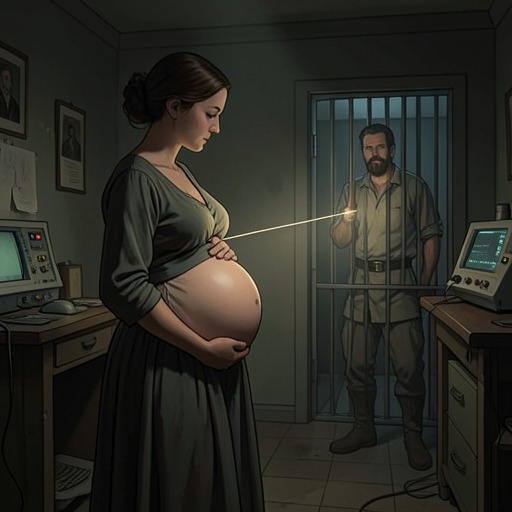
What can get worse can get better
If Beale Street Could TalkWhat can get worse can get better is the hard-won hope Tish draws from her pregnancy while Fonny remains imprisoned and the future of their family is uncertain. The phrase holds fear and possibility in the same thought: it offers no promise that hardship will end, but the child’s first movement gives Tish a reason to prepare for change and to keep going.
Meaning and Immediate Circumstances
Tish reaches this thought after a night of exhaustion and a nearly silent morning with Sharon. On her walk to work, she sees the crowded streets, people hurrying to jobs or returning to furnished rooms, and garbage piled along the side streets and stoops. Against that poverty, she privately considers whether, if Fonny is still not free before the baby comes, she might have to sell sex. The thought is not a settled plan: she knows she cannot do so before the birth and is only beginning to ask what getting ready would mean.
Her anxiety becomes practical on the subway. As her pregnancy advances, she wonders how she will keep getting to work and fears that if she passes out in the crowded car, other passengers might trample her and the baby. She holds the pole more firmly and reminds herself that Fonny is counting on her to bring the child safely into the world. The packed, silent car recalls drawings of slave ships to her, while the passengers around her remain strangers absorbed in getting through another workday. This pressure gives the expression its setting: hope emerges not outside material danger, but within a life narrowed by imprisonment, poverty, work, and pregnancy.
The Child's First Movement
The phrase takes on force in a bar, where Tish and Ernestine sit together and recognize that their circumstances may become worse. Then Tish feels a light tap below her ribs: the baby has moved for the first time. The small physical signal changes the scale of the moment. The child is not simply an expectation in the future; its movement announces a presence and makes Tish's own part in that future unmistakable.
Tish understands that the baby cannot arrive without her. She also recognizes that birth will bring a transformation for the child and that she, too, must prepare to be transformed. The thought therefore works in both directions: conditions can worsen, but improvement remains possible; what improves can also worsen. Its hope is conditional and alert rather than consoling certainty. Tish says she is not afraid, and Ernestine answers with a smile and an invitation to move on.
Hope Under Public Threat
The expression's balance between danger and action also resonates with Tish's encounter at a tomato stand. When a young man makes unwanted advances, follows her into the shop, blocks her way, and grabs her arm, the bystanders watch without intervening. Fonny arrives and attacks the man; seeing a police officer run toward them, Tish places herself between Fonny and the officer, holds Fonny's wrists, and identifies the other man as her attacker. No witness speaks in support of her. The scene makes her courage consequential but not protective in any guaranteed sense: she acts to defend Fonny in a situation where racial power and public indifference shape what may happen next.
The phrase does not claim that love or resolve can prevent a worsening turn. Rather, set beside Tish's repeated acts of protection, it names the possibility of continuing to act when outcomes remain uncertain. Her pregnancy makes that responsibility especially concrete: the future she hopes for depends on her survival and care, not on a promise that the surrounding world will become fair.
Hope Without a Guaranteed Outcome
Sharon's confrontation with Victoria Rogers provides a stark counterpoint to any reading of the phrase as a guarantee. Sharon tells Victoria that she has put a young Black man who wants to marry her daughter in jail, and challenges her claim to have seen him by distinguishing the police lineup from an earlier encounter. When Sharon touches her crucifix, Victoria screams, breaks away, and runs from the room; an older woman takes her in her arms, while the people gathering in the hall stare at Sharon as she leaves. The encounter supplies no resolution for Fonny's case and no reassurance that telling the truth will repair the harm.
Read alongside these scenes, What can get worse can get better is a statement of possibility, not a forecast of easy recovery. Its source is intimate and specific—the movement of a child Tish must carry—but its meaning remains exposed to the pressures of work, poverty, racialized policing, and a legal accusation. The sentence allows fear to remain present while refusing to treat the worst outcome as the only imaginable one.