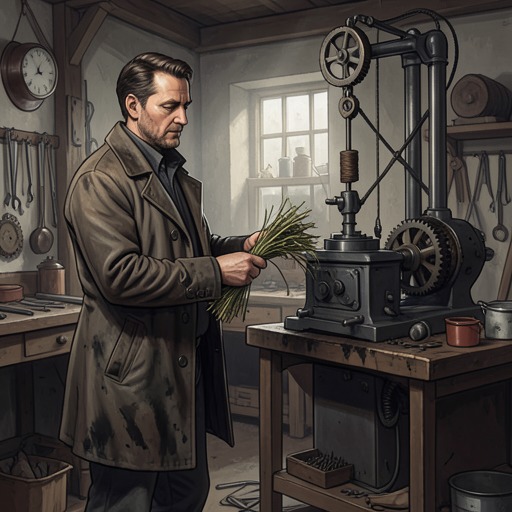
Ève Séchard
Illusions perduesÈve Séchard moves between two kinds of labor: the quiet, largely unrecognized work of keeping her family afloat and the increasingly public work of managing a failing business. Her devotion to Lucien de Rubempré helps him reach beyond the poverty of their household, while her marriage to David Séchard brings affection and shared hardship. As David pursues a new papermaking method, Ève learns the practical demands of the printing trade and takes responsibility for the enterprise. Her story makes care both an emotional bond and a material effort, measured in wages, borrowed money, sacrificed possessions, and the daily work of survival.
Identity and Family Background
Ève is described as tall, dark-haired, and blue-eyed, with a strong character tempered by gentleness and tenderness. She has been raised with education and propriety, but poverty has left her working for a living. At the time the family lives in L’Houmeau, her mother, Madame Chardon, earns money caring for women in childbirth, while Ève works for a fine laundress, supervises the other workers, and earns about fifteen sous a day. Her position in the workshop gives her a measure of authority without lifting her out of hardship.
The family’s income is slight: their earnings and Madame Chardon’s annuity amount to roughly eight hundred francs a year for three people to live, dress, and pay rent. Much of the household’s limited means is absorbed by Lucien. The two women nevertheless believe in his future and give him extraordinary support. Madame Chardon conceals her identity under the name Madame Charlotte to spare her son the embarrassment of seeing his mother reduced to such work. Ève’s own contribution is no less practical: her wages help sustain the home, even as the family organizes its hopes around Lucien’s prospects.
That loyalty is visible when Lucien is invited to visit Madame de Bargeton. Ève spends some of the household’s scarce savings on fine shoes and a new suit for him, then improves his best shirt with a jabot she has washed and pleated herself. She also coaches him in the small bodily manners she thinks necessary in an aristocratic salon, warning him not to lean casually on furniture as he habitually does. She accompanies him as far as the gate of Saint-Pierre, watches him set off toward Beaulieu, and takes his opportunity as the dawn of the family’s fortune. The care is loving but also costly: she invests money, skill, and hope in a social ascent whose risks she cannot yet see.
Love and Marriage with David Séchard
Ève and David’s attachment begins quietly. Each is shy of the other, and both conceal their feelings from Lucien, perhaps fearing that acknowledging a romance might harm him. David, who regards Ève with deep respect, is particularly hesitant. He sometimes makes excuses to visit L’Houmeau, but turns back before reaching her door, afraid of intruding or arriving too late. Ève understands the feeling in his looks and manner; she is moved by his reserve and by his devotion to Lucien.
Their relationship takes shape amid contrasting judgments about Lucien’s future. After his painful experience in Madame de Bargeton’s world, David fears that social ambition will draw Lucien away from work and expose him to expenses the family cannot meet. Ève rejects the prospect of giving up on her brother. She believes that while Madame Chardon can continue her difficult work and Ève herself remains able to earn, their labor may cover Lucien’s needs until he becomes successful. For her, working for someone she loves makes hardship bearable. David warns that their modest earnings cannot match Lucien’s growing appetite for the costly life he has glimpsed. Their disagreement is not a lack of affection for Lucien, but a difference over what love can safely promise him.
At the Charente, Ève finally tells David that she has never thought of another man and has seen in him someone a woman could be proud to belong to. She had not dared to hope that a poor working woman without prospects could share his future. Their confession turns a restrained attachment into a declared commitment. By the time Lucien later returns to the family’s life, Ève and David are married. David has spent what he had on the marriage and Lucien’s journey to Paris, and he has bought Ève a small set of bridal jewels. When the household’s financial distress becomes plain, he regrets the expenditure and brings out the jewelry boxes; Ève answers his remorse with affection rather than reproach.
Supporting Lucien, and Learning to Doubt Him
Ève’s devotion to Lucien continues after he leaves for Paris. In a letter to him, she celebrates the friends who have helped him and says that their kindness has eased her own distress. She describes David as a generous, unknown man whose inner qualities she appreciates more deeply over time, and explains that he has neglected the printing business while spending his days experimenting with papermaking. She also reveals that she is pregnant, a prospect that would ordinarily have brought her joy but now weighs on her because of the family’s financial situation. Madame Chardon has returned to strenuous nursing work, and Ève and her mother secretly pawn possessions to send Lucien one hundred francs.
Her letter combines support with reproach. She blames Madame de Bargeton, in Ève’s view, for drawing Lucien away from his family and then failing to protect or help him after his move to Paris. Yet Ève does not ask him to abandon his ambitions. She urges him to spread his wings, while taking comfort in the friendships he has found. The family’s assistance is an act of faith, but it also deepens its exposure: money and possessions needed at home are redirected to Lucien, even as David’s business and the household’s own future become more precarious.
That faith changes as Lucien’s conduct threatens David’s safety. While David is hidden from his enemies, Ève writes that she trusts Kolb, Marion, and Basine Clerget more than her brother. Lucien has sent fine clothes and five gold pieces, which Ève has put toward the household’s needs, but she fears his presumption in trying to settle the family’s debts. She sees his wish to intervene as driven by pride rather than reliable judgment. The shift is painful: Lucien is still her beloved brother, but affection no longer means confidence in his decisions.
When Lucien appears to have regained public favor in Angoulême, Ève allows herself a moment of hope. After more than a year under severe pressure, she dresses carefully and plans to walk at Beaulieu on his arm, eager to enjoy the sight of her brother honored in his home city. The outing shows that her reservations have not erased her attachment. They have, however, made that attachment more wary: she can welcome his success without believing that it has repaired the damage or made him safe to trust.
Managing the Printing Business
The strain on the family becomes unmistakable after the marriage. David has kept one thousand francs for the printing business and owes a similar sum to Postel, but the couple’s sole reserve is gradually consumed by household expenses. For four months, David does not explain the full financial situation to his new wife. He is reluctant to disturb their early married life with the demands of the trade, while Ève does not yet know how to manage it. When the bill falls due, she sacrifices her bridal jewelry and silverware to pay it. Only then does she begin to press David about the business and the experiments that increasingly occupy him.
David shows her a small, secluded workspace and tells her that their prospects depend on the problem he is trying to solve. Ève takes his confidence seriously. Already pregnant, she leaves the room where she had been doing women’s work and descends into the printing shop to learn its commercial mechanics. The move is both an act of partnership and a change in her role: she becomes responsible not merely for household economy but for understanding the business that supports it.
Her first examination reveals how little work the shop is receiving and how much it is losing. The Cointet brothers have drawn away workers and captured much of the region’s printing trade. In the first half-year, the shop takes in eight hundred francs, while wages and supplies absorb most of the revenue, leaving its owner without the expected returns on equipment, premises, and printing privileges. Ève makes an inventory and has Kolb, Marion, and Cérizet put the workshop in order. She then asks David how the remaining resources can be used and promises to direct the business herself.
Her first venture turns leftover paper and illustrations into inexpensive popular sheets for village homes. The subjects include the Wandering Jew, Robert the Devil, La Belle Maguelonne, and miracle stories. Cérizet sets the pages, Marion works the press, Ève colors the pictures, and Kolb sells them as a traveling hawker. In two months, they sell three thousand sheets within twelve leagues of Angoulême. The sheets cost thirty francs to make and bring in three hundred francs at two sous apiece. The undertaking converts idle materials and the household’s divided labor into immediate income, though its market is limited once the local villages and taverns have been supplied.
Ève next finds the illustrations needed for the Almanac of the Shepherds, a pictorial almanac intended for readers who cannot read. She proposes a much larger first printing: one hundred reams, or fifty thousand copies, with a projected profit of two thousand francs if the stock can be sold. The plan draws on a product the old printing business had once made profitably, but its scale also places the family’s scarce resources at risk. The evidence establishes Ève’s initiative and her calculations, not the eventual commercial success of this venture.
Crisis and Significance
Ève’s letters show how the struggle over money and David’s invention shapes family life. She reports that David continues his experiments while she handles the business, and that Madame Chardon has resumed her demanding work. Later, as David remains in hiding, Ève insists that their safety depends on keeping his whereabouts secret. She fears Lucien’s confidence that he can repair the damage, and interprets his intervention as another consequence of ambition. At the same time, she uses the money he sends to keep the household going, preserving the difference between accepting material help and trusting his judgment.
The public celebration of Lucien briefly tempts Ève to reclaim the brother she has missed, but a forged letter from him becomes the immediate danger. After Lucien leaves, Ève finds the letter and fears that he has gone to end his life. She sends Kolb and Marion to make discreet inquiries and watch the Charente. In the same morning, Petit-Claud tells her that David has been imprisoned. Her attention is pulled between two emergencies: the possible loss of her brother and the known arrest of her husband. The scene brings together the loyalties that have defined her life, now sharpened by the consequences of Lucien’s choices and the family’s financial conflict.
When a settlement with the Cointet brothers provides a way forward, Ève does not measure the outcome by wealth alone. She thanks Petit-Claud for giving the family the means to be happy and says they will remain grateful. That response completes the contrast running through her story. She has repeatedly treated money as necessary—counting wages, pawning valuables, finding markets, and protecting the printing shop—but refuses to make financial gain the final measure of what her family has received. Ève’s resilience lies in joining practical intelligence to sustained affection, even when affection must be revised by experience.