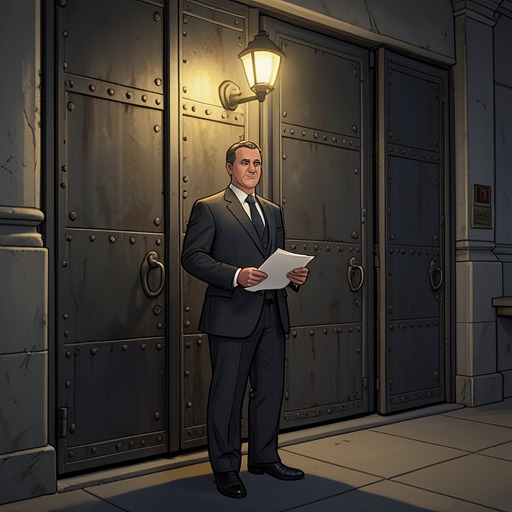
Étienne Lousteau
Illusions perduesÉtienne Lousteau is a journalist from Sancerre whose knowledge of Parisian literary life becomes one of Lucien de Rubempré’s first practical guides to the city. He explains how journalism can provide a living, but also shows how its dependence on money, favors, and manufactured opinion corrodes literary judgment. His importance rests in that doubleness: he warns Lucien against the machinery even as he teaches him to use it.
Identity and Introduction
Lousteau first comes into view at Flicoteaux, where Lucien notices a pale, thin young man whose handsome face already seems worn by disappointed hopes. The two have left the provinces for Paris: Lousteau came from Sancerre two years earlier, carrying a tragedy and drawn by the same prospects that attracted Lucien—glory, power, and money. His animated gestures, bright gaze, and sometimes abrupt speech betray a bitter familiarity with literary life.
Their acquaintance takes shape through interrupted meals and brief conversations. Lousteau appears at Flicoteaux only intermittently, and Lucien repeatedly has to begin again after absences. Lucien learns from the restaurant’s counter that Lousteau writes for a small newspaper, reviewing new books and reporting on plays at the Ambigu-Comique, the Théâtre de la Gaîté, and the Théâtre du Panorama-Dramatique. The job gives the apparently impoverished stranger a new importance in Lucien’s eyes: a working journalist might provide the connections a beginner needs.
Lousteau’s irregular presence has a prosaic explanation. He eats at Flicoteaux when he has run out of money, while his way of life seems to involve cafés, drinks, punch, performances, and suppers. Lucien, still cautious with the small amount of money he has left, sees the expense without yet understanding its source. Their contrasting habits mark an early divide: Lucien is trying to preserve provincial discipline and work, while Lousteau is already moving through the costly, unstable social world of the press and theater.
The Journalist’s Trade
Lousteau’s livelihood is less secure than its access to theaters and publications might suggest. He recounts that family assistance ran out, and that even after he placed a play at the Théâtre-Français he could not turn the achievement into dependable income. A novel sold anonymously to Doguereau for two hundred francs brought little prospect of a career. Journalism, he concluded, was the only trade likely to feed him, but entry required months of unsuccessful applications and unpaid or provisional work.
By the time he advises Lucien, Lousteau reviews boulevard theaters for a newspaper owned by Finot. The arrangement pays little directly. Theater managers provide tickets that help meet the cost of his favorable treatment in the paper; booksellers send books for review, some of which he must sell; and businesses pay for articles either praising or attacking their interests. Products such as cosmetics and patent remedies can buy a mocking advertisement for twenty or thirty francs. A bookseller who supplies too few copies may be attacked even if the book is excellent, because the paper and Lousteau each want copies to sell. Larger publishing ventures can pay to avoid hostile coverage. The press, in his account, is not simply a forum for judgment but a market where attention, praise, and hostility all have a price.
The petty economics surface in a dispute over his pay. Lousteau calculates that eleven columns at the stated rate amount to fifty-five francs and says he has received only forty; Giroudeau counters that Finot’s method of calculating columns reduces the submitted writing by three columns. The argument makes visible a world in which even the size of a journalist’s work—and therefore his earnings—can be altered by the paper’s accounting. Lousteau’s access to publication does not amount to security or control.
His warning to Lucien is therefore rooted in experience, not detached criticism. He describes literary success as a public spectacle whose backstage consists of rivalries among writers, publishers, and political camps. Reviewers can help raise a lesser talent while injuring an author they resent; a book may be betrayed by supposed friends or forgotten despite its merit. He urges Lucien to find a publisher willing to print his poems before expecting payment for them. The contrast is stark: literary ambition imagines a work meeting its public, while the trade is governed by access, alliances, and commercial necessity.
Lucien’s Entry into Journalism
Lousteau’s account does not persuade Lucien to retreat. After listening in silence, Lucien clasps his hand and declares his determination to triumph. Lousteau immediately turns that resolve into an itinerary: Lucien is to dress properly, accompany him to meet Dauriat, attend a first-night performance at the Théâtre du Panorama-Dramatique, and join a supper where Finot and other journalists will be present. His guidance is simultaneously practical and initiating. He brings Lucien into rooms where the literary trade is conducted and teaches him that relationships, appearances, and timing matter alongside writing.
He also lays out a possible route to income through theater reviewing. If Florine succeeds and Finot advances Lousteau, Lousteau imagines taking on the major theaters and leaving the boulevard theaters to Lucien. He calculates that Lucien could earn money from columns, sell books supplied by Barbet, and sell theater tickets; a place on Finot’s new weekly might provide an additional paid article. These figures are presented as a conditional prospect, not a guaranteed appointment. Lousteau’s promise of advancement shows how journalism works through delegated access and favors, with one man’s possible rise creating an opening for the next.
The two collaborate in print. When Lucien writes about a performance at the Théâtre du Panorama-Dramatique, Lousteau writes a separate piece about an aging former beauty, Du Potelet. Lucien’s review is described as introducing a new and original manner into journalism. Their parallel work demonstrates that Lousteau does not simply lecture about the profession: he is Lucien’s companion as the younger writer begins to practice it.
Lousteau’s methods are clearest when he turns Lucien’s anger at Dauriat into a retaliatory review of Nathan’s book. He instructs Lucien to begin by praising the work, so readers will regard the critic as impartial, then shift to an attack on the book’s larger literary system. The argument should contrast a tradition of analytical writing with modern fiction that relies on dialogue and description, and classify the opposed tendencies as literature of ideas and literature of images. The review’s apparent fairness is thus part of its construction: a critical framework, however learned its references, can be arranged to serve a rivalry. Lousteau makes the technique legible even as it exposes criticism as an instrument of competition.
His influence extends beyond professional tactics. He tells Lucien about Coralie’s circumstances and attachment to him: she had been sold by her mother, disliked her first purchaser, and later endured the attentions of Camusot, who treated her almost as a daughter. Lousteau describes her as having refused wealthier offers and presents Lucien as her first love. This account helps Lucien understand the actress’s distress and also intensifies the vanity with which he receives the news. Lousteau is an intermediary in both the press and the theater world, translating other people’s circumstances into information Lucien can act upon.
Friendship, Money, and Compromise
The friendship becomes entangled with loans and shared financial danger. Lucien lends Lousteau one thousand francs. Later, Lousteau admits that gambling has made him deeply indebted and that the Guards of Commerce are pursuing him; he says he would be happy if he did not gamble. He does not conceal the scale of his trouble, but his admission arrives after Lucien has already entrusted him with money. Their closeness is real, yet it does not protect Lucien from the consequences of Lousteau’s habits.
Lucien’s own losses eventually make the debt urgent. After creditors seize Coralie’s carriage, horses, and furniture for a total of four thousand francs, Lucien asks Lousteau to return the loan. Lousteau answers by showing papers indicating that Florine is in a similar financial predicament, and offers instead to help place Lucien’s manuscript of The Archer of Charles IX. The offer is a form of assistance, but it does not repay the money. When Lucien later finds Lousteau at Flicoteaux, Lousteau is himself pursued and unable to return to his home on Rue de La Harpe. He offers Lucien dinner; Lucien accepts. Their reunion at the restaurant where they first met brings their relationship back to its point of origin, now under harsher conditions.
At one low point, Lousteau and three other writers cannot pool enough small change for coffee. An established printer gives them forty francs, which Lousteau divides into four equal shares. Lucien weeps as he describes his situation, only to find that each of the others has an equally painful story. The scene makes their fellowship tangible without making their poverty romantic: shared artistic identity offers recognition and a little cash, but no escape from the material crisis. Lousteau then returns to gambling, using part of his share at the Palais-Royal.
Their relationship also turns on competing standards of conscience. Lousteau dismisses conscience as a weapon people use against others rather than themselves, and argues that Lucien should seize a sudden opportunity instead of hesitating over its means. He calculates how a successful theatrical venture could make him an editor, increase his income, and give Lucien a succession of reviewing work. This is not merely abstract cynicism: he places moral scruple against a detailed promise of wages, access, invitations, and social visibility. Lucien’s attraction to the prospect helps carry him away from the principles he had tried to retain.
Reversals and Continuing Ties
When Lucien turns against his former friends and joins the royalist newspaper Le Réveil, Coralie encourages him to disregard their judgment and promises to use her connections to secure the aristocratic title he wants. Lousteau’s earlier lessons about journalism have helped prepare Lucien for a world in which affiliation can be changed for advantage. Yet Lousteau is not simply a disapproving observer: his own career has depended on compromise, and he has already framed the press as a contest in which one must fight to avoid being abandoned by one’s side.
After Coralie’s health fails and Lucien cannot work, the couple reaches extreme poverty. Lucien’s most painful recourse is to seek the thousand francs Lousteau still owes him. Lousteau is no longer able to return to his own home; he has been driven from place to place by creditors. He is found again at Flicoteaux, dining at the very table where Lucien first met him and later left Daniel d’Arthez’s company to return to Lousteau. The return makes the cost of that earlier choice newly visible. Lousteau offers food, but their circumstances are so severe that even a group of writers cannot scrape together thirty sous for coffee. Lucien refuses the proposed supper afterward, and his handshake with Lousteau carries the pain of a man recognizing the damage done by his own literary guide.
The relationship is not finished by that estrangement. When Lucien returns to Angoulême and needs respectable clothes for the public honors arranged for him, he writes to Lousteau asking for a complete outfit on credit. The request invokes their shared tailor and asks Lousteau to turn the unpaid thousand francs into practical help: clothes suitable for the banquet awaiting him. Lousteau’s circle responds from Florine’s salon. Florine, Nathan, and Émile Blondet contribute toward the purchases; she adds shirts, Nathan sends a cane, Blondet a gold chain, and others provide further accessories. The shipment is imperfect—there are difficulties with shoes, hat, and neckties—but it answers Lucien’s immediate need. Florine asks in return for an article on Nathan’s latest book.
Lousteau’s later assistance does not erase his unpaid debt or his earlier betrayals. It does, however, qualify any simple portrait of him as a corrupter: the same journalist who teaches Lucien to weaponize criticism and fails to repay a substantial loan remains part of a network that rallies to clothe him when he is in need. Across their changing fortunes, Lousteau embodies the unstable mixture of generosity, self-interest, artistic fellowship, and commercial calculation that defines Lucien’s passage through the literary world.