Censure de la presse sous la Restauration
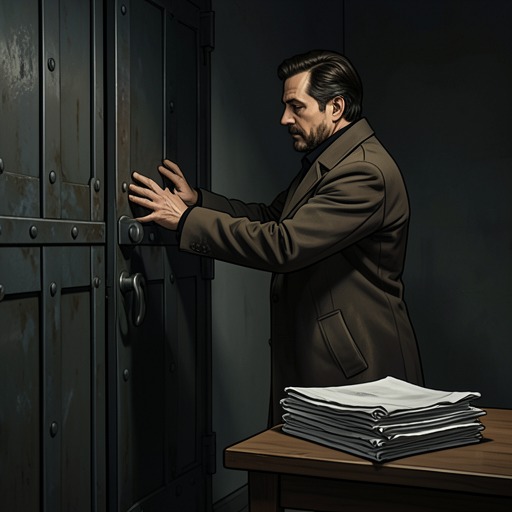
Illusions perduesCensure de la presse sous la Restauration was a political restraint on the press whose possible return hangs over the novel’s account of journalism. It appears not as an already-restored measure but as a danger: after censorship was lifted at the opening of the Chambers, Léon Giraud warns that escalating partisan abuse may give the government grounds to impose it again. The warning links the freedom to publish not only to political power but also to the press’s own conduct and commercial conditions.
Political suspension and the threat of return
Giraud describes a divided political landscape in which the government, the Court, the Bourbons, and absolutist factions disagree over how to suppress the Revolution but share, he argues, an interest in suppressing the press. Royalist and ministerial papers have been founded as instruments of reprisal against Liberal journalism, answering injury with injury. In his view, this tit-for-tat gives personal insult the appearance of a public right: each side can claim its attacks are justified because the other side attacks first.
The immediate historical reference is the censorship imposed after the assassination of the Duke of Berry and lifted when the Chambers opened. Giraud predicts that reciprocal abuse will eventually make restrictive laws and censorship return. That is his political forecast, not a narrated report that the measure actually comes back. He argues that readers may accept Liberal insinuations that the Bourbons intend to attack the material gains of the Revolution, and that this belief could eventually drive the French people to rise up and expel them. The threat of censorship thus becomes part of a larger cycle: partisan journalism may provoke repression, while repression may intensify public distrust of the monarchy.
Press power and political competition
Giraud’s warning is sharpened by the imbalance he sees in readership. Subscribers, he says, are mostly on the Left, so the Liberal press possesses the advantage of larger numbers. In his analogy, political competition in journalism resembles war: victory goes to the side with the bigger battalions. He expects Royalist writers to be branded liars and enemies of the people while their Liberal opponents appear as defenders of the country and martyrs—even if, in his judgment, those opponents are more hypocritical and perfidious. The press’s political power rests partly on this ability to assign reputations and moral roles, not simply on the accuracy of what it prints.
Giraud also warns that reciprocal personal attacks normalize practices that would otherwise remain scandalous. Once insult and attacks on individuals become accepted conventions, censorship can be presented as a response to a public harm. Yet he sees that justification as dangerous: suppressing the press could make the government appear hostile to the Revolution’s established gains. Censorship is therefore both a possible tool of political control and a potential accelerant of the conflict it is meant to contain.
Fiscal barriers and the publishing market
State control over publication also operated through economic restrictions. The novel describes stamp duties, postal charges, and security deposits imposed on the press during the period of Villèle. These measures made founding a newspaper nearly impossible, creating a practical privilege for established publications. Rather than simply extinguishing newspapers, the restrictions helped shape the commercial system in which they operated, including the growth of paid advertising as a source of revenue.
That system gave newspapers leverage over books as well as politics. In 1821, they could determine the prospects of literary ideas and publishing ventures, while publishers relied on newspaper notices and reviews to reach readers. An advertisement of only a few lines could be prohibitively expensive, and the struggle for space within editorial offices and printing rooms made publication a matter of access as well as expression. Censorship belongs to this wider structure of constraint, but it is not identical to the commercial barriers that restricted who could publish or be noticed.
Formal censorship and editorial control
The novel distinguishes, in practice, between state censorship and the control exercised within the publishing trade. When Lucien de Rubempré submits his historical novel to Vidal and Porchon, they explain that they are commission booksellers, not publishers, and say that books they finance themselves involve established names. Their refusal illustrates a commercial gatekeeping process rather than an official prohibition. Likewise, Dauriat’s treatment of Lucien and his manuscript shows how much a writer’s access depends on a powerful bookseller’s judgment.
Editorial intervention appears even more directly when Lucien writes a harsh review of a theatrical production and discovers that the published version has been softened overnight: his analysis remains, but its conclusion now favors the play. This alteration is not identified as government censorship. It shows instead how a newspaper’s internal decisions and commercial interests can reshape what reaches readers even without a state censor. Set beside Giraud’s warning, the episode reveals several distinct pressures on expression—legal threat, fiscal restriction, market access, and editorial revision—whose effects overlap without being interchangeable.