Coralie
Illusions perduesCoralie is an actress whose devotion to Lucien de Rubempré gives their relationship a tenderness that stands against the opportunism and instability of his public life. She is also caught in its material consequences: when Lucien’s debts bring the bailiffs to her door, the furniture they try to seize is hers. Her death leaves him grieving and unable to afford her burial, making her both the intimate loss at the center of his return to despair and a measure of the cost his ambitions have imposed on others.
Identity and Place in Lucien’s Life
Coralie is Lucien’s mistress, and her youth, beauty, and devotion help him overlook the precariousness of their situation. Daniel d’Arthez, writing to Lucien’s sister, describes her love as so complete that Lucien fails to see the social dangers surrounding their life together. The relationship offers Lucien immediate pleasure and consolation, but d’Arthez presents that comfort as part of what draws him away from more difficult obligations and ambitions.
Lucien’s later account of Coralie is more intimate. In a letter to Ève Séchard, he says that she could love him as his mother and sister did while also giving him the happiness those family bonds could not. He presents her devotion as a combination of affection and romantic love, and says she had sacrificed everything for him. This is Lucien’s account, written in grief; the letter conveys both the force of his attachment and his sense of what he has lost.
Debt and the Seizure of Her Furniture
The financial consequences of Lucien’s conduct reach Coralie directly when a creditor pursues him over a bill. Lucien is served with legal notices and then faces the seizure of property at her home. Coralie does not understand the proceedings at first and assumes that Lucien has helped his brother-in-law. She gives him the papers only after it is too late to prevent the initial legal action.
Lucien’s friends counsel him to delay matters through legal objections. When officials come to remove the furniture, he turns to Desroches, a lawyer introduced through Bixiou. Desroches arranges challenges to the proceedings; after a later seizure, he argues that the furniture belongs to Coralie, not Lucien. The court ultimately recognizes her ownership, and Métivier’s appeal is rejected on July 30. The episode establishes a concrete boundary between them in law—the furnishings are hers—even as the debt incurred by Lucien brings the threat of seizure into her home.
Death and the Aftermath
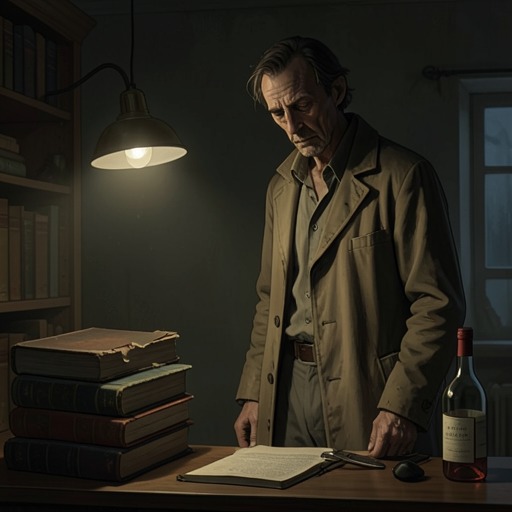
In a letter dated August 29, Lucien tells Ève that Coralie died two days earlier, at five in the morning. He says he received her last breath and believes that she may have died for him, after giving up everything for their life together. Yet he has no money to pay for her burial. His immediate need is to find enough to lay her in consecrated ground, a practical crisis that sharpens his grief and exposes the poverty behind the life they had shared.
Lucien describes Coralie’s death as Christian and expresses the hope that God absolved her. He also tells Ève that Paris has brought him both glory and disgrace, and that he expects to lose further illusions as he begs for burial money. The city that had promised Lucien distinction is thus recalled through the most private consequence of his downfall: the woman who comforted him is dead, and he cannot provide for her funeral.
In a postscript, Lucien acknowledges that his levity has caused his family distress and says that Camusot, a merchant whom he had put to considerable trouble, has undertaken to arrange the matter. When Ève shows the letter to David, its tears move her to pity and stir something of her former affection for Lucien. David, too, responds with compassion, while qualifying it against Lucien’s own description of the love he received. Coralie’s death therefore reaches beyond the couple: her reported devotion softens the family’s judgment of Lucien even as it makes the consequences of his choices harder to ignore.