Daniel d'Arthez
Illusions perduesDaniel d’Arthez is a young writer of exceptional talent and character whose generosity makes him both the artistic mentor of Lucien de Rubempré and the moral center of Le Cénacle. He offers Lucien exacting instruction in composition, practical help in poverty, and a vision of authorship grounded in patience and conscience. Lucien’s increasing attraction to journalistic success tests that vision: d’Arthez’s friendship remains a measure of what he is abandoning, even when Lucien turns his satirical skill against his friend’s work.
Identity and Literary Principles
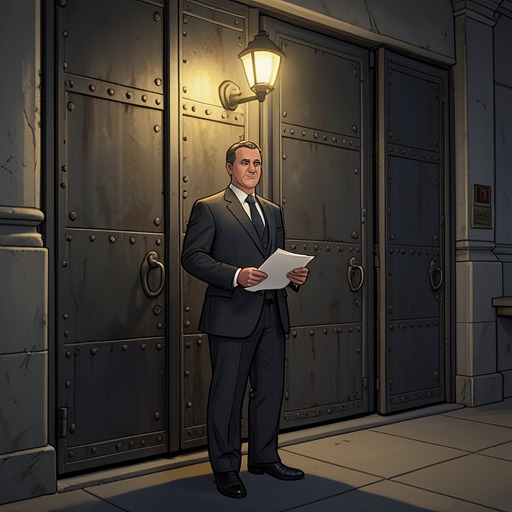
When Lucien meets him in the Jardin du Luxembourg, d’Arthez is an unknown young man trying to console a fellow aspiring writer. The narrator later identifies him as one of the most illustrious writers of his age, but his distinction rests on more than future fame: he is presented as one of the rare people in whom great talent and admirable character coincide. He does not offer Lucien a promise of easy recognition. Instead, he insists that achievement requires struggle, patience, and readiness to endure hardship; literary greatness, in his account, is inseparable from sustained effort.
That principle shapes both his advice and his conduct. D’Arthez describes genius as a long apprenticeship, vulnerable to setbacks, and urges Lucien not to mistake an initial gift for a finished achievement. His counsel makes artistic work a discipline of endurance rather than a shortcut to reputation. The image of a writer continuing toward a distant goal gives Lucien a demanding standard: talent matters, but only will and patience can carry it through the obstacles of a literary life.
Mentor and Editor
D’Arthez’s mentorship becomes concrete when he reads Lucien’s manuscript, The Archer of Charles IX. He recognizes promise but tells Lucien that the book needs to be substantially revised. His criticism identifies a structural weakness: Lucien imitates Walter Scott by beginning with extended conversations, then introducing description and action, leaving dramatic conflict until too late. D’Arthez advises reversing that sequence—entering the action early, making dialogue the culmination of preparation, varying the narrative approach, and using description to give the work a distinctive form.
His advice is also historically specific. He urges Lucien to draw on French history rather than reproduce Scott’s manner, to portray the passions and social life of different periods, and to give the reader costumes, furniture, houses, and private interiors alongside the spirit of an age. He points to popular misconceptions about French rulers as opportunities for original work, including the possibility of restoring Catherine’s character from inherited prejudice. The criticism is demanding, but it is offered as instruction in how Lucien might become original, not as a dismissal of his ability.
The work of revision is shared. When Lucien has spent his remaining money on firewood and is absorbed in rewriting, d’Arthez helps him keep warm by burning fuel for him. Lucien is reluctant to speak of his distress, but the members of Le Cénacle understand that he is without money and respond with tenderness rather than reproach. Later, d’Arthez returns Lucien’s revised manuscript with a note: the friends are nearly satisfied, and believe he can present the work with greater confidence. He also acknowledges Lucien’s review of the Panorama-Dramatique, even as he signals that the review is drawing the young writer away from his old companions.
Friendship and the Cénacle
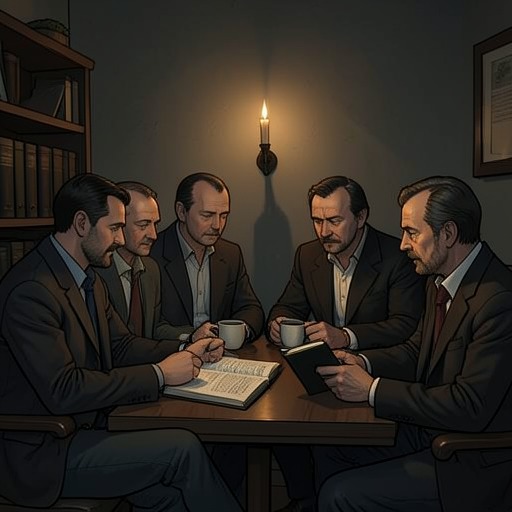
D’Arthez’s friendship is expressed through practical care as much as literary guidance. In the cold attic where Le Cénacle gathers, Lucien is accepted as an equal and welcomed for the poetry he brings to the company. The group’s members share intellectual work and personal confidences despite their own poverty; d’Arthez’s example helps make that community a place where Lucien’s abilities can develop without being reduced to their market value. When Lucien misses dinner at Flicoteaux because he lacks money, the friends understand the reason and act together to help him.
This fellowship provides a sharp contrast with the wealthy, witty journalistic circle Lucien encounters later. At a lavish dinner, he sees journalists exercising influence amid luxury and fine food, and begins to find them more exciting than the serious men of Le Cénacle. The narrator presents d’Arthez’s earlier instruction and Lousteau’s warnings about journalism as lessons Lucien has already received but does not heed. D’Arthez has shown him the dignity of work and solidarity; the glitter of social power makes those values seem, to Lucien, less compelling.
D’Arthez’s standing within the literary circle persists even as Lucien drifts away. Nathan calls him its visible leader and predicts that the young writer may outstrip the others. Lucien answers that d’Arthez is a man of genius, a momentary defense of the friend whose achievement and character he still recognizes. Yet admiration alone cannot preserve their closeness: the novel repeatedly sets Lucien’s knowledge of d’Arthez’s worth against his willingness to act against it.
Conscience and Rupture
D’Arthez makes the ethical consequences of journalism explicit when Lucien considers whether newspaper work can be reconciled with a clear conscience. He describes the value of ending the day without having unfairly judged another writer, injured an innocent person through a cutting joke, or betrayed one’s convictions. His standard is not merely personal kindness. It directly challenges the methods through which Lucien is beginning to seek advancement: criticism used as a weapon and cleverness turned into a means of damaging others.
The conflict sharpens when Lucien prepares to join the royalist press after having written for liberal newspapers. D’Arthez and Léon Giraud confront him, arguing that this change of camp would stain his character because he has already attacked the very political and literary interests he is now being asked to defend. Lucien replies that his reasons belong to a higher order of thought and that the end will justify his actions. The exchange reveals how far his language of ambition has diverged from d’Arthez’s insistence on consistency and responsibility.
The breach becomes personal when Lucien is pressed to attack d’Arthez’s book. Told that refusing would imperil Coralie’s prospects and his own livelihood, he reads the work, hesitates, and finally writes a mocking article designed to injure it. The act is especially painful because Lucien knows the quality of the book and has benefited from the generosity of its author. After rereading it, he crosses Paris at midnight and sees the light in d’Arthez’s room, but remains outside for a time before knocking. The scene makes his betrayal visible as a conflict between material pressure and conscience, not as a simple failure to understand what his friend has taught him.
Narrative Role and Legacy
D’Arthez is more than a mentor whose advice Lucien can accept or reject. His patient labor supplies a living alternative to the manufactured triumphs of journalism: he helps improve a manuscript, supports a friend through want, and maintains a standard of intellectual and moral responsibility even when it costs him. Lucien’s decline is illuminated by the distance between that example and his successive compromises. The contrast is not abstract; it runs through the manuscript d’Arthez helps transform, the moneyless writer he sustains, and the book Lucien later attacks.
His compassion also survives conflict. After Coralie’s death, when Lucien is overcome by grief and can no longer put his songs in order, d’Arthez tells him that this suffering effaces many faults. The response neither erases the earlier betrayal nor reduces Lucien to it. It shows d’Arthez continuing to recognize the human being beneath the failures of judgment, and closes his role in this part of the story on the same terms that define it from the beginning: artistic seriousness joined to generosity toward others.