Galeries de Bois
Illusions perduesThe Galeries de Bois were a crowded, makeshift arcade in the Palais-Royal, at once a notorious commercial bazaar and a central meeting ground for Parisian publishing and public life. Their contrast between squalid construction and immense social influence gives the setting its force: here, books and reputations changed hands alongside political news and ordinary merchandise, and here Lucien de Rubempré first confronted the commercial machinery on which a literary career depended.
A precarious arcade
At the time of Lucien’s arrival, the Galeries de Bois were no orderly stone passage but a maze of plank-built huts, badly roofed and poorly lit. Three rows of shops formed two galleries, each about twelve feet high. The central shops opened onto both passages, where the air was foul and little daylight filtered through permanently dirty panes. Some premises measured only six feet across and eight to ten feet long, yet their rents reached a thousand écus. Small green trellises shielded the fragile plaster backs of shops facing the courtyard or garden, while a narrow strip behind them held neglected plants mixed with the wares and debris of different trades.
The scene’s makeshift quality was visible everywhere. Ribbons and prospectuses caught in the foliage; scraps of fashion covered plants, and satin ornaments could masquerade as flowers. The walls bore layers of old paint and patched plaster, while the ground was uneven with hardened mud tracked in by visitors and continually swept by shopkeepers. The roofs leaked badly: in places, tarred canvas served as a covering, and one textile merchant successfully sued the House of Orléans after rain damaged valuable goods. Because fires could spread rapidly through the dry timber, paper, gauze, and muslin, merchants relied on warming pans rather than ordinary fires and watched over them themselves.
The arcade’s physical disorder was not incidental to its character. Its ramshackle structures resembled a fairground or a temporary building site, yet they sheltered an unusually vigorous concentration of trade. The narrator describes an environment that was both dirty and exuberant, where noisy crowds, laughter, disputes, and the movement of visitors gave the covered passages a distinctive liveliness. The place drew people despite the grime, combining attractions that more respectable settings kept apart.
Books, business, and public life
For decades, the Galeries de Bois played an outsized role in Parisian life. From the Revolution of 1789 to the Revolution of 1830, substantial business was conducted there; for twenty years, the Bourse operated across from them on the ground floor of the Palais-Royal. Visitors met in the galleries before and after the Bourse, and commercial and political conversations shared the same crowded space. The arcade was a place where public opinion and reputations could be made or undone as well as a market for new books and pamphlets.
Its shops brought together booksellers, printers, paper merchants, illustrators, fashion sellers, and, in the evening, sex workers. Political discussion and publishing activity occupied the same noisy environment. New books and news circulated there, and audiences came specifically to buy the latest publications. The galleries’ open, bustling arrangement made the literary marketplace visible: books were not simply written and read but promoted, traded, and connected to the fortunes of their authors and publishers.
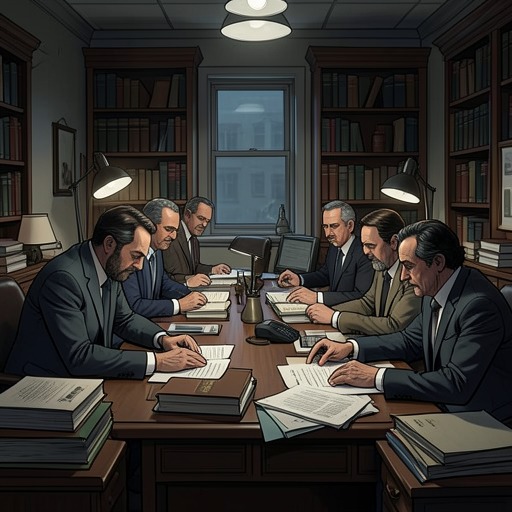
When Lucien visits, the bookseller Dauriat has a large shop facing the garden, divided between a spacious sales area and a private office. Ladvocat has recently opened at the corner of the passage, opposite him, on the courtyard side. Dauriat’s premises are full of people waiting to speak with him. Printers, paper merchants, and illustrators gather around the clerks to ask about current and prospective business, turning the bookshop into a clearing house for professional information as well as a retail space.
Lucien’s first encounter with the literary marketplace
Lucien first approaches the galleries after repeated, fruitless attempts to find Andoche Finot, the newspaper director, at his office on Rue Feydeau. He has gone there again and again, only to hear that Finot has not yet returned, is out on business, or has just left a café. Eventually, Lucien gives up trying to catch him and decides to look for Étienne Lousteau at Flicoteaux, hoping the journalist can explain the newspaper world. The detour leads him into a wider network of introductions and book trade centered on the galleries.
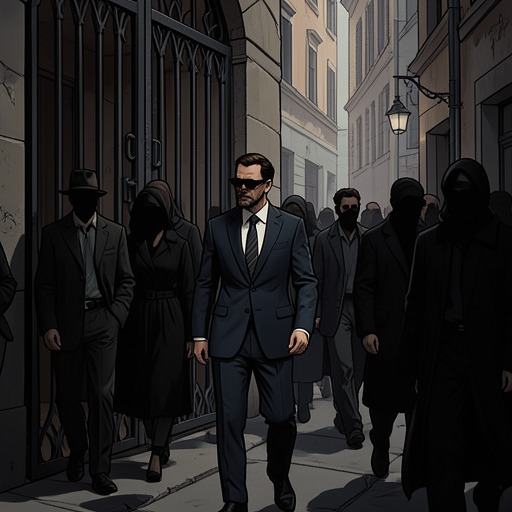
Lousteau takes Lucien there by cab, paying three francs, a display of spending that startles the young writer after his experience of poverty. Entering the arcade for the first time, Lucien is overwhelmed by its crowds and distractions. Separated from his guide, he moves with the flow of people, embarrassed by the attention he attracts and clutching his manuscript lest someone take it. The manuscript is both the reason he has come and a fragile possession amid a world that seems to operate according to unfamiliar rules.
Lousteau brings him into Dauriat’s shop, where Lucien sees Finot speaking with Félicien Vernou. Finot casually discusses a first-night box that he has arranged, and the conversation soon turns to literary promotion: Dauriat has acquired two hundred copies of Paul de Kock and wants Lucien to praise that author above Victor Ducange. Lucien’s first view of publishing is therefore not simply of books being judged on merit. It is a system of access, arrangements, and reciprocal favors, in which a writer’s work enters public circulation through people who control connections and attention.
A marketplace of access and influence
The Galeries de Bois help Lucien understand how closely literary and political power are entangled. In Dauriat’s shop, he sees political figures discussing public affairs and learns that the weekly paper under consideration has the right to address politics. At the time, a newspaper was a rare and coveted privilege, comparable to the privilege of operating a theatre. An influential shareholder in Le Constitutionnel is among the political group, while the bookseller’s influence makes literature and public affairs appear to converge under one roof.
This spectacle unsettles Lucien’s earlier ideals. He has revered Raoul Nathan’s book, yet witnesses Émile Blondet criticizing Nathan while Nathan appears to submit to the attack. Lucien is shocked by what he reads as a sacrifice of dignity, and the busy shop presses a harsher lesson upon him: a writer’s prospects depend not on talent alone but also on money, position, and the power to circulate judgments. The young poet begins to resent the literary friends whose principles, he thinks, have kept him from entering this competitive world sooner. Dauriat, rather than the writer or critic, now seems to him the pivotal figure because the bookseller can affect careers and fortunes.
The galleries remain a practical stage in Lucien’s professional progress. Lousteau later advises him to cultivate Vernou, who may open the way to work on a political paper; the proposed opportunity again depends on personal connections rather than an impersonal application. At a later meeting at Dauriat’s, Lucien watches Giroudeau subject a timid prospective writer to the same discouraging jokes once used on him. He now understands that this performance helps create barriers between beginners and those admitted to the journalists’ inner circle. The passage from anxious outsider to knowing observer is small but consequential: the Galeries de Bois have taught Lucien that entry into literary life is controlled through a mixture of introductions, gatekeeping, favors, and commercial leverage.
The arcade’s importance finally lies in the way its material and social disorder make the mechanisms of cultural success legible. It is at once a shabby collection of huts and a place where books, politics, money, and reputation meet. For Lucien, its shops offer a route into professional life, but they also expose the bargains and hierarchies that shape that life before he has fully learned how to navigate them.